

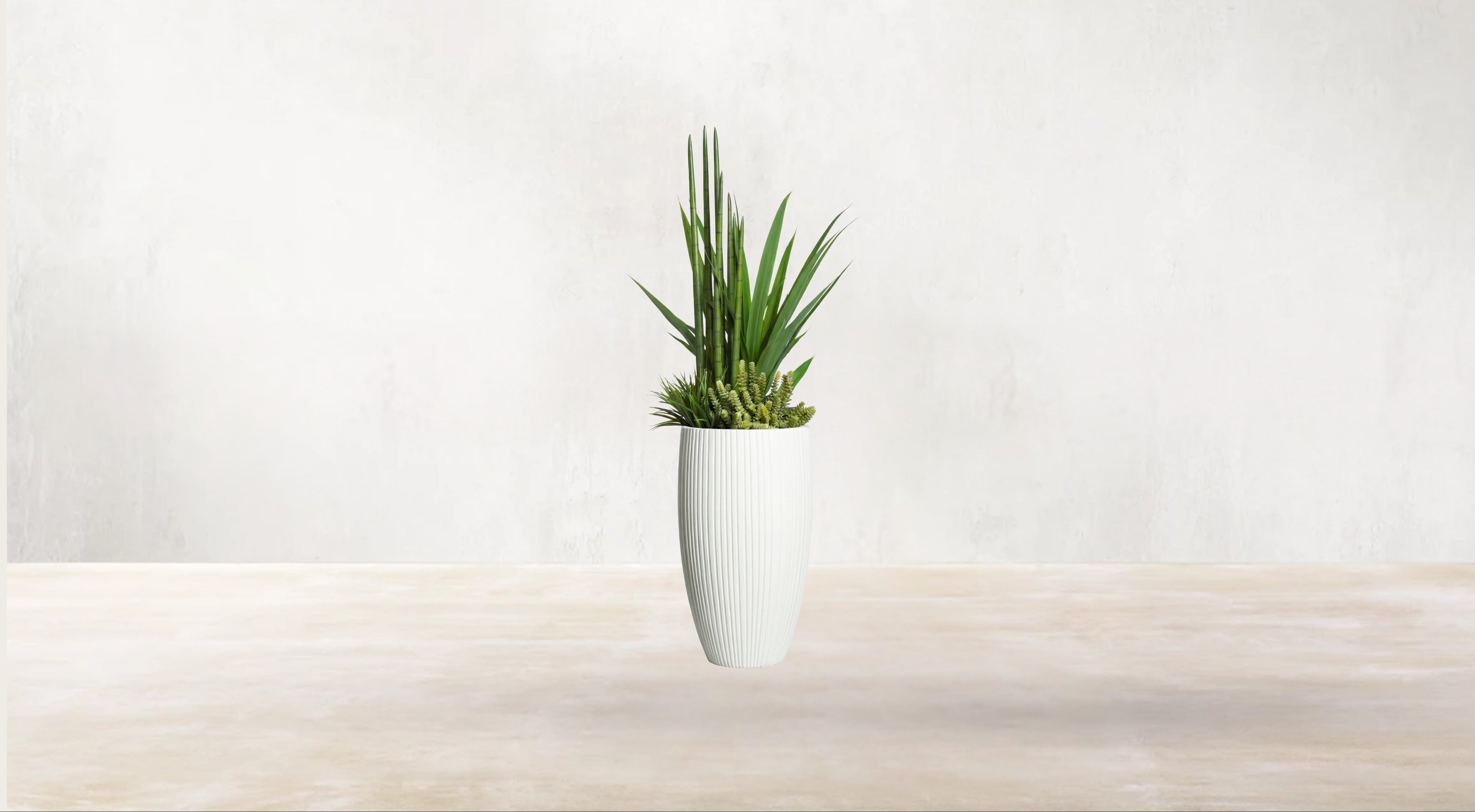
From St. Petersburg high-rises to Sarasota estates, decorators turn to premium faux indoor plants to bring the outdoors inside. While live greenery struggles with the practical constraints of elite architecture, hyper-realistic permanent botanicals maintain strict spatial proportions and visual perfection across high-end properties.
This technical guide uncovers the exact microclimates and spatial blind spots where faux options outshine living plants, acting as a turn-key roadmap for busy design professionals looking to deliver flawless, lock-and-leave projects.
Ready to maximize your project's organic potential? Read on to discover the top designer locations for styling premium faux greenery.
Key Takeaways
-
Navigating Structural Blind Spots: Deep interior hallways, low-light entry foyers, and windowless powder rooms represent ideal zones for high-end replicas. These spaces starve living plants but thrive visually with permanent alternatives.
-
Neutralizing High-Sun Window Traps: Massive glass walls with UV-blocking treatments create a survival paradox that rapidly kills real vegetation. High-quality faux species sit perfectly in these sun-drenched architectural focal points without fading.
-
Protecting Luxury Hard Surfaces: Eliminating real soil and drainage trays prevents irreversible water rings and moisture damage on delicate materials. Custom wood millwork, natural stone counters, and silk rugs remain entirely safe.
-
Scaling Double-Height Volumes: Massive vertical footprints require soaring anchor trees that are structurally lightweight and immune to leaf drop. Permanent trees deliver flawless, enduring proportions to grand great rooms.
Which Low-Light Zones Benefit Most from Faux Indoor Plants?
Deep architectural layouts often contain dead space entirely devoid of natural sunlight. Forcing live plants into these windowless pockets guarantees leaf yellowing and rapid rot, making them prime territory for introducing high-end botanical replicas.
Windowless Powder Rooms and En-Suites
Luxury bathrooms are exceptional showcases for organic lines, yet they frequently suffer from zero solar exposure. Styling premium faux ferns, cascading pothos, or delicate calla lilies on marble vanities completely redefines the atmosphere:
-
Humidity Shielding: Live plants can rot or develop soil mold in enclosed, steamy environments.
-
Zero-Light Stability: High-end replicas provide a fresh, spa-like biophilic element that remains vibrant in total darkness.
-
Vanity Counter Protection: Eliminating wet pots protects unsealed natural stone counters from permanent hard-water staining.
Deep Interior Corridors and Elevator Lobbies
Grand entryways and structural hallways establish the initial design narrative but rarely feature functional windows. They are the exact answer to where designers should style faux indoor plants to soften rigid architecture:
-
Welcoming Texture: Placing a stately, structural faux snake plant or custom grass arrangement in a recessed wall niche creates immediate visual interest.
-
High-Traffic Durability: Replicas handle accidental bumps from guests or luggage far better than fragile, live foliage.
-
Visual Continuity: Hallways remain consistently lush, connecting separate light-filled living spaces with unbroken green elements.
Why Style Replicas in High-Sun Window Traps?
Counterintuitively, the brightest areas of a luxury home are often the most lethal for real vegetation. High-performance architectural glass creates specific environmental traps that demand an engineered, fade-resistant botanical solution.
The UV-Filtered Glass Paradox
Modern penthouses and waterfront estates utilize floor-to-ceiling windows treated with advanced UV-inhibiting tints. These specialized coatings protect multi-million dollar interiors but inadvertently kill live plants:
-
Light Wave Starvation: UV filters strip away the exact solar wavelengths needed for natural photosynthesis, causing real trees to slowly starve.
-
The Faux Alternative: Siting an ultra-realistic faux olive tree or a massive traveler’s palm directly against the glass delivers the desired indoor-outdoor view without plant degradation.
-
Zero Scorching: Replicas will not suffer from leaf-burn when subjected to hours of magnified heat radiating off the glass.
High-Heat Solariums and Sunrooms
South-facing window walls can act as greenhouses, spiking ambient temperatures beyond what sensitive indoor tropicals can handle. When specifying greenery for these intense sun zones, designers prefer faux indoor plants because they never wilt, require zero hydration, and easily withstand the midday heat:
-
No Drying Out: Replicas do not require constant, frantic watering schedules to combat rapid evaporation.
-
Color Fastness: Premium botanicals are engineered with high-grade UV stabilizers built directly into the polymers, preventing fading or leaf yellowing.
-
Maintained Silhouettes: The branches will not unnaturally bend or lean heavily toward the glass searching for light, preserving your intended geometric layout.
How Do Hard Surfaces Dictate Faux Plant Placement?
Water damage is one of the costliest liabilities in high-end residential design. Sitting live, draining pots on top of luxury materials introduces constant risk, making permanent options the intelligent choice for protecting expensive client finishes.
Custom Millwork and Built-In Library Shelving
Styling greenery on top of bespoke cabinetry adds beautiful vertical movement, but watering overhead is a disaster waiting to happen. Faux trailing plants offer the perfect compromise:
-
Zero Overflow Risk: No chance of forgotten water trays overflowing and warping expensive custom walnut or oak cabinetry.
-
No Ladder Required: Eliminates the client burden of climbing ladders with watering cans, preventing scuffs on cabinetry faces.
-
Permanent Staging: The vines remain perfectly draped over the shelf edges exactly how you styled them for photography.
Hardwood Flooring and Fine Silk Area Rugs
Massive floor planters hold large amounts of damp soil, which continuously vents moisture downward through the base of the container. Faux trees completely protect these floor surfaces:
-
Eradicating Condensation Rings: Eliminates the hidden condensation trap that ruins site-finished white oak or exotic wood flooring underneath.
-
Stain Prevention: Zero soil runoff means no muddy water leaking onto priceless, custom-woven silk or wool area rugs.
-
Lightweight Flexibility: Without heavy wet dirt, massive containers can be easily shifted during seasonal room re-arrangements without scratching the floors.
Can Faux Greenery Solve Scale in Grand Spaces?
Double-height great rooms and sweeping staircases demand massive botanical scale to feel balanced. Sourcing, delivering, and keeping an 11-foot living tree pristine indoors is logistically impractical, highlighting the power of custom replicas.
Double-Height Great Room Corners
A vast room with 20-foot ceilings requires an anchor piece that bridges the massive vertical gap. Custom faux trees provide unmatched benefits in these soaring volumes:
-
Engineered Heights: You can specify the exact height, canopy spread, and branch density needed to scale beautifully with the room's molding.
-
No Acclimatization Shock: Large living trees frequently experience shock when moved, dropping substantial amounts of leaves and instantly ruining the room's scale.
-
Low Structural Weight: A large faux tree uses a lightweight core, avoiding the immense weight of massive root balls that can stress subfloors.
Floating and Spiral Staircase Centers
The empty void in the center of a grand staircase is a classic styling opportunity, but it is notoriously difficult to maintain. Faux installations solve this perfectly:
-
Bespoke Canopy Shaping: Foliage can be hand-sculpted to wrap around the contours of the steps without blocking the architectural view.
-
Zero Litter: No dead leaves or sap dropping down onto the stair treads, keeping high-traffic footpaths clean and safe.
-
Consistent Form: The tree looks pristine from every angle—whether viewed from the ground floor foyer or looking down from the second-story landing.
Ready to Elevate Your Next Design Project?
Ultimately, knowing where to style faux indoor plants comes down to identifying structural limitations and exploiting them beautifully. Utilize terrific everlasting botanicals where live crops are unable to perform, such as in low-light blind spots, UV-tinted windows, fragile tough surfaces & high-flying vertical corners.
The only answer: The right elite botanical supplier, perfectly positioned to provide you with the efficient project execution that not only pays off but guarantees your clients' happiness long after they have left. Contact Jardin Du Monde for more information.
Frequently Asked Questions
Q: What are the key indicators of a high-quality faux plant?
A: Seek out true-touch polymer leaf coatings that remove synthetic shine, foliage put together by hand that reveals real-life color gradients, and actual wood for the trunks preserved in a natural state. When picking out a patch, avoid pieces that have visible plastic seams or that the edges of the fabric are frayed, or perfectly symmetrically laid leaves, which ruin any illusion.
Q: How do you properly anchor a faux tree in a designer planter?
A: Place the tree’s base insert inside your chosen luxury container, secure it using dense floral foam or weighted bricks, and top-dress the surface. Fill the top two inches with premium preserved sheet moss, polished river rocks, or real dehydrated soil to mimic a genuine planting method.
Q: How often should permanent indoor installations be maintained?
A: Very low-maintenance, they are suitable for clients who are busy people or those with a second holiday home. Just blow away surface dust with compressed air or wipe down the leaves with a dry microfiber cloth every few weeks; avoid water or harsh chemical cleaners, which can break down the polymers.
Q: Should you mix live and faux plants within the same room layout?
A: Yes, this is an excellent trade secret known as hybrid styling. Placing a highly realistic faux tree in a dark, problematic corner while keeping small, hardy live succulents on a sunlit table confuses the eye and makes the entire space feel undeniably authentic.


