

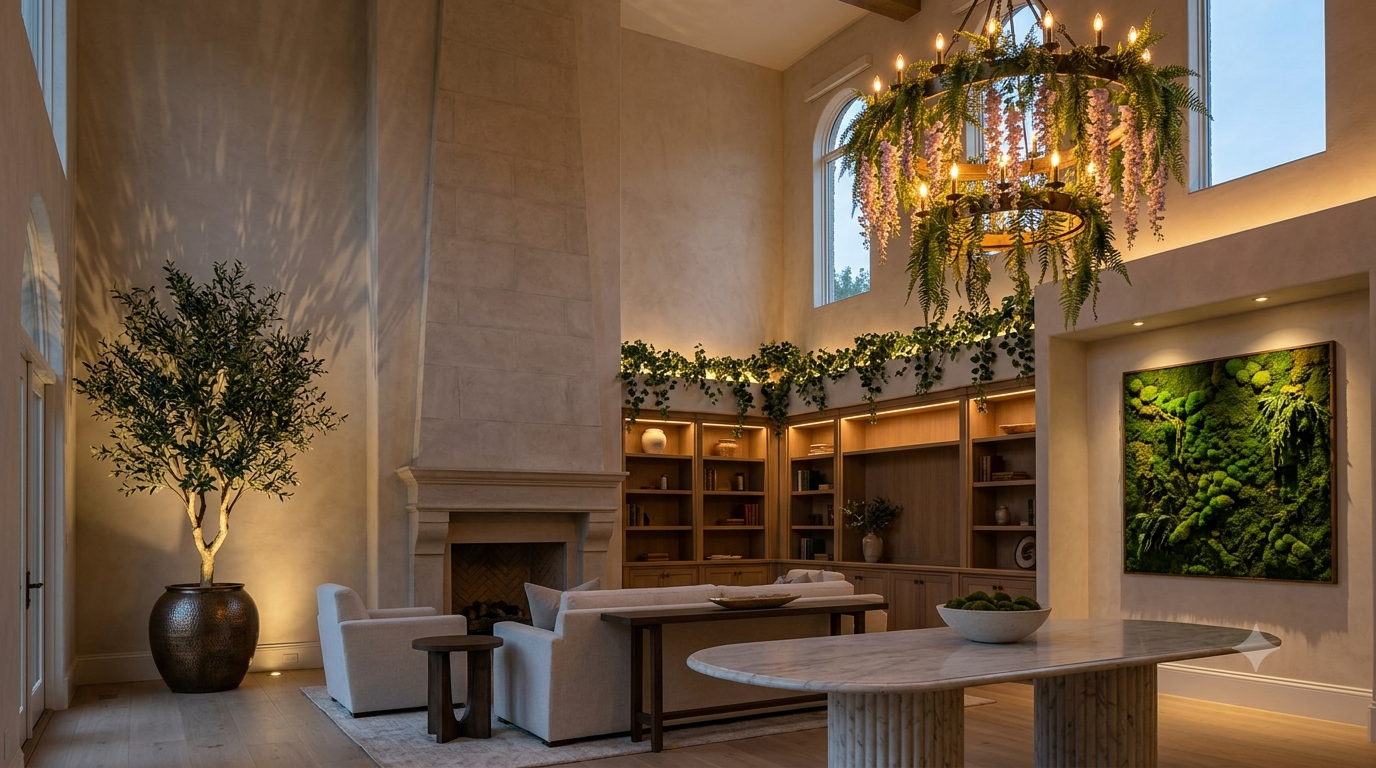
In modern grand estates, scale is a privilege and also a strict design imperative. Double-height ceilings, those big plaster expanses, and monumental stone hearths give a residence that unmistakable presence. But if you’re not careful with restraint, these huge rooms can end up feeling chilly, almost too empty. That’s where sophisticated faux plant decor ideas come in, somehow bridging the gap without shouting. After that, the whole place starts to feel warmer and more inviting.
This guide is basically about how you can pair bespoke, hyper-realistic botanicals with modern warm-spectrum lighting. Like, we can take those large-scale volumes and make them feel like intimate, luminous sanctuaries.
Key Takeaways
- Transformative Scale & Motion: Go with oversized botanical forms plus warm directional uplighting, and the greenery stops being static. It becomes these dynamic shadow patterns across the architectural planes.
- Seamless Architectural Integration: Concealed LED strip channels, plus canopy framing, help soften glare into a gentler, sanctuary-like glow.
- Museum-Grade Color & Texture: Use warm 2700K lighting, ideally 95+ CRI, aimed at grazing angles. That keeps subtle natural color shifts intact, without that synthetic sheen.
- Grounded Luxury Materiality: Pair large-scale foliage with weighty artisanal vessels, brass, marble, terracotta, and it really celebrates both nature and craft at the same time.
5 Lighting and Faux Plant Decor Ideas to Elevate Any Grand Room
The secret to softening grand architecture is this quiet, tactile harmony: an artful conversation between concealed lighting, innovative faux plant decor ideas, and Jardin Du Monde’s hyper-realistic botanical artistry. When custom foliage and preserved mosses are curated alongside warm-spectrum light, the room stops feeling like “just decor” and starts bridging structural volume with organic realism.
1. The Kinetic Shadow: Statement Uplighting for Oversized Trees
To anchor an expansive corner, a room requires architectural weight. A grand botanical specimen commands the vertical plane, providing an organic counterbalance to hard surfaces. Seen in private estates across Bel Air, Cap Ferrat, and Tribeca, directional uplighting on statement trees warms raw plaster and expansive glass.
- Style Showcase: The Signature Faux Olive Tree from Jardin Du Monde (9–12 ft) features a gnarled natural wood trunk and individually articulated silk leaves in muted silver-green and pale sage.
-
The Visual Effect: By day, soft matte leaves absorb natural light as a calm centerpiece. By night, a low-profile floor well-light projects warm rays through the canopy, casting elongated, dancing leaf shadows across soaring walls.

2. Diffused Solace: Architectural Cove & Niche Illumination
Deep wall niches, library millwork, and stone display ledges add necessary depth to open-plan architecture. But unlit recesses? They create harsh shadows. From subterranean lounges in London’s Mayfair to Soho, alcoves illuminated with indirect 2700K strip channels do the intimate ambient warmth thing, almost like a hush.
- Style Showcase: Jardin Du Monde’s Trailing Botanical Series brings hyper-realistic weeping ivy, cascading eucalyptus, and delicate vine foliage with silk-touch textures and non-uniform stems. It’s like the material just makes sense; So you know, it feels lived in.
-
The Visual Effect: Concealed behind a stone lip, warm LEDs shine through translucent, variegated leaves, casting a luminous halo effect across the millwork, while softening structural lines in a way that looks gently controlled, not sharp.

3. The Botanical Canopy: Chandelier and Foliage Intersections
Extend the visual impact of a multi-tiered pendant or brass chandelier downward by intertwining light with greenery. Pioneered by world-class retreats like Aman Tokyo and Equinox Hotel Hudson Yards, overhead foliage turns direct glare into an intimate, conservatory-like experience.
- Style Showcase: Jardin Du Monde’s Canopy & Hanging Florals Collection offers real-touch fern fronds, silk wisteria, and structured magnolia leaves engineered with weighted, pliable stems. The whole canopy reads cohesive even when it’s moving a little in your imagination.
- The Visual Effect: Illuminated from within, hand-painted veining, and non-reflective coatings diffuse glare into a warm, dappled glow. Secure stems with concealed aircraft wire, keeping a 3- to 6-inch clearance around exposed bulbs, so the heat and the look stay separate.
4. Precision Color: Gallery-Style Spotlighting for Green Walls
Expansive interior walls benefit from custom living green walls or preserved moss panels. Featured in exclusive venues like Soho House West Hollywood and Paris ateliers, gallery-style 95+ CRI spotlighting brings dimensional moss installations to life.
- Style Showcase: Jardin Du Monde’s Custom Botanical Panels & Moss Art combine preserved mosses, dimensional ferns, and variegated leafy stems layered in varied depths.
- The Visual Effect: Position adjustable gimbal fixtures 2 to 3 feet off the wall at a 30-degree grazing angle. The multidimensional panels absorb light unevenly, accentuating deep shadows and subtle undertones from forest green to soft sage.

5. Material Weight: Elevating Bases with Reflective Vessels
In ultra-luxury places, light should honor the craft behind the planter, not just “do its job.” If the containers are too light, they break that whole luxury illusion. So, in five-star sanctuaries like Amanjena in Marrakech and Rosewood London, they routinely wash aged terracotta and carved travertine with ambient grazing lighting, just to highlight local making and regional craftsmanship.
- Style Showcase: Jardin Du Monde’s Artisan Planter & Finish Collections team greenery with hand-hammered antique brass, fluted marble, or aged terracotta, and then they finish it with dark river stones plus preserved forest moss.
- The Visual Effect: Set low-voltage floor accent lights about 8 to 12 inches away from the base, and you’ll skim the planter’s texture. That tiny lift in angle throws soft, subtle highlights onto the nearby flooring, while the dense soil-line dressing hides the hardware, like it was never there.

Where Light Meets Leaf
Turn cold, double-height architectural voids into warm, organic sanctuaries. Using these elevated faux plant decor ideas with Jardin Du Monde’s hyper-realistic luxury botanicals and warm-spectrum, hidden lighting, you can blend kinetic shadows, glowing coves, and gallery-worthy green walls into your estate interior design, without it feeling staged.
Frequently Asked Questions
Q: How do you keep silk foliage and preserved moss looking good under continuous lighting?
A: Keep that delicate matte finish, with a very gentle touch. Dust the silk leaves quarterly with a soft microfiber cloth, or a cold-air hairdryer—don’t get too close. Never apply water to preserved moss. For long-term fading, stick to UV-filtered LED museum fixtures instead of heat-emitting halogens; this part is strict.
Q: Can bespoke botanicals blend with smart-home lighting systems?
A: Absolutely. Our set-ups pair cleanly with premium automation platforms like Lutron or Control4. That way you get smoother, programmed transitions—moving from bright natural daytime vibes to evening that’s more dimmed, kinetic shadow art like it’s effortless.
Q: What kind of structural support is needed for overhead canopy installations?
A: Suspended botanicals require serious architectural anchoring. Fasten all foliage frameworks straight to structural ceiling joists or steel blocking, using aircraft-grade stainless steel cables. Also keep a 3- to 6-inch clearance around exposed bulbs, so the heat can dissipate safely.
Q: How do you reduce artificial glare on faux foliage when using spotlights?
A: Glare is handled through intentional materiality and careful aiming. Jardin Du Monde uses hand-painted matte silk that absorbs light more organically. Pair that with warm 2700K spotlights that have anti-glare louvers, set for about a 30-degree grazing angle, rather than a direct wash.


