

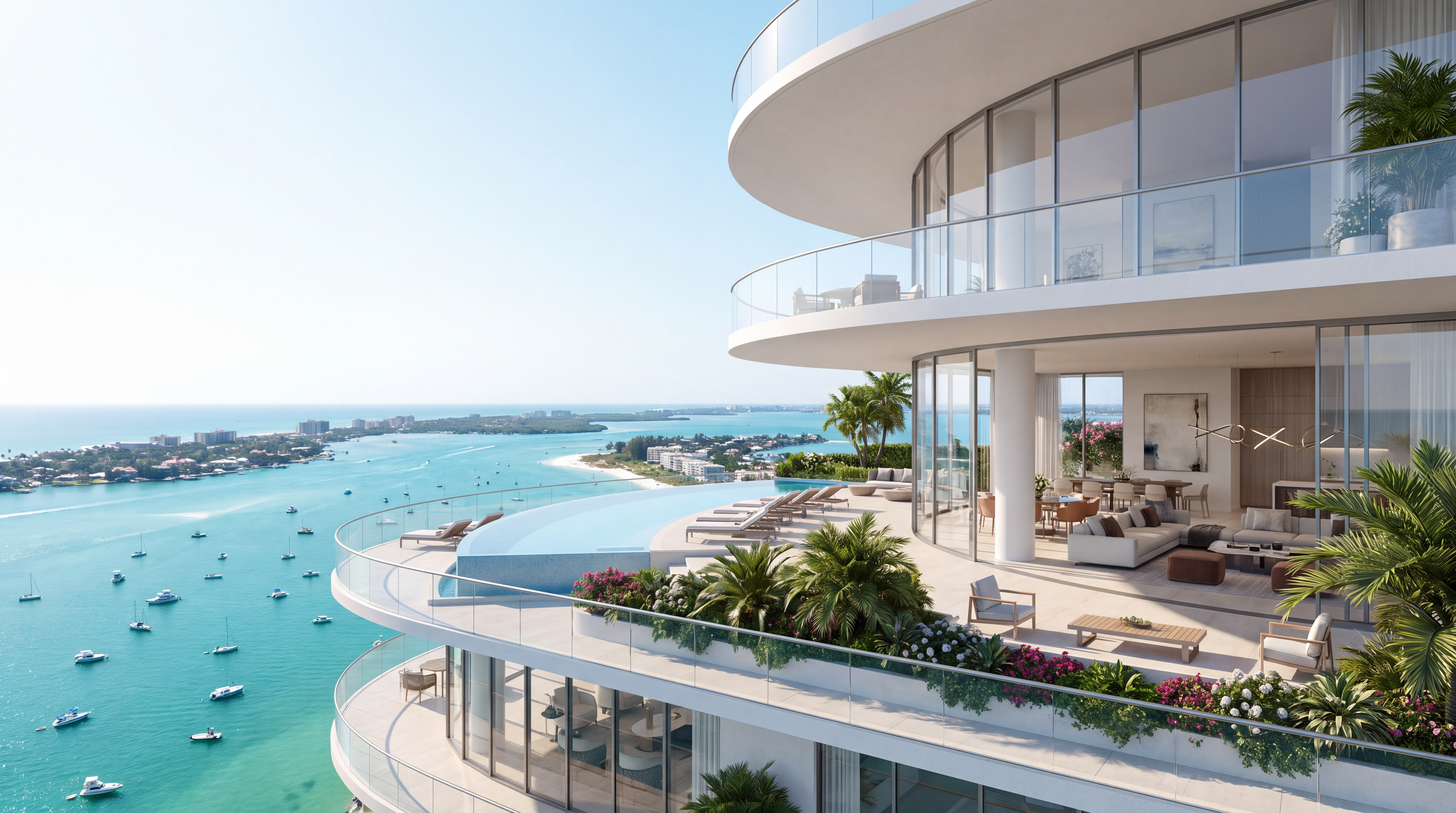
The world’s most exceptional residences have mastered the art of the view.
They rise above coastlines, private islands, and celebrated skylines. Their glass walls dissolve the boundary between interior and horizon. Their terraces appear suspended over water. Their rooms are composed in limestone, rare marble, bronze, white oak, and hand-finished plaster.
Everything is immaculate.
And increasingly, everything is familiar.
The same invisible technology.
The same monumental scale.
The same uninterrupted view.
When every penthouse achieves architectural perfection, what makes one emotionally unforgettable?
The answer may not be found in another imported finish, automated feature, or collectible object. It may lie in something more instinctive: a residence’s ability to understand how its occupants want to feel.
When Perfection Is Not Enough
Contemporary penthouses represent extraordinary feats of architecture, engineering, and craftsmanship. In homes belonging to the world of Bugatti Residences Sky Mansion in Dubai or Six Fisher Island in Miami, Florida, nearly every practical desire has already been anticipated.
Arrival is private.
Service is effortless.
Technology is discreet.
Materials are exceptional.
The view is almost beyond measure.
Yet a residence can possess every hallmark of excellence and remain emotionally incomplete.
It can be impressive without being intimate.
Flawless without feeling personal.
Rare without possessing a distinct identity.
This is not a failure of architecture. It is the natural consequence of architecture being asked to accomplish something it cannot achieve through materials alone.
You can acquire a stone that establishes permanence and glass that creates openness. Bronze can introduce warmth while technology innovations remove friction. But none of these elements, individually, can fully create the sensation of being recognized by one’s surroundings.
That requires another dimension of design: environmental emotional intelligence.

What Does It Mean for a Residence to Feel?
Emotional intelligence in a residence is its ability to respond not mechanically, but psychologically to the people in its presence.
It can be felt in the transition from a private elevator into the home where the moment a monumental room becomes intimate.
It is expressed through proportion, light, rhythm, texture, silence, and natural form.
The most successful interiors do more than present beauty. They choreograph emotion.
They understand when to create drama and when to withdraw knowing where the eye should rest, where the body should pause, and where the architecture should become softer.
Botanical art can become one of the most powerful instruments within this emotional architecture.
Not because every residence needs more greenery, but because botanical form possesses something rigid materials do not: the visual language of life.
The way an olive branch reaches rather than simply extends or a canopy filters rather than divides. When an asymmetrical silhouette interrupts perfection with something more human, organic forms introduce movement into rooms built from straight lines, hard surfaces, and exacting geometry.
Nature does not weaken architectural discipline.
Properly composed, it reveals it.
Beyond the Panoramic View
The view is often the defining feature of a penthouse. It is also one of the most difficult elements to design around.
An undisciplined interior can compete with it or an overly restrained interior can become subordinate to it. In both cases, the residence risks feeling less like a home and more like an observation deck.
Botanical art can mediate this relationship.
A carefully positioned canopy can frame the horizon without obstructing it, while an organic silhouette can create a visual transition between interior architecture and the landscape beyond the glass. Layered foliage can draw the colors of the exterior inward, allowing the residence to feel connected to its setting even after nightfall erases the view.
This is where botanical composition becomes more than an object.
It becomes a threshold between the built environment and the natural world.
The objective is not to imitate the exterior landscape. It is to interpret it.
A waterfront residence does not require an obvious collection of tropical plants. It may call instead for the wind-shaped gesture of a coastal tree, the controlled sensuality of an orchid, or a composition whose restrained palette echoes sea grass, stone, and shifting light.
The strongest botanical work does not announce a theme.
It creates a relationship.

The Intelligence of Permanence
In a primary residence, private retreat, or seasonally occupied penthouse, beauty must coexist with operational reality.
Live botanical installations are influenced by changing light, irrigation, air-conditioning, humidity, travel schedules, pruning, pest management, and the quality of ongoing care. Their form changes over time... sometimes beautifully, sometimes unpredictably.
Hyper-realistic botanical art offers a different proposition: the preservation of artistic intent.
A permanent composition maintains its designed height, canopy, movement, color balance, and relationship to the architecture. It does not decline during an owner’s absence or require constant intervention to remain visually resolved.
This is not nature reduced to convenience. It is botanical expression approached as lasting art.
Every detail down to the stem, branch, leaf, and bloom can be selected for a precise purpose while the silhouette and density can be adjusted to the room. The composition can remain exactly as the artist and designer intended.
For homeowners whose lives move between cities, residences, yachts, and aircraft, permanence is not a compromise. It is a form of freedom.
Luxury should not be measured by how many beautiful things require attention.
Sometimes, it is the ability to preserve beauty without being burdened by its maintenance.
Designed to Belong
At Jardin du Monde, botanical design begins with context.
The architecture, elevations, materials, sightlines, lighting, circulation, furnishings, artwork, and exterior environment all inform the composition. Botanical species are considered not only for their appearance, but for their geographic associations, cultural meaning, structural character, and emotional effect it has on its residence.
Scale is studied carefully and a composition must be substantial enough to converse with the architecture, but restrained enough to preserve spatial clarity. Even a canopy must respond to ceiling height and silhouettes must account for primary viewpoints. And finally, it’s vessel must belong to the material language of the room rather than it appear elected independently from it.
Digital renderings allow the work to be evaluated within the residence before fabrication begins. Proportion, placement, botanical density, and visual balance can be refined in relation to the complete interior.
The final composition is then formed and installed with white-glove precision.
The goal is not simply realism.
It is inevitability.
The botanical work should appear so integrated with the residence that removing it would make the architecture feel unresolved.

A New Point of Distinction
For developers and designers of branded residences, this emotional layer also presents a strategic opportunity.
Architectural features can be matched. Materials can be sourced by competitors. Technologies can become standard. Even exceptional views may be shared by neighboring towers.
BUT emotional identity is more difficult to reproduce.
A site-specific botanical composition can create a recognizable sense of arrival, distinguish a penthouse from visually similar properties, and give the residence a visual signature that remains in the buyer’s memory.
It can connect the interior to its geography and can sales imagery greater depth. Most importantly, it can help a prospective resident imagine something more meaningful than ownership.
It allows them to imagine belonging.
This distinction matters because the finest residences are no longer competing only through specifications. They are competing through the quality of life their environments appear capable of creating.
A buyer may admire the stone, the ceiling height, and the view.
But admiration alone does not create attachment.
Attachment begins when the residence seems to recognize something within them.
The Residence as a Form of Care
The future of residential luxury will not be defined by excess. It will be defined by intelligence. The quiet intelligence to know what should be added, what should be left untouched, and how each element can contribute to the emotional life of the home.
Architecture gives a penthouse its structure.
Craftsmanship gives it distinction.
Technology gives it ease.
But nature gives it sensitivity.
The most exceptional residence should not merely know how to impress its owner. It should know how to receive them after a long absence. It should know when to offer energy and when to create stillness. It should make monumental rooms feel human and extraordinary views feel intimately connected to the life unfolding within them.
A view can capture the eye.
A thoughtfully composed environment can hold something far more valuable: a sense of self.
For penthouse owners, architects, interior designers, and developers seeking to create that deeper relationship, Jardin du Monde develops site-specific botanical works conceived in dialogue with the architecture, the location, and the emotional identity of each residence.
Because the world’s finest homes should offer more than a beautiful place from which to see the world.
They should change the way it feels to return home.


