

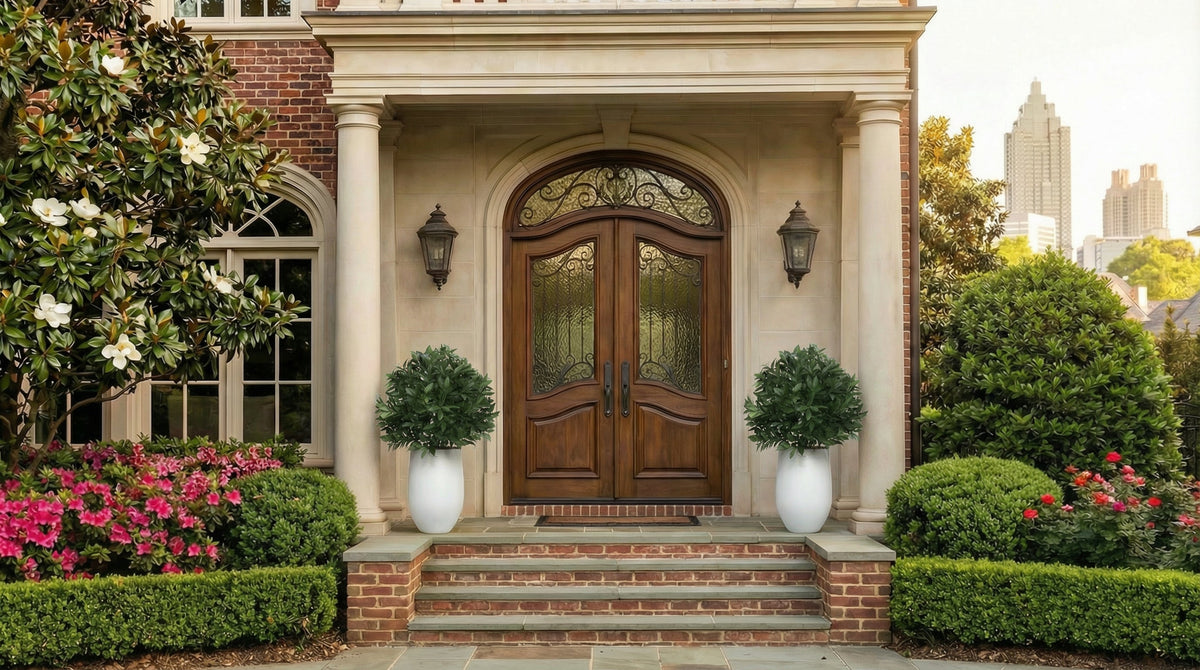
When an outdoor space feels unfinished, adding more furniture or accessories isn’t always the answer. Sometimes it needs a softer shape, a touch of color, or a botanical detail that connects the architecture with its surroundings. Artificial flowers for outdoors can help create that sense of completion, but only if they suit the setting. Look for products specifically intended for outdoor display, and consider how direct sun, moisture, and wind may affect them. Then choose a scale that feels right for the space, from a small balcony accent to a substantial arrangement near an entry. A carefully selected planter and a protected placement can help the display feel composed while supporting its appearance over time.
Key Takeaways
- Confirm outdoor suitability before buying: Check each arrangement’s care and exposure guidance, since lifelike design alone does not guarantee it is made for outdoor conditions.
- Choose a protected, well-proportioned location: Consider sunlight, rain, wind, and the relationship between the flowers, planter, and surrounding architecture.
- Care for arrangements throughout the season: Clean them gently, secure stems and containers, inspect for wear, and store them when weather turns severe.
Are Artificial Flowers a Good Choice for Outdoors?
Artificial flowers can bring lasting color to outdoor spaces without the watering and regular replacement fresh blooms require. They’re a practical choice when the flowers are made for outdoor use and the placement suits their materials and care instructions. A sheltered patio arrangement, for example, faces different conditions from flowers in an exposed garden bed.
Think about the whole setting, not just the blooms. Sun, rain, wind, temperature, and the container all affect how an arrangement looks over time. Even products described as weather-resistant may fade or wear with prolonged exposure. For a considered display, choose a scale, color, and vessel that feel connected to the architecture and landscape. Jardin Du Monde’s floral collection offers design inspiration, but confirm that any specific piece is suitable for your outdoor conditions before displaying it outside.
Choose the best spots: patios, balconies, gardens, and entryways
Begin with a spot that gives the arrangement visibility while offering some protection, such as a covered patio, sheltered balcony, or entry beneath an awning. Less exposure to direct sun and heavy rain can help preserve its appearance. Outdoor-rated flowers can also add color to gardens, but they need secure placement and products specifically intended for outdoor use.
Consider how the display will look from different viewpoints. Matching containers on either side of an entry can create a composed welcome, while one larger arrangement may suit a terrace corner. On balconies and rooftops, measure the available space and consider wind exposure before choosing a planter. Afloral’s outdoor collection is one example of products identified for outdoor display. Check each item’s specifications and care instructions to make sure it suits the location you have in mind.
Know the limits of outdoor-rated flowers
“Outdoor-rated” does not mean that artificial flowers will look unchanged in every condition. Sunlight can fade color, and repeated exposure to rain, heat, and cold can wear down materials. Afloral recommends displaying its outdoor flowers outside for no more than three months per year to help extend their life. Seasonal use may be a better fit than leaving an arrangement exposed year-round.
Lifespan also varies with sun exposure. Afloral estimates three to six seasons in low sun, two to four in moderate sun, and one to two in strong sun. Treat these as general guidance, not a guarantee; climate, product construction, and care all matter. Before buying, check the product’s outdoor-use claims and ask the retailer how it is expected to perform in your conditions.
Consider sun, rain, wind, temperature, and shelter
Check the conditions at the exact spot where you plan to display the flowers. Strong, direct sun can fade colors more quickly, while persistent rain and temperature swings can affect some materials. A covered area may reduce exposure, though it may not protect an arrangement from wind or rain blowing in from the side.
Wind is an important consideration on balconies, rooftops, and open terraces. Lightweight stems or containers can shift or tip, so secure the arrangement and choose a stable planter. For ground displays, Nearly Natural’s outdoor flower guidance recommends anchoring products. Its guidance also mentions cleaning some flowers with a damp cloth or light hose spray, but always follow the care instructions for your specific item.
After severe weather, check for loose stems, debris, or fading. Move the arrangement under cover or store it when conditions are harsh.
What to Look for in Outdoor Artificial Flowers
Outdoor artificial flowers should suit the conditions where you plan to display them, not just look beautiful in a product photo. Before you buy, consider how much sun, rain, and wind the spot receives, then check the product details for guidance on exposure, care, and stability. A covered entryway and an open terrace may call for different materials and levels of protection.
Verify UV resistance and outdoor-use claims
Sunlight can fade color and weaken some materials over time. Look for specific descriptions such as “UV-resistant,” “fade-resistant,” or “suitable for outdoor use.” Then check whether the retailer explains what those claims cover. A broad “weatherproof” label may not tell you how a product handles hours of direct sunlight or extended seasonal exposure.
Match the product to its intended location. A covered porch offers more protection than an exposed balcony, even if both arrangements are marketed for outdoor use. If the listing doesn’t explain suitable conditions, ask the retailer before ordering. This guide to using artificial plants and flowers outdoors offers additional considerations for selecting and placing outdoor displays.
Check materials, colorfastness, construction, and care instructions
Silk and high-grade polyester can provide lifelike texture, but the material alone doesn’t confirm that flowers are suitable for outdoor use. Look closely at petal color, leaf detail, and how naturally the stems are finished. Subtle color variation and carefully constructed details can make an arrangement feel more convincing than a uniform, glossy finish.
Read the care instructions before you buy. Check whether the flowers can be rinsed, need gentle cleaning, or should stay in a covered area. If you’re unsure how a material will respond to sun or moisture, ask the retailer for specifics. This overview of artificial flower materials and quality can help you assess finish and craftsmanship, though outdoor use should be confirmed separately.
Distinguish water-resistant from waterproof and assess wind stability
Water-resistant flowers may tolerate light moisture, but that doesn’t mean they can withstand heavy rain or prolonged exposure to water. Look for clear instructions about rain, drainage, and drying, especially if you plan to place an arrangement in an uncovered area. When the listing is vague, ask what level of exposure the product is designed to handle.
Wind can shift stems and tip lightweight containers, even when the flowers are labeled for outdoor use. Check whether stems attach securely and whether the container can be weighted or anchored. For exposed spots, consider a more sheltered placement. Some retailers advise limiting outdoor display to certain periods of the year, so review the care guidance instead of assuming an arrangement can remain outside year-round. Afloral’s outdoor artificial flowers and plants provide examples of product guidance to review.
Review dimensions, planter needs, warranty, and return terms
Check an arrangement’s full height and width, including any stems that spread outward. Compare those measurements with the planter, ledge, table, or entryway where it will sit. A display that looks balanced online may feel too large beside a narrow doorway or too small on a broad terrace.
Confirm whether a planter is included and whether the arrangement needs a particular container or insert. You may also need to add weight or secure the stems to keep the display stable. Before ordering, review the warranty and return terms, including any conditions related to outdoor exposure. Filters for height, color, style, and features can help narrow your options, as shown in Afloral’s outdoor artificial flower collection.
How to Style Artificial Flowers Outdoors
An outdoor arrangement feels at home when it relates to its surroundings. Look at the architecture, the scale of the space, and the colors and textures already in view. A petite balcony may suit one understated arrangement, while a broad entrance can carry a pair of substantial planters. Sun, rain, and wind matter, too, so check that the flowers are designed for outdoor use and appropriate for your specific conditions before styling them.
Think of the flowers, container, and setting as one composition. A planter that feels right in proportion and material can help blooms sit naturally beside stone, wood, or greenery. Consider how the arrangement will look from different viewpoints, including from inside the home. For inspiration on sculptural forms and lifelike detail, explore Jardin Du Monde’s floral designs, and confirm outdoor suitability before placing any product outside.
The aim is not to make every stem look perfectly arranged. A little variation in height, shape, and spacing helps a display feel relaxed and connected to the landscape. The following details can help you create an arrangement that looks considered and stays securely in place.
Match scale, color, and flower type to the setting
Start with proportion. A small pot and a few stems can bring a gentle accent to a compact balcony without crowding it. A large doorway or open terrace may call for fuller flowers and a more substantial container. Look at the colors nearby, too. A shade picked up from a door, cushion, or architectural detail can help the arrangement feel integrated; a contrasting color can give the eye a clear focal point.
Choose flower shapes that suit the character of the space. Airy, branching stems may feel relaxed in a garden setting, while more sculptural blooms can complement a formal patio. Close-up realism matters, so check that petals, leaves, and finishes look convincing in the light where they will be seen. Elle Decor’s guide to artificial flowers offers examples of materials and details to look for.
Layer heights and textures for a natural look
An arrangement made from stems of one height can look rigid. Combine taller flowers with shorter blooms and foliage to create a more natural outline. Place the tallest stems toward the back or center, then let lower flowers soften the edges. When grouping several pots, vary their heights as well as the plants inside them to give the display a sense of rhythm.
Texture adds depth without requiring a wide range of colors. Pair soft petals with finer leaves or structured greenery, and keep the palette cohesive so the result feels calm. For a group of containers, an odd number can create an informal composition, but vary the spacing rather than lining every pot up evenly. Love Grows Wild’s outdoor styling guide also recommends mixing heights and textures for a natural-looking display.
Secure stems and weigh containers against wind
Before arranging the flowers, consider how exposed the spot is. A sheltered porch has different needs from an open terrace or balcony. Choose a planter with enough weight to stay stable, or add stones or sand to a lighter container. Keep walkways clear, and avoid placing arrangements close to exposed edges where a strong gust could tip them.
Secure the stems inside the planter so they do not shift or lean. Depending on the container and design, floral foam or chicken wire can help hold stems in place. Check the arrangement after windy weather, then reposition anything that has moved. These practical steps help protect both the display and its surroundings. Love Grows Wild’s guide recommends weighing containers and anchoring stems to keep outdoor arrangements steady.
Conceal bases with stones, soil, or natural-looking materials
Once the stems are secured, cover visible mechanics such as foam or cut stem ends. A layer of soil, small stones, mulch, or moss can give the arrangement a more grounded finish. Choose a covering that suits the planter and the materials around it. For example, stones may complement a stone terrace, while soil can help flowers blend into a garden setting.
Keep the base tidy and stable, especially in a breezy location. Lightweight moss or mulch may shift, so check it when you inspect the stems. Stones can conceal the arrangement’s construction while adding visual weight, but make sure they do not press on delicate stems. Love Grows Wild’s styling advice includes using natural-looking materials to cover the base and help a display feel more integrated.
Avoid overly uniform displays; consider pairing flowers with live greenery
Repeating the same arrangement in matching pots can make an outdoor space feel overly staged. Instead, vary the shapes or heights while keeping one detail consistent, such as the container material or color palette. Leave some space between groupings, too. This gives each arrangement room to read clearly and helps the overall display feel more relaxed.
Artificial flowers can sit alongside live greenery if both suit the light and care conditions in that location. Living foliage brings natural variation, while artificial blooms provide color without the routine replacement fresh flowers require. To keep the combination believable, look for compatible tones and forms, and avoid placing delicate artificial stems where they will be battered by wind or rain. For a botanical composition planned around a specific interior, Jardin Du Monde’s personal consultation offers a way to discuss scale, form, and atmosphere.
What Affects the Price of Outdoor Artificial Flowers?
Compare size, materials, realism, and construction
The price of outdoor artificial flowers depends on their size, materials, and how carefully they’re made. Larger arrangements generally require more stems and assembly time. Quality silk or polyester flowers may feature subtle color shifts, detailed petals, and natural-looking textures, while simpler materials can appear less lifelike, particularly in direct sunlight. Aldik Home’s guide to artificial flowers explains how materials and craftsmanship shape an arrangement’s appearance.
Look closely at how the stems connect, whether petals hold their form, and how the arrangement looks from different angles. For a prominent entrance or spacious terrace, realistic detail and a considered shape may justify a higher price. A small, sheltered accent may call for a simpler design.
Weigh lifespan and upkeep against upfront cost
A low purchase price may be appealing, but consider how the arrangement could hold up where you plan to place it. Direct sun, rain, and wind can affect flowers differently, and outdoor arrangements need occasional cleaning and inspection. Sturdier materials and construction may cost more at first, yet be a more practical choice for a demanding location.
Artificial flowers don’t require watering or routine replacement, though their lifespan still depends on exposure and care. Elle Decor’s guide to artificial flowers notes that well-cared-for faux flowers can last for years. Compare the price with the care instructions and expected conditions, rather than judging value by the initial cost alone.
Decide whether stronger UV and weather resistance justify the added cost
UV protection and weather-resistant construction may add to the price, but can be worthwhile for arrangements placed in direct sun or exposed areas. Ask the retailer what its outdoor-use claims mean for the specific product. Look for clear guidance on sun exposure, moisture, and care, and treat general terms such as “weatherproof” as a reason to ask follow-up questions.
The setting can help determine how much protection you need. Flowers beneath a covered porch may face different conditions from those in an open garden. Browse Jardin Du Monde’s floral collection for design inspiration, then confirm whether a particular arrangement is suitable for your climate and intended placement before purchasing.
Where to Buy High-Quality Outdoor Artificial Flowers
Compare specialist retailers, garden centers, and online shops
Specialist artificial-flower retailers often offer more choice in materials, finishes, and styles than general home stores. Garden centers let you inspect color and texture in person, though their selection may be limited. Online shops make it easy to compare products, but photos can conceal details such as thin petals or poorly finished stems.
Wherever you shop, check close-up images, dimensions, customer reviews, and care information. Look for natural-looking variations in color and texture, as well as secure, neatly finished stems. A guide to realistic artificial flowers can help you spot details that distinguish a convincing arrangement from a less considered one.
Assess documented UV protection, materials, construction, and support
For an arrangement that will sit outdoors, look for clear confirmation that it is made for outdoor use. Check whether the seller specifies UV resistance, lists the materials, and explains how to care for the flowers. If you cannot find this information, ask before ordering. Also check whether the retailer offers a warranty or can advise you about placement.
Material names alone do not tell you how a product will perform in your setting. Ask about the specific arrangement, including how its petals and leaves are attached and what conditions it is designed to handle. Industry research on artificial flowers provides context on materials and manufacturing, but the retailer should confirm the outdoor suitability of the item you plan to buy.
Treat broad “weatherproof” claims cautiously; confirm outdoor suitability
“Weatherproof” is not a precise guarantee. It might refer to light moisture resistance, for example, rather than extended exposure to direct sun, heavy rain, frost, or strong winds. Ask the seller what the claim covers and whether the product has documented UV or colorfastness testing.
The location matters, too. A covered entryway has different conditions from an exposed terrace or garden. Share details about the sunlight, shelter, and weather your arrangement will encounter, and ask whether the product is suitable for that specific spot. Elle Decor’s guide to artificial flowers offers useful context on materials and realistic finishes, but confirm outdoor use directly with the retailer.
Explore Jardin Du Monde florals or book a personal consultation; check suitability for your conditions
Jardin Du Monde creates lifelike florals with attention to form, texture, and composition. Browse the floral collection to explore its designs, but do not assume that a particular arrangement is intended for outdoor exposure. Check with the team before placing it outside.
Sun, shelter, rain, and seasonal temperatures all affect how a botanical arrangement will fare. A personal consultation is an opportunity to describe your setting and ask whether a design is appropriate for it. Share photos of the intended location, explain how exposed it is, and ask about care and placement before deciding.
How to Care for Outdoor Artificial Flowers
A simple care routine helps outdoor artificial flowers retain their color, shape, and considered appearance. Check the manufacturer’s instructions, since cleaning and weather guidance can vary by material and construction.
Remove dust and debris regularly; rinse gently or use mild soap as needed
Dust, pollen, and leaves can settle between petals and stems, particularly in open gardens and uncovered spaces. Brush away loose debris with a soft cloth or brush, handling the details gently. For a deeper clean, rinse the arrangement with a hose on a low setting. If dirt remains, use a little mild soap and water, then rinse thoroughly.
Skip high-pressure hoses, bleach, and strong household cleaners, which may affect the finish or loosen delicate details. Love Grows Wild’s guide to outdoor artificial flowers also recommends gentle cleaning. If you are unsure how a material will respond, check the care instructions before washing the whole arrangement.
Air-dry fully and avoid harsh cleaners
After rinsing, gently shake off excess water and leave the flowers in a well-ventilated spot until they are completely dry. Pay attention to areas where petals, leaves, and stems meet, since water can collect in small creases. Returning a damp arrangement to a planter can leave moisture trapped around its base.
Use a soft cloth for spot cleaning, rather than abrasive sponges or solvents. If a mark does not lift with mild soap and water, check the manufacturer’s guidance before trying another product. You can also test a cleaning solution on a small, less visible area first. Love Grows Wild’s outdoor care recommendations include air-drying flowers fully after cleaning.
Shelter arrangements from severe weather and store them when practical
Outdoor use does not mean an arrangement is suited to every season or weather condition. Wind can shift a display or bend stems, while severe cold, snow, and prolonged rain may affect some materials. Move flowers to a covered area when rough weather is expected. If the maker does not confirm frost resistance, bring them indoors during winter.
For storage, choose a dry place away from direct sunlight. Set the arrangement in a box or container that protects its shape, and avoid placing heavy items on top. These simple steps help preserve the petals and stems between seasons. Check the product’s outdoor-use guidance before leaving it exposed for extended periods, since weather resistance varies by design.
Check for fading, loose stems, and wear
Inspect your flowers every few weeks, looking for fading, loose stems, bent branches, or signs of surface wear. Gently reposition any stems that have shifted, and check that the arrangement remains secure in its planter. Small adjustments can keep the display looking composed through changing weather.
Sunlight affects how quickly outdoor flowers fade. Afloral’s outdoor collection guidance notes that expected lifespan varies with sun exposure, with covered placements generally lasting longer than spots in strong sun. If colors begin to fade, try moving the arrangement to a shadier location or rotating it so the same side is not always exposed.
How Long Do Outdoor Artificial Flowers Last?
Set expectations based on exposure, climate, materials, and care
Outdoor artificial flowers don’t have a set lifespan. Strong sunlight can fade color and weaken materials, while rain, temperature swings, and the quality of the construction also affect how an arrangement holds up. As a general guide, Afloral estimates that outdoor flowers may last three to six seasons in a sheltered spot with little sun, two to four seasons in moderate sunlight, and one to two seasons in strong sunlight. These are estimates, not guarantees. Your local climate and the time of year you display the flowers matter, too.
Check the product details for outdoor-use guidance before placing flowers outside. UV resistance can help slow fading, but it doesn’t mean an arrangement is immune to weather or wear. If you’re considering Jardin Du Monde’s florals, ask whether a particular piece suits your intended setting. A personal consultation can help clarify the right choice for your space and conditions.
Limit fading with sheltered placements
Even flowers made for outdoor use are likely to last longer when protected from intense, all-day sun. A covered patio, sheltered balcony, or recessed entry can keep an arrangement visible while reducing direct exposure. Afloral recommends limiting outdoor display to no more than three months per year to help minimize fading, even for UV-rated products. Treat this as a cautious guideline, since conditions and product specifications vary.
Before choosing a spot, notice how sunlight moves across it during the day. Gentle morning light may be less demanding than strong afternoon sun. When practical, bring arrangements indoors during periods of intense sun or severe weather, then store them clean and dry between uses. Check the maker’s care instructions as well, so you know how to protect the flowers without damaging their finish.
Avoid using indoor flowers outside, overlooking wind, or skipping cleaning
Indoor artificial flowers aren’t built for outdoor conditions, so sun and moisture may cause them to fade or wear sooner. Look for a clear statement that a product is suitable for outdoor use rather than judging by appearance alone. Wind matters, too: lightweight stems and containers can shift or topple. Secure the arrangement and choose a stable planter with enough weight for its location. Retailers such as Nearly Natural identify products intended for outdoor settings.
Dust, pollen, and debris can dull flowers over time. Remove buildup with a soft cloth or gentle rinse, following the maker’s care instructions, and let the arrangement dry fully. Avoid harsh cleaners, which may damage its finish. Check periodically for fading, loose stems, and other signs of wear. If the arrangement looks weathered, move it to a more protected spot or store it indoors when practical.
Frequently Asked Questions
Can I put any artificial flowers outside?
No. Check that the specific flowers are made for outdoor use, and follow the maker’s instructions for sunlight, moisture, and seasonal exposure. Indoor flowers may fade or wear more quickly outside.
Are outdoor artificial flowers waterproof?
Not necessarily. Outdoor use or water resistance does not always mean a product can withstand heavy rain or prolonged moisture. Check the product details, and ask the retailer if the guidance is unclear.
How can I help outdoor artificial flowers last longer?
Choose a sheltered spot, secure the stems and planter against wind, and clean away dust and debris gently. Bring the arrangement under cover during severe weather, and store it somewhere dry when it is not in use.
How long do artificial flowers last outdoors?
It depends on the product, climate, care, and amount of sun it receives. Strong sunlight can fade flowers sooner, so treat any lifespan estimates as general guidance rather than a guarantee.
Can Jardin Du Monde flowers be displayed outdoors?
Outdoor suitability can vary by design. Before placing a piece outside, contact Jardin Du Monde to confirm whether it suits your location and the conditions it will face.


