

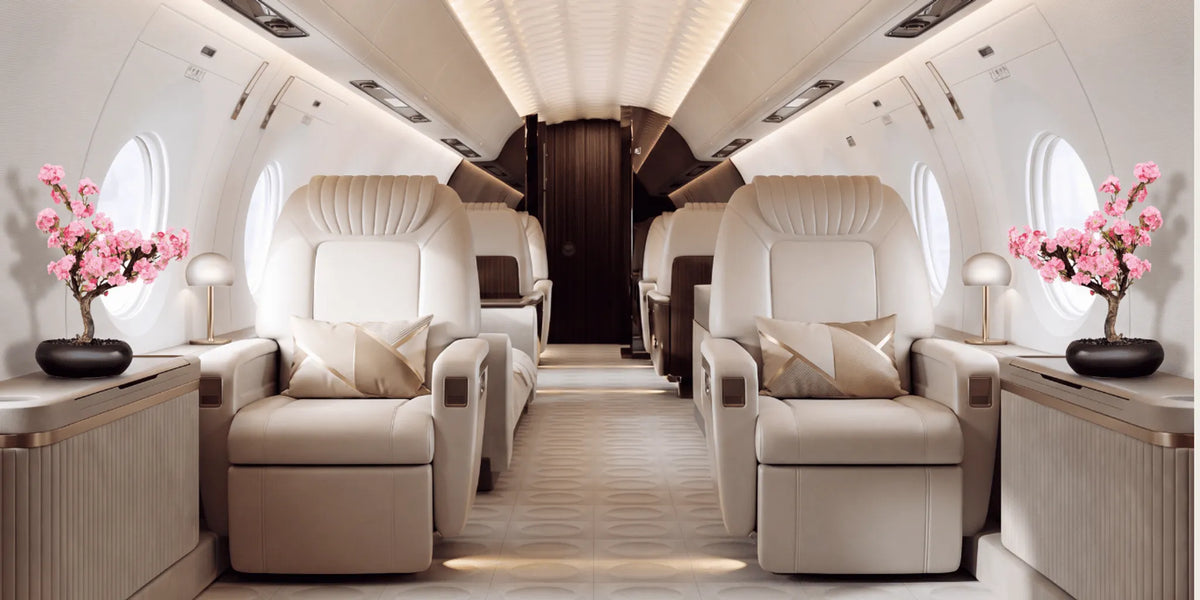
The most successful aviation interiors feel considered from every angle. A botanical piece can contribute to that feeling when it connects with the cabin’s architecture, palette, and purpose. Artificial plants for aviation interiors provide a lasting way to introduce natural shapes, while avoiding the watering and growth needs of living greenery. But not every arrangement belongs in every setting. A piece that suits a lounge may be too large for a cabin, and a beautiful product photo cannot confirm whether its materials or mounting details suit a specific project. We’ll cover how to choose forms for different aviation spaces, assess a composition in context, and work with the responsible team to review project requirements.
Key Takeaways
- Design for the space: Choose botanicals that suit the cabin’s scale, lighting, sightlines, materials, and available clearance.
- Get project approval first: Share product dimensions, weight, materials, mounting details, and documentation with the operator or aviation team before purchase.
- Plan for care and longevity: Confirm cleaning guidance and material suitability for the installation, then include the piece in routine inspections.
Why Choose Artificial Plants for Aviation Interiors?
Botanicals can bring warmth, texture, and a sense of welcome to aviation interiors. Their impact depends on more than appearance: each piece needs to suit the space, the passenger experience, and the operator’s requirements for materials, placement, and care.
Artificial plants offer a way to include natural forms without the ongoing horticultural needs of living greenery. They do not require watering or sunlight, and their appearance stays consistent without growth or seasonal changes. They still need appropriate cleaning and inspection, and every product must be reviewed for its intended use. For aviation projects, confirm requirements with the operator, completion center, or relevant technical team before making a selection. A commercial artificial plant guide offers a helpful overview of the reduced care needs.
Reduce Watering, Pruning, Irrigation, and Replacements
Living plants need regular watering, pruning, and monitoring, with replacement sometimes necessary when conditions affect their health. Coordinating that care can be challenging in aircraft cabins and busy aviation facilities, where access and operating schedules shape what is practical. Artificial botanicals remove routine horticultural tasks from the care plan, so teams can focus on cleaning and scheduled inspections.
They are not entirely maintenance-free. Dust and residue can collect on leaves, so buyers should ask about suitable cleaning methods and materials. The difference is that there is no irrigation to install or manage, no watering schedule to maintain, and no need to replace a plant because it has outgrown its setting. Artificial plants for commercial spaces can help buyers compare the practical care considerations.
Avoid Pests and Uneven Growth
Living plants can introduce soil and moisture into an interior, which may require additional monitoring. Their appearance can also change with light and growing conditions: foliage may become sparse, lean toward a light source, or shed leaves. In a carefully designed cabin or lounge, those changes can affect the balance of the composition.
Artificial plants do not need soil or sunlight, and their form remains consistent rather than growing or shedding. They still require cleaning and inspection, but do not bring the same horticultural variables as living greenery. BF Plants describes how artificial plants can soften interiors without watering, pruning, or sunlight. For aviation use, buyers should also confirm that each product’s materials and documentation meet the project’s requirements.
Keep a Consistent Look With Less Care
Cabins, lounges, and terminals welcome passengers throughout the year. Artificial botanicals can help maintain a considered appearance across seasons, without changes in growth, flowering, or plant health. That consistency is especially useful when greenery forms part of a larger interior scheme or contributes to a distinct passenger experience.
Long-term appearance still depends on selecting materials suited to the setting. Sunlight, temperature shifts, humidity, and cleaning products can affect foliage over time. Ask suppliers for care guidance, and, when possible, view samples under the lighting planned for the space. Some artificial plants are designed to resist fading or brittleness, as noted in this overview of durable artificial plants. Confirm product suitability against the operator’s specifications before purchase.
Match Botanicals to Cabins, Lounges, and Terminals
The right botanical form depends on where it will sit. A cabin calls for a compact composition that respects limited space and sightlines. A lounge may suit a sculptural arrangement that brings softness to a seating area, while a terminal can accommodate larger groupings where circulation, visibility, and clearance allow. Foliage, vessel, scale, and placement should feel considered together.
Think about the atmosphere the space needs, too. Grasses and restrained foliage can soften a contemporary interior; a tree or floral arrangement can create a focal point where height and clearance permit. Explore Jardin Du Monde’s trees and florals for different forms and moods. For a composition shaped around a specific interior, a personal consultation can help connect the botanical design with the architecture and atmosphere of the space.
Which Artificial Plants Suit Aviation Interiors?
The right artificial plants for an aircraft depend on more than appearance. Cabin dimensions, passenger movement, sightlines, lighting, and the operator’s requirements all influence which forms will suit the space. A small arrangement might bring warmth to a side table, while a taller botanical could create a focal point in a lounge with ample clearance. The aim is for each piece to feel connected to the cabin’s architecture, materials, and atmosphere.
Begin by identifying where the botanical will sit and how the space is used. Consider its proportions in relation to nearby furniture, the passenger’s view from a seat, and the route crew members take through the cabin. Then review practical details such as the vessel, mounting method, weight, retention, and access for inspection. These decisions should be made with the operator and relevant aviation team, not from appearance alone.
A considered composition can add softness and a sense of life without competing with the cabin’s design. Compact foliage, trees, green walls, and florals each create a different effect, so choose the form that fits the space and the project’s requirements.
Choose Compact Foliage, Succulents, and Grasses for Tight Spaces
In a cabin, every surface and passage has a purpose. Compact foliage, small succulents, and grasses can add natural texture to a desk, credenza, or lounge table while keeping the arrangement in proportion to its setting. Their smaller scale can also make them easier to consider where planter size and available space are limited. A guide to choosing planters for small succulents and medium plants offers a useful starting point, though each aviation project needs its own measurements and approvals.
Choose a form that reads clearly from both a seated position and nearby. Fine grasses can bring a softer outline, while a sculptural succulent creates a more defined silhouette. Keep the vessel scaled to the surface, and confirm that the arrangement does not interfere with controls, access panels, or passenger use.
Use Trees and Tall Forms Where Height and Clearance Allow
Tall botanicals can give an open lounge or private cabin a focal point and draw the eye upward. Olive trees, branching forms, and bird-of-paradise silhouettes may suit areas with generous height and enough room around the base. Artificial trees such as olive and bird of paradise are often used to bring structure to larger interiors, but an aircraft setting calls for a careful review of dimensions, placement, and retention.
Measure the full proposed height and width, including the vessel and branches that extend beyond it. Consider sightlines, nearby seating, doors, and crew movement. A tall form should feel composed within the cabin, not crowded against the ceiling or placed where it complicates access. Explore Jardin Du Monde’s tree collection for sculptural forms to consider alongside the interior design and project requirements.
Add Green Walls Only When Weight, Mounting, and Access Permit
A green wall can add depth and texture where floor space is limited, but it requires more planning than a tabletop arrangement. Before considering one, confirm that the wall or supporting panel can accommodate the proposed installation and that the mounting approach meets project requirements. The design should also preserve access to equipment, panels, and service areas.
Artificial green walls can bring color and texture to spaces where living plants may be impractical. However, weight, structural support, and maintenance access all deserve attention. In an aviation project, the operator and relevant technical teams should review the proposed materials and installation details. If a wall feature makes review or access difficult, a smaller removable composition may be a more suitable option.
Choose Florals and Sculptural Botanicals That Complement the Cabin
Florals can soften a tailored cabin, while sculptural botanical forms can echo its lines, finishes, or artwork. The right choice depends on the atmosphere you want to create. A restrained arrangement in a tonal palette can feel calm and collected; a more expressive composition can bring character to a private lounge or meeting area. Explore Jardin Du Monde’s permanent florals as you consider forms, colors, and vessels for the cabin.
Look beyond the botanical itself and consider how its scale, silhouette, and vessel relate to the surrounding design. Guidance on luxury artificial plants also recommends matching florals and sculptural botanicals to the interior’s theme and palette. For a tailored composition, a personal consultation can help connect the botanical design with the architecture and intended mood.
Create Integrated Compositions, Not Added Filler
A botanical piece feels intentional when it relates to the space around it. Consider the architecture, nearby furniture, lighting, materials, and vessel as parts of one composition. A single sculptural arrangement may have more presence than several smaller pieces scattered across surfaces. The goal is to bring warmth and a sense of completion while keeping the cabin’s design clear.
This matters in aviation interiors, where space is carefully planned and every object contributes to the overall experience. Design guidance on biophilic interiors recommends integrating artificial plants into a cohesive composition, rather than using them as filler. Start with the focal point or atmosphere the cabin needs, then select a botanical form that supports it. This helps the greenery feel connected to the interior, with its scale, vessel, and placement considered from the beginning.
What Should Buyers Check Before Choosing Artificial Plants?
In an aircraft, artificial plants need to suit the cabin as well as look at home in it. Scale, lighting, movement, cleaning routines, and installation all shape whether a botanical piece feels considered and works for its location. A design that is right for a residence may need different materials, fixing details, or documentation for an aircraft project.
Start by identifying the intended location and the people responsible for approving the installation. Ask the aircraft operator, completion center, or relevant technical team what information they need before reviewing options. Requirements can vary by aircraft and project, so a supplier’s general product description cannot replace project-specific approval.
Then request the details that let the team assess the piece: finished dimensions and weight, materials, vessel or mounting specifications, care instructions, and any available test reports. Consider how the composition will look from nearby seats and at the distances passengers and crew will see it. Jardin Du Monde’s personal consultations can help shape botanical choices around a space’s architecture and atmosphere; the aircraft team should assess the practical and technical requirements for the proposed installation.
Check Realism in Cabin Lighting and at Close Range
Artificial foliage can look convincing in a product photograph but reveal repeated leaves, a glossy finish, or stiff stems when viewed nearby. Request detailed images or a sample, then examine the leaf shapes, color variation, veins, branching, and overall composition. The aim is foliage that feels thoughtfully arranged, not assembled from identical parts.
Lighting can change how color and texture appear, so review the piece in conditions close to those in its intended location. If possible, see it under the cabin lighting and from the angles passengers and crew will encounter. Evergreen Direct’s guide to artificial plants in interior design emphasizes choosing greenery that fits its setting. For an aircraft, ask the project team to assess a sample in context before approving the final design.
Confirm Weight, Size, Clearances, Mounting, and Retention
Ask for the finished dimensions and weight, including the vessel, base, and mounting hardware. Confirm how the piece will be retained and have the proposed fixing method reviewed by the team responsible for the installation. A freestanding arrangement, secured planter, and wall-mounted composition each have different space and installation considerations.
Check clearances around aisles, seats, doors, service areas, and access panels. Consider sightlines, the space needed for routine tasks, and movement or vibration in the aircraft. These details should be assessed using the measurements and approval process for the specific project. RCO Engineering’s overview of airplane interior materials describes how aircraft design balances form, function, safety, and performance. Use the aircraft operator or completion center’s guidance when confirming whether a proposed size, weight, and mounting approach is appropriate.
Verify Fire, Smoke, Toxicity, and Aviation Requirements
Do not assume that a product described as flame retardant or suitable for commercial interiors meets aircraft requirements. Ask the operator, completion center, or aviation compliance team which standards and documentation apply to the specific aircraft and installation. Approval depends on the project, so general marketing claims should be checked against the team’s criteria.
Request documentation for all relevant components, including foliage, vessels, coatings, adhesives, and mounting hardware. If a supplier provides test reports or compliance statements, confirm that they apply to the exact product and configuration under consideration. BF Plants’ guide for buyers of fire-retardant artificial plants outlines useful questions about materials and project suitability. Treat this information as a starting point for discussion, then rely on the responsible aviation team to assess the requirements for the installation.
Check Durability Against Temperature, Humidity, UV, and Cleaning Products
Ask how the materials are expected to perform in the conditions where the piece will be installed. Consider temperature changes, humidity, sunlight through windows, and conditions during storage or transport. For a display exposed to strong daylight, ask whether the foliage has been tested for UV resistance and what the supplier can share about color retention over time.
Cleaning products can also affect finishes and materials. Request care instructions, then confirm that the recommended method fits the operator’s cleaning protocols. Do not assume that a surface can withstand every disinfectant or cleaning agent. Some artificial plants are designed to resist UV exposure and varied climates, as Evergreen Direct explains in its interior design guide. Ask the supplier about the specific product and have the relevant team review its suitability before making a selection.
Plan for Cleaning, Inspections, and Maintenance Access
Choose an installation that the responsible team can inspect and care for without unnecessary disruption. Ask how dust should be removed, whether the foliage can be cleaned in place, and whether it needs occasional reshaping. For pieces with several components, confirm how they are secured and whether staff can reach them for routine checks.
Consider the location when planning care. A botanical piece near a service area may need a different cleaning schedule from one in a protected display area. Confirm that it will not obstruct access panels, equipment, or inspection points. Agree on who will clean and inspect the installation, which products they can use, and how they should report damage or loosened components. A clear care plan helps the piece remain presentable while fitting the aircraft’s established procedures.
Review Materials, Test Reports, and Product Documents
Before ordering, request a product specification that identifies the foliage, stems, coatings, vessel, and hardware. Ask for any available test reports, material information, installation instructions, care guidance, and details about production consistency. If the project team has a documentation checklist, share it with the supplier early so missing information can be addressed before design approval.
Material names alone do not establish how a particular product will look or perform. Evergreen Walls’ guide to artificial plants discusses how material choices can affect texture and appearance. For an aircraft installation, have the relevant technical team review the specific components and records. Keep approved documents with the project files, and check that the delivered pieces match the specifications the team reviewed.
What Trends Shape Artificial Plants for Aviation Interiors?
Aviation interiors are designed around more than function. In cabins, lounges, and terminals, materials, lighting, and layout all shape how a space feels to passengers. Botanical elements can introduce warmth and a sense of welcome, but they work best when they respond to the architecture rather than appear as decoration added at the end. Scale, sightlines, clearances, and the overall visual direction should guide the choice.
That approach is changing how buyers assess artificial plants. Realistic foliage matters, but so do a composition’s footprint, weight, durability, and relationship to the interior’s identity. A compact arrangement may suit a cabin, while a larger sculptural piece could bring presence to a lounge. The design of aviation interiors increasingly considers how a space shapes the passenger experience, as Aircraft Interiors International explains.
For buyers, the next step is to evaluate the complete composition in its intended setting. Consider how it looks from different seats and approaches, how it relates to nearby finishes, and whether its placement supports the way people use the space. A personal consultation with Jardin Du Monde can begin with the architecture and design intent, helping determine whether a ready-to-place piece or a bespoke composition is the better fit.
Bring Natural-Looking Foliage Into Cabins
Artificial foliage continues to develop in realism, with more attention to leaf shape, color variation, branching, and natural growth patterns. In aviation interiors, these details matter at close range as well as from across a cabin or lounge. Repeated leaf shapes, glossy surfaces, or stiff stems can stand out against carefully selected upholstery, wood, metal, and stone.
The goal is not simply to find a plant that looks convincing in a product photograph. Review samples under lighting similar to the installation environment, and look at them from several angles. Cabin lighting can change how colors and textures appear, so check that the foliage feels cohesive with the palette throughout the day or across different lighting settings. Artificial plant design trends reflect growing interest in lifelike greenery that works across varied interiors. For an aviation project, the right choice should also suit the space’s scale and viewing distance.
Choose Lightweight, Space-Saving Sculptural Compositions
Limited floor area and weight considerations make compact botanical compositions a natural fit for many aviation interiors. A carefully shaped arrangement can provide visual interest without extending into a walkway or taking up valuable seating space. In smaller cabins, a tabletop composition or restrained vertical form may be more practical than a wide planter. Larger trees and sculptural pieces may suit lounges or terminals, where the layout allows more room.
Assess the complete composition, not just the foliage. The vessel, internal structure, and attachment method all contribute to its final dimensions and weight. Confirm these details with the project team, and have qualified aviation specialists review installation and retention requirements. Lightweight approaches are also informing broader cabin design, where materials and layouts can support spatial clarity and flexibility, as Aircraft Interiors International’s overview of aviation interiors discusses.
Customize Botanicals to Match Cabin Design and Brand
Botanical design can reinforce an aviation interior’s identity when its shape, scale, foliage, and vessel feel connected to the surrounding architecture. A quiet, minimal cabin may call for a refined composition with a calm silhouette. A private lounge or branded terminal may have room for a more expressive form. In either setting, the piece should feel selected for that environment rather than pulled from a generic collection.
Customization involves the whole composition, not simply choosing a preferred plant or color. Share material samples, brand guidelines, reference images, and installation dimensions with the botanical designer early in the process. These details help guide decisions about species, arrangement, vessel finish, and placement. Bespoke artificial plant design can be tailored to different spaces, while aviation projects also need to account for their specific operational and technical criteria. The result should support the cabin’s character without competing with its design.
Check Sustainability Claims and Integrated Technology
Sustainability claims deserve a closer look. Ask suppliers for product-specific details about foliage, vessels, structural components, packaging, and expected service life. If a product is described as recycled, plant-based, or modular, request documentation that clarifies which materials or components the claim covers. Aviation interior material guidance discusses options such as recycled materials and modular design, but each product still needs to be assessed for the project’s requirements.
Botanical pieces may also sit near lighting, displays, sensors, or other installed systems. Include these elements in the design review, and confirm that plants and vessels will not obstruct equipment, access panels, or maintenance routes. If a composition includes integrated lighting or another technology, clarify how it is powered, serviced, and documented. Before approving a design, share its specifications and supporting documents with the operator, completion center, or aviation team responsible for reviewing the installation.
Where Can Buyers Find Artificial Plants for Aviation Interiors?
Buyers can source artificial plants for aviation interiors from online retailers, specialist botanical studios, and suppliers that support commercial design projects. The best fit depends on the space, the level of customization required, and the project’s approval process. A ready-to-place arrangement may suit a lounge or terminal with clear dimensions and placement plans. A private aircraft or branded aviation interior may call for a composition designed around its architecture, materials, sightlines, and available space.
Treat the botanical selection and the project requirements as connected decisions. Consider how the arrangement will look in the actual lighting, how it will be secured, and whether the supplier can provide the product details your aviation team needs to review. Ask for dimensions, weight, material information, cleaning guidance, and relevant test documentation before making a purchase. Requirements vary by project, so confirm them with the operator, completion center, or other responsible team.
Explore Jardin Du Monde’s Permanent Botanical Art
Jardin Du Monde creates permanent botanical art for interiors, with lifelike florals, trees, grasses, and succulents. Its approach considers how a botanical composition relates to the architecture and atmosphere of a space, rather than treating greenery as a finishing accessory. That perspective can help buyers think beyond the plant itself and consider scale, shape, vessel, and placement as part of the overall design.
Browse the studio’s permanent florals and botanical trees to see available forms. If you are planning a project with specific dimensions or design goals, Jardin Du Monde offers a personal consultation. Share the setting and any known project requirements so the concept can be considered alongside the relevant review process.
Compare Ready-to-Place Pieces With Bespoke Design
A ready-to-place piece can work well when the location, dimensions, and placement plan are already clear. It gives the design team a specific form to assess against the interior. Bespoke design may be a better fit when a botanical composition needs to relate closely to a cabin’s architecture, brand identity, sightlines, or a particular vessel or mounting detail.
Ask suppliers what customization covers. It might include plant selection, composition, dimensions, vessel choice, or installation guidance, and the scope can differ between providers. For example, Evergreen Direct describes bespoke artificial-plant services for interior design projects. For aviation use, share the proposed design and product details with the appropriate project team before ordering or installation.
Assess Craftsmanship, Customization, Vessels, and Documentation
Review the botanical details in person when possible, or request clear close-up images in natural-looking light. Check leaf shape, color variation, branching, stems, and how the plant sits in its vessel. Consider the piece from several viewing distances, not only in a styled photograph. Confirm whether the vessel is included, whether the listed dimensions describe the complete arrangement, and which design details can be customized.
Request project-specific information such as product materials, weight, dimensions, cleaning guidance, and available test reports. Suppliers vary in their design and manufacturing services. For instance, Sunwing Industrie describes original design and manufacturing support. Treat general service descriptions as a starting point, then ask for details and documentation for the exact product under consideration.
Review Feedback on Realism and Long-Term Appearance
Customer reviews can offer useful clues about a product’s appearance after delivery and its performance over time. Look for feedback on realism, color consistency, packaging, assembly, and whether the item matches its photographs. If you can, request a sample or recent project images, then assess the piece under lighting similar to the intended setting. Cabin and terminal lighting can affect how foliage colors and surface finishes appear.
Ask how the materials respond to expected light exposure and routine cleaning. Some products are described as UV-resistant, but performance depends on the specific materials and conditions. Evergreen Direct’s artificial-plant guide discusses UV resistance and long-term appearance. Use claims like these as a prompt to request product-specific information and confirm suitability with the project team.
Confirm Suitability With the Operator, Completion Center, or Aviation Team
Before purchasing or installing artificial plants, share the proposed product details with the operator, completion center, or aviation team responsible for the space. Requirements may differ by aircraft, location, installation method, and project scope. Ask which material details, test reports, mounting information, and maintenance instructions they need, and follow their approval process before moving forward.
A supplier’s description of a product as fire retardant does not, by itself, confirm that it suits a particular aviation project. Request documentation for the exact product and have the responsible team assess it against the project’s requirements. A buyer guide to fire-retardant artificial plants outlines considerations such as material type and project suitability. Confirm applicable requirements directly with your aviation contacts.
Frequently Asked Questions
Are artificial plants suitable for aircraft interiors?
They can be considered for aircraft cabins, lounges, and terminals, but suitability depends on the specific product, location, and installation. Share the materials, dimensions, weight, mounting details, and available documentation with the operator or aviation team for review.
What information should I request from a supplier?
Ask for the complete dimensions and weight, details about the foliage and vessel materials, mounting specifications, cleaning instructions, and any relevant test reports. Confirm that the documents refer to the exact product and configuration you are considering.
How do you choose the right botanical scale for a cabin?
Start with the intended location, nearby seating, sightlines, clearances, and crew access. A compact arrangement may suit a table or credenza, while a taller piece needs adequate height and space around its base. Review samples in the cabin’s lighting when possible.
Do artificial plants still need care?
Yes. They do not need watering or horticultural attention, but dust can collect on foliage. Follow the supplier’s cleaning guidance and include the piece in routine inspections, especially if it is secured or mounted.
When should I choose a bespoke botanical composition?
A ready-to-place piece may suit a location with clear dimensions and design plans. Consider a bespoke composition when the scale, vessel, palette, or shape needs to relate closely to the cabin’s architecture or brand. Jardin Du Monde offers personal consultations to discuss a composition for the space.


