

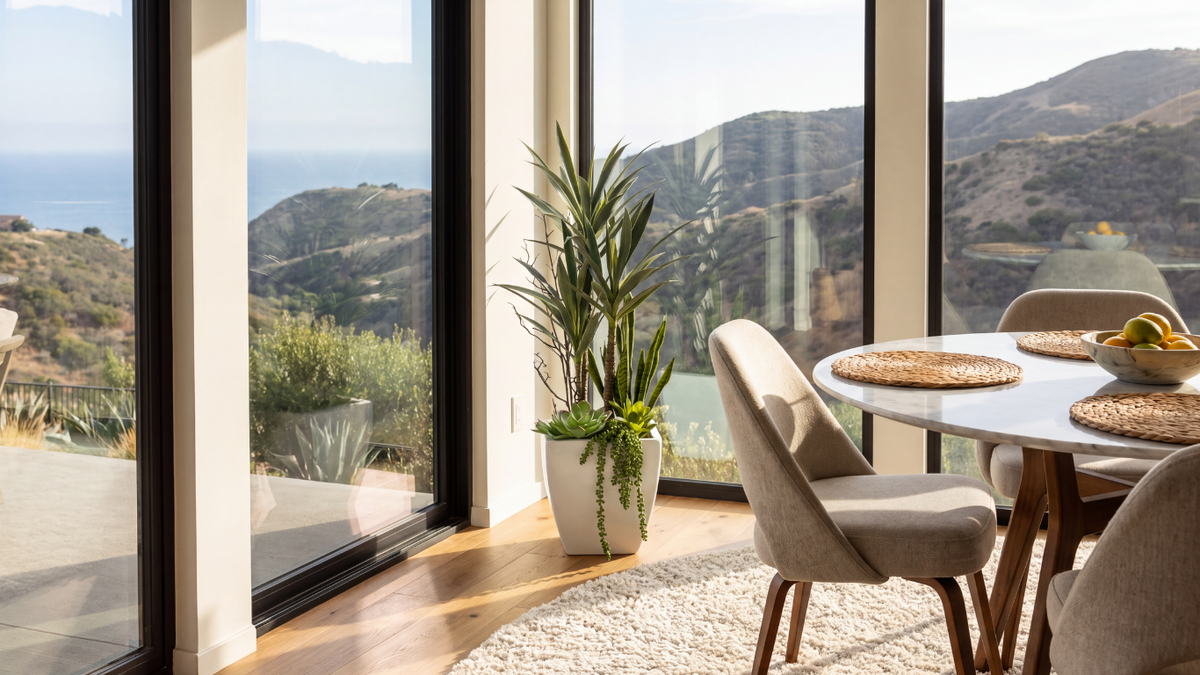
A well-chosen plant can soften a sharp corner, add color to a quiet room, or give an entryway a more welcoming feel. But artificial greenery only works when it looks at home in the space. Leaf shape, color variation, branching, and the planter all affect whether a piece feels natural or overly uniform. The best realistic artificial plants for home decor balance lifelike botanical detail with a shape that suits the room. This guide covers what to look for, how to choose the right size and style, and where different plants can make the greatest impact, from sculptural trees to delicate faux florals.
Key Takeaways
- Choose by scale and setting: Measure the space and match each plant’s shape, size, and color to the room.
- Check the details: Look for varied foliage, natural branching, suitable finishes, and a planter that complements your décor.
- Style with intention: Use thoughtful placement, varied heights, and gentle upkeep to keep displays polished across homes, hotels, and offices.
Choose the Best Realistic Artificial Plants for Home Decor
The right artificial plant should suit the room’s scale, palette, and purpose. A tall tree can bring presence to an open corner, while a small succulent adds texture to a desk without taking up much space. Before choosing, consider what the room needs: a focal point, softer lines, a touch of color, or a finishing detail on a shelf.
For a convincing look, pay attention to the plant’s shape, color, and finish. Leaves with subtle variations and naturally spaced stems often look more lifelike than foliage with a uniform shape and color. The planter matters, too: its material and proportions can help the plant feel connected to the rest of the room.
You don’t need greenery on every surface. A few well-placed pieces can make a stronger impression, especially when you vary their height and leave room around them. Start with the options below, then choose plants that work with your furnishings and the way you use each space.
Best statement tree: anchor corners and spacious rooms
A statement tree can give an unfinished corner, spacious entryway, or area beside a fireplace a clear focal point. Olive trees and fiddle-leaf figs are popular choices, thanks to their height and distinctive branching. Before ordering, measure the floor area and check the tree’s height against nearby ceilings, windows, and furniture. A well-proportioned tree should feel at home in the room, not crowded into it.
Look for an open silhouette and variation in the canopy. Branches with natural spacing and foliage that isn’t perfectly uniform can make a tree feel more convincing. Designers often use larger faux trees to bring greenery into corners where a live plant may be difficult to maintain. Browse Jardin Du Monde’s artificial trees for sculptural designs suited to considered interiors.
Best potted foliage: style shelves, consoles, and entryways
Potted foliage adds an easy finishing touch to a console, bookshelf, or entry table. On a shelf, a trailing plant can soften straight lines; on a console, a compact upright shape can add interest without taking over the display. Check the plant’s dimensions, and leave enough room for practical items such as books, a lamp, or a catchall tray.
Treat the planter as part of the design. A simple vessel can keep the look understated, while a textured container can bring another layer of character. Artificial foliage holds its shape without needing the right light or regular care, so it can work well in an entryway or other low-light spot. For a collected feel, combine different heights and shapes rather than arranging identical pots in a row.
Best faux florals: create lifelike vase and seasonal arrangements
Faux florals add color and form to a dining table, bedroom, or reception area. Look for realistic petal edges, detailed centers, and gentle color variation. To keep an arrangement cohesive, choose a limited palette and combine flowers with greenery. Adjust the stems to create a relaxed outline, rather than a perfectly even shape.
The vase helps set the tone. Clear glass suits delicate stems, while ceramic can give a fuller arrangement a grounded, sculptural look. You can also change a display with the seasons by swapping a few stems instead of replacing the whole arrangement. Explore Jardin Du Monde’s floral collection, and use this guide to combine greenery and flowers for a palette that feels pulled together.
Best grasses and succulents: add texture to desks, side tables, and small spaces
Grasses and succulents are well suited to smaller surfaces where a large plant would feel out of scale. Set a compact succulent on a desk, bedside table, or bathroom shelf, or place ornamental grass beside books to add height and movement. Their distinct forms bring texture without requiring a busy display.
Check the plant’s proportions before choosing a spot. A low, compact succulent works on a narrow surface, while taller grasses need enough clearance to avoid looking cramped. Choose a finish that suits the plant: succulent leaves often look matte and plump, while grass blades appear more natural when their angles and tones vary. Pair one plant with a few useful objects for a simple arrangement. This guide to decorating with artificial plants offers more ideas for styling compact greenery.
Best layered accents: finish spaces with picks, bushes, wreaths, and garlands
Picks, bushes, wreaths, and garlands bring botanical detail to spots where a potted plant may not fit. Tuck a small pick into a vase or shelf arrangement, drape a garland over a mantel, or hang a wreath on a door. These accents work particularly well alongside a larger tree or floral display, helping carry the same colors and textures through the room.
For a natural effect, vary the angles and let some stems sit higher or lower than others. Repeating the same shape in a straight line can make an arrangement feel too uniform. Instead, draw on one or two colors or textures already present in the room, such as a planter finish or upholstery tone. Artificial foliage and florals come in forms that suit many design styles, so choose accents that feel consistent with the room rather than competing for attention.
What Makes Artificial Plants Look Real?
Realistic artificial plants capture the small variations that make living greenery feel natural. Look for leaves that differ slightly in shape and color, stems that branch with some irregularity, and textures that suit the plant. Details matter, but so does the overall form: a convincing plant should look balanced from the angles where you’ll see it. As you compare options, take a moment to inspect both close-up photos and the full silhouette.
Choose varied leaf shapes, natural color shifts, and lifelike textures
Living plants rarely have leaves that are perfectly alike. Some may be smaller, more curled, or a slightly different shade of green. A realistic artificial version reflects that variation instead of repeating the same leaf shape and color throughout. Look for subtle shifts in tone, visible veins, and textures that feel right for the species.
Be cautious of colors that seem unusually bright or uniform. Natural-looking greens tend to have depth, while some plants also show lighter new growth or darker leaves near the center. These details bring dimension to a display without making it feel busy. When browsing Jardin Du Monde’s artificial trees, compare the foliage, shape, and color variation with the look you want for your room.
Check stems, branches, proportions, and seams
Take a close look at how the leaves connect to the stems and how the branches spread. A perfectly symmetrical shape or evenly spaced foliage can make a plant feel manufactured. Natural growth is usually less predictable, so slight differences in branch angles and leaf placement help create a more convincing effect.
Proportions matter, too. Consider whether the stems look sturdy enough to support the leaves and whether the plant’s overall shape feels balanced. Check for visible seams, rough edges, or connectors that stand out when viewed up close. These finishing details can be especially noticeable in a hotel lobby or a carefully styled living room. Waysaving’s advice on faux-plant displays highlights the value of lifelike details and quality materials.
Look for organic details, like root sheaths and varied growth
Small botanical features can help an artificial plant feel more true to life. Depending on the species, these may include root sheaths near the base, branching stems, new growth, or gentle bends in the leaves. Such details give the eye something to notice and make the plant feel less uniform.
Consider how the plant grows in nature. Trailing varieties should drape naturally, while a tree should have branches that spread at varied angles. Avoid designs where every leaf points in the same direction or each branch mirrors the next. A fuller plant isn’t always a more realistic one. Jamali Garden’s guide to live and artificial plants recommends looking for organic features, including delicate root sheaths, when comparing faux options.
Match the finish to the live plant, from matte leaves to waxy succulents
The right finish depends on the plant. Many foliage varieties have matte or softly textured leaves, while succulents and some tropical plants naturally have a waxier sheen. A glossy surface can look appropriate on those species, but it may seem out of place on a plant with velvety or matte leaves.
Think about the room’s lighting as well. Bright sunlight or overhead lighting can create strong reflections on shiny leaves, making them look less natural. Choose a surface finish that fits the real plant and the way light falls around it. If you’re considering a succulent, Jamali Garden’s plant guide notes that a waxy look can suit plants such as aloe.
Compare product photos with real-plant references
Before you buy, compare the product photos with images of the live plant. Pay attention to leaf shape, color, stem placement, and the overall growth pattern. This gives you a clearer idea of whether the artificial version captures the features that make that species recognizable.
Review several product images if they’re available. A close-up can reveal texture and construction, while a full view helps you judge the plant’s proportions and density. Read the dimensions and description, too, since a photo can make a piece seem larger or fuller than it is. Jamali Garden suggests comparing a faux plant with images of its live counterpart, a helpful step when choosing a specific variety.
Choose a planter that suits the plant and room
A planter is part of the finished display, not just a container. Its shape, color, material, and scale affect how the plant looks alongside nearby furniture and finishes. A sculptural tree may suit a substantial vessel, while a delicate floral arrangement can feel balanced in a more understated vase. Aim for a planter that complements both the plant and the room.
Check whether the plant includes a pot, and whether that pot is designed to be displayed or placed inside another container. If you’re using a decorative outer planter, confirm its dimensions before ordering. Also consider how the vessel’s texture and finish relate to the rest of your decor. CORT’s guide to decorating with faux plants recommends treating the planter as part of the design, rather than an afterthought.
Which Artificial Plants Suit Your Decor Style?
Artificial plants work best when their shape, scale, and finish feel connected to the room around them. Start with the style’s defining features: a restrained palette and open space in a minimalist interior, for example, or layered color and texture in a maximalist room. Then choose greenery that reinforces those qualities rather than competing with them.
It also helps to consider the plant’s role. A tall tree can bring height and structure to a spacious room, while a small potted plant or vase arrangement can add detail to a shelf or console. Look at the room’s materials, too. Wood, stone, woven fibers, metal, and ceramics can all guide your choice of foliage and planter.
Realistic details matter, but so does the overall composition. A plant with natural variation in leaf shape and color will feel more at ease alongside furniture and textiles than one with a uniform, glossy finish. For a cohesive result, repeat a color or material elsewhere in the room, and leave enough space around each arrangement for its silhouette to show. These principles can help you choose artificial plants that suit a range of interiors, from quiet and pared-back to richly layered.
Biophilic interiors: mix realistic greenery with sculptural forms
Biophilic interiors bring natural shapes and greenery into a space. Pair lifelike foliage with a sculptural form, such as a tree with branching stems or an arrangement with distinctive leaves. Choose greens that work with the room’s wood, stone, or woven textures, so the plants feel part of the design rather than separate accents.
Vary the scale to create a natural rhythm. A floor-standing tree can soften an empty corner, while a smaller arrangement brings detail to a console or shelf. Explore Jardin Du Monde’s collection of artificial trees for a statement piece, then add a few quieter accents. This approach echoes the mix of realistic greenery and varied forms described in artificial plant styling ideas.
Minimalist and Scandinavian rooms: choose simple shapes and restrained colors
Minimalist and Scandinavian rooms favor clean lines, open space, and calm colors. Choose artificial plants with simple silhouettes, such as a compact succulent, a slender branch arrangement, or a modest potted plant. Muted greens sit comfortably with white walls, pale wood, and warm neutrals without drawing attention away from the room’s uncluttered feel.
Be selective about both quantity and placement. One well-chosen plant on a side table can make a stronger impression than several small pots scattered around the room. Choose a straightforward container in ceramic, stone, or a matte finish, and leave space around the leaves. Look for natural variation in color and shape, rather than glossy foliage or overly dense growth, to keep the arrangement understated yet welcoming.
Japandi spaces: pair organic shapes with natural-looking containers
Japandi interiors combine minimalist forms with warmth and natural materials. Artificial plants suit this style when their shapes feel organic and their containers have a tactile, understated finish. Consider an olive-inspired tree, a compact leafy plant, or a branch arrangement in a pot made of ceramic or stone, or in a muted earthy tone.
Keep the display simple: choose one clear focal point and give it room to breathe. Warm wood, linen, and handmade finishes can help the arrangement feel at home. A Japandi decor guide also points to olive topiary as an option for neutral rooms. Use the idea as a starting point, then consider the plant’s height and silhouette in relation to nearby furniture.
Bohemian and maximalist rooms: layer foliage, textures, and colors
Bohemian and maximalist interiors welcome collected objects, expressive color, and a mix of materials. Artificial plants can add another layer of texture: combine trailing greenery with leafy floor plants or colorful faux flowers, then vary their heights for a relaxed display. Rattan, patterned textiles, warm wood, and distinctive planters can connect the plants to the rest of the room.
For a layered look that feels intentional, repeat a few colors or materials. Echo a planter’s terracotta tone in a cushion, or carry leafy greens from a shelf to a nearby table. Jardin Du Monde’s faux florals offer a way to add color and sculptural detail. This collected approach also fits with the layered, globally inspired ideas in this guide to decorating with artificial plants.
Modern farmhouse interiors: choose classic greenery and relaxed arrangements
Modern farmhouse rooms often pair rustic materials with comfortable, unfussy styling. Classic greenery, such as eucalyptus- or olive-inspired branches, works well with wood furniture, linen, and neutral walls. Choose arrangements that feel loose rather than tightly shaped, and let the stems sit at varied angles for a more natural appearance.
A vase of faux branches can soften a kitchen island or entry console, while a small potted plant can add a quiet touch to open shelving. Avoid making every arrangement perfectly symmetrical or full. A little variation suits the room’s relaxed textures. For more practical ideas, explore designers’ tips for styling faux plants and flowers. Use the finishes already in the room to guide your choice of vase or planter.
Glam, industrial, and traditional rooms: match shapes and planters to the finishes
In glam, industrial, and traditional interiors, plant shapes and planters can help connect greenery to the room’s finishes. For a glam space, consider elegant faux florals in a polished or sculptural container. Industrial rooms can pair bold foliage with dark metal, concrete, or geometric pots. In traditional spaces, balanced arrangements and classic branches complement wood furniture and more detailed finishes.
Aim for contrast that feels considered. Soft foliage can bring warmth to industrial materials, while a structured arrangement can sit comfortably among ornate details. Check the planter’s scale, color, and finish as well as the plant’s dimensions. A container that looks too small may make a tall plant feel out of proportion. If you would like help choosing pieces for your space, Jardin Du Monde offers a personal consultation.
How Do You Choose the Right Plant and Size?
The right artificial plant should feel considered in its setting, not simply fill an empty spot. Start with the room’s palette and proportions, then check the plant’s dimensions, materials, and intended placement. A little measuring and comparison before you order can help you choose a piece that fits the room and looks natural from the angles people see most.
Match shape, color, and texture to your palette
Start with the colors and materials already in the room. Deep green foliage can ground warm wood and neutral upholstery, while softer tones may feel at home among pale fabrics and light finishes. Shape matters, too: broad leaves make a stronger visual statement, while fine grasses and delicate stems add movement without dominating the space.
Consider how the plant’s texture will work with nearby surfaces. Smooth foliage can contrast with linen, stone, or woven materials; sculptural forms can complement clean-lined furniture. Look for subtle shifts in color and leaf shape rather than a uniform finish. Jardin Du Monde’s floral designs pair lifelike botanical details with sculptural forms, offering options for a range of interior palettes.
Measure the display area; consider furniture height and viewing distance
Measure the space before choosing a plant. Note the available floor width, ceiling height, and distance from nearby shelves, windows, and doorways. For a floor plant, include the planter in your height estimate. A tall statement tree can bring presence to a spacious entry or open corner, while a smaller arrangement may suit a console, desk, or side table.
Also consider how people will view the plant. Close-up details matter beside a reception desk or sofa, while bolder shapes and taller silhouettes are easier to appreciate across a large room. Compare the plant’s full dimensions with nearby furniture, and leave enough space for comfortable movement. In a tight area, a compact or narrow shape can make the display feel intentional without interrupting the room’s flow.
Check plant dimensions, planter details, and included pots
Product photos can make it hard to judge scale, so review the listed dimensions before ordering. Check both height and width, and confirm whether the stated height includes the planter. Read the product details to find out whether a pot is included and whether it is designed to be displayed or placed inside another container.
Treat the planter as part of the composition. Its shape, color, and material can connect the plant to the room or compete with the surrounding décor. If you plan to use a pot you already own, check its opening size and stability. Compare the plant’s proportions with the container and nearby furniture, rather than relying on the product image alone. A well-scaled pairing helps the arrangement look finished and suited to its setting.
Consider placement, lighting, pets, children, and foot traffic
Choose a location that suits the way the room is used. A plant beside a sofa or in a quiet corner can become a relaxed focal point; a narrow hallway needs a slimmer silhouette that leaves the route clear. In homes with pets or children, consider whether the plant could tip, be pulled, or become an obstacle. A stable base and secure placement can help keep it in position.
Lighting also shapes how a plant appears. Natural light can bring out subtle color variation, while a nearby lamp or spotlight can highlight its form after dark. Avoid placing delicate stems where they are likely to be bumped. For hotels, offices, and other shared spaces, prioritize stable placement and clear walkways, then choose a plant that looks composed from multiple viewing angles.
Confirm whether the plant suits indoor or outdoor use
Check the product’s intended use before buying. Indoor plants may not be designed to withstand direct sun, rain, wind, or changing temperatures. Outdoor designs may use materials made for exposure, but weather resistance varies. Review the product description for guidance on sunlight, moisture, and care, and ask the retailer if anything is unclear.
Consider the conditions at the exact spot where the plant will sit. A covered patio or sheltered entrance may still receive strong sun or wind, which can affect materials or shift a lightweight planter. Indoors, take note of nearby windows, heaters, and air vents. Matching the plant to its setting helps you understand the care it needs and choose a piece suited to the space.
Avoid glossy finishes, fake raindrops, and identical leaves
Natural-looking variation can make an artificial plant feel more convincing. Look for leaves that differ slightly in size, angle, and color, along with branches that grow in varied directions. A highly glossy finish, decorative fake raindrops, or a repeated leaf pattern can draw attention to the material, especially when the plant is close to eye level. Jamali Garden’s guide to live and artificial plants recommends seeking organic details, such as root sheaths near the base.
When the plant arrives, gently separate the stems and adjust their angles. A little variation can make the arrangement feel more relaxed than a perfectly symmetrical display. Step back and view it from the room’s main seating area or entry point, then make small adjustments until the shape feels balanced.
Where Can You Shop for Realistic Artificial Plants?
Start with a retailer that treats artificial plants as considered design pieces, not just finishing touches. Look for a range of plant types, clear product photography, and practical details that help you judge whether a piece will suit your room. A statement tree needs the right height and shape to hold its own beside furniture; a small succulent should feel proportionate on a desk or shelf.
It also helps to shop with a plan. Decide where the plant will go, what role it should play, and whether you want one focal point or several pieces that work together. Then compare the product dimensions with your available space and check what comes with the plant, including the pot or planter. If you’re shopping for a hotel or office, consider how the piece will look from a distance and how it fits the wider interior scheme.
Jardin Du Monde offers lifelike florals, plants, trees, grasses, and succulents, with a globally inspired approach that pairs botanical detail with sculptural form. Whether you’re furnishing a home or working on a hospitality or commercial project, use product information and professional guidance to find pieces that suit the space.
Explore Jardin Du Monde’s florals, trees, grasses, and succulents
Choose a plant type based on the effect you want. Floral stems can bring color and softness to a dining table or console, while a tall tree can give an empty corner more presence. Grasses and succulents offer distinct shapes and textures that work well in smaller displays or as part of a layered arrangement.
Jardin Du Monde’s floral collection and tree collection make it easy to explore two different scales of botanical décor. As you browse, consider how each piece will relate to the furniture, finishes, and other objects around it. Specialty retailers often carry a wider mix of plant forms, so you can compare options for different rooms in one place. This guide to artificial plants offers ideas for choosing greenery by type and setting.
Choose pieces with hyper-realistic details and sculptural design
A convincing artificial plant has more going for it than a familiar outline. Look for natural variation in leaf shapes and color, believable branching, and textures that suit the plant. Details such as visible root sheaths or varied growth can make foliage feel less uniform. A sculptural silhouette also matters: it helps the piece feel intentional in the room, whether it stands alone or sits among other décor.
Jardin Du Monde brings lifelike botanical detail together with sculptural design, which can work especially well in carefully styled interiors. Review product photos at different angles, and picture the plant from the places people are most likely to see it. For more pointers on assessing organic details and lifelike foliage, read this artificial plant selection guide.
Find designs for homes, hotels, and executive offices
Choose a piece that suits the way a space is used. At home, a floral arrangement can add interest to an entryway, while a tree can give a living room a stronger focal point. In a hotel lobby, a larger piece may help define an open area. An executive office might call for a more restrained shape that brings warmth without drawing attention away from the room’s purpose.
For shared spaces, think about viewing distance, circulation, and the overall design scheme. A plant at the end of a long lobby needs a clear shape that reads from across the room; one beside a desk can be more delicate. Artificial greenery can suit varied settings, from homes to hotels and offices. Match the plant’s size, form, and finish to its surroundings so it feels at home in the space.
Book a personal consultation for help choosing and placing plants
A personal consultation can help when you’re choosing a statement piece, styling a large room, or coordinating botanical décor across several spaces. It gives you a chance to discuss the look you want and ask how different shapes and sizes might work with your interior. This can be useful for homeowners as well as designers planning greenery for a hotel or executive office.
Before your consultation, gather a few room photos and measurements. Note the colors, materials, and furniture near the intended placement, then identify any practical considerations, such as foot traffic or limited floor space. Jardin Du Monde offers personal consultations to help you choose and place botanical décor. Bring questions about scale, positioning, and how to create a cohesive look across the room.
Compare photos, dimensions, materials, care instructions, and return policies
Before ordering, review the product page closely. Check the plant’s height and width, and confirm whether the dimensions include the pot or planter. Look at photos from several angles, zoom in on the foliage, and read any information about materials and finish. These details help you picture how the piece will look in your room and whether its proportions suit the intended spot.
Check the care instructions and confirm whether the plant is designed for indoor or outdoor use. It’s also worth reading the shipping and return policies, particularly when ordering a large piece or buying for a project with an installation schedule. Product details can vary, so don’t assume that every plant includes a planter or has the same care requirements. This shopping guide outlines useful details to compare, including photos, dimensions, materials, and return terms.
What Affects Price and Value?
The price of an artificial plant reflects more than its height. Plant type, size, materials, construction, and finishing all influence cost. A tall tree with detailed branching and a substantial base uses more material than a small potted accent. When comparing options, look at pieces with similar dimensions and features, then consider how visible the plant will be and what role it needs to play in the room.
Value also depends on how well a piece suits your space and how it fits into your overall design. One statement tree can bring presence to an empty corner, while several smaller plants or floral stems may work better on shelves, consoles, or tables. Check whether a planter is included, and factor in delivery charges, care requirements, and the retailer’s return terms. These details help you compare the full cost, not just the listed price.
If you’re choosing greenery for a larger interior or aren’t sure which scale will feel right, Jardin Du Monde’s personal consultation can help you consider options for your space.
Compare prices by plant type, size, materials, and craftsmanship
Artificial plants can differ considerably in price, even within the same category. A compact succulent, a vase-ready floral stem, and a tall tree vary in scale, materials, and construction. Compare height and width, the way leaves and stems are made, planter details, and the quality of the finish. A simpler design may suit a less prominent spot, while a more finely detailed piece may be worth considering where guests will see it up close.
Prices for real and artificial trees also vary by type, size, quality, and retailer, making direct comparisons difficult, as Wirecutter’s artificial plant guide notes. Compare like with like, then decide which details matter most for your room.
Weigh a statement tree against smaller accents or floral stems
A tall tree can add scale and structure to a spacious living room, entryway, or office. Before choosing one, measure the floor area and check the plant’s height and canopy width. Leave enough room for doors, walkways, and nearby furniture. A carefully placed artificial tree can become a focal point, giving one substantial piece more impact than several small accents.
In a tighter space, potted foliage, grasses, or floral stems may be easier to place and rearrange. Style them on a shelf, console, desk, or side table, and consider how their shape relates to the furniture around them. A guide to choosing artificial plants also recommends tall trees for larger rooms. Let your room’s proportions lead the decision.
Assess realism, finish, included planters, and upkeep
Look closely at leaf color and texture, branch structure, visible seams, and the way the foliage grows. Subtle color variation and a natural-looking finish can make a plant feel more convincing than shiny, uniform leaves. Details near the base, such as root sheaths, may add to the realistic effect, as Jamali Garden’s guide to faux plant features explains.
Check whether the price includes a decorative planter or a basic nursery pot. If you have a container in mind, a simple base may be all you need. Review care instructions as well: most artificial plants need occasional dusting, though the material and placement can affect upkeep. For arrangements, explore Jardin Du Monde’s floral designs and check each product’s details.
Review shipping costs and return policies before you order
Large trees and sculptural arrangements may need special packaging or freight delivery, so check shipping charges before placing an order. Confirm the expected delivery window, whether the plant arrives assembled, and whether someone needs to be available to receive it. For international orders, check whether duties or taxes may apply.
Read the return policy before buying, including the return window, condition requirements, and who pays for return shipping. Keep the packaging until you’ve inspected the plant and confirmed that its scale and finish suit your room. Retailers set their own terms, so check the policy for the specific item rather than assuming all products qualify for the same returns. Wirecutter’s artificial plant reviews are a useful reminder to review a retailer’s stated return period before ordering.
Check retailer sites for current deals
If you have a particular size or style in mind, check retailer websites for current offers before you buy. Promotions can change, and a discount may apply only to selected products, minimum order values, or limited periods. Read the terms on the retailer’s site and compare the final price, including shipping, rather than focusing only on the advertised savings.
A deal is worthwhile when the plant already meets your needs for appearance, scale, and quality. Compare product photos, dimensions, materials, and planter details alongside the price. You can also check a retailer’s artificial plant collection for available styles and any listed promotions.
How Can You Display Artificial Plants Naturally?
A natural-looking display feels considered, not overly arranged. Think about how greenery relates to the room’s light, furniture, and materials. Then use differences in height, shape, and placement to keep the overall look relaxed. A sculptural tree can anchor a larger space, while smaller pieces add detail to shelves and tables.
Create a focal point without crowding the room
Choose one spot where greenery can draw the eye, such as beside a sofa, at the end of a hallway, or near an entry console. A statement tree works well in a spacious corner, especially when its shape complements the furniture without blocking a walkway. Leave open space around it so the plant’s silhouette can stand out.
Avoid placing greenery in a dark, hidden corner simply to fill it. Thoughtful positioning helps a display feel like part of the room, as Bamboo Tree’s guide to artificial plant styling explains. For a polished focal point, pair one substantial plant with a simple planter and keep nearby accessories restrained. Before settling on a spot, view it from the doorway and the main seating area.
Vary heights and group small plants in odd numbers
A mix of heights gives a display the irregular rhythm found in nature. Place a taller plant beside a low cabinet, add a medium-sized piece to a console, and set a small succulent on a stack of books. Different levels guide the eye through the room without making every surface feel busy.
For a tabletop, try grouping three small plants in a tray or arranging five pieces across a broad shelf. Odd-numbered groupings can feel more relaxed than evenly matched pairs, especially when each plant has a distinct shape or scale. Christmas Central’s faux greenery styling ideas also recommend combining plant sizes to add visual interest. Leave a little space between each piece, so the grouping reads clearly rather than as one crowded cluster.
Space stems naturally and vary their angles
Before placing faux stems in a vase, loosen them and adjust each one by hand. Let some sit higher, angle a few outward, and keep others closer to the center. This creates a more organic outline than arranging every stem at the same height or spacing them evenly around the vase.
As you work, step back and check the arrangement from different viewpoints. Slight asymmetry can make a bouquet feel relaxed, while a balanced overall shape keeps it elegant. Apartment Therapy’s designer tips recommend adding variation and spontaneity for a more natural effect. For a cohesive look, choose stems that suit the vase’s proportions and the room’s palette. Jardin Du Monde’s floral collection includes designs for a range of interior styles.
Mix artificial and live plants where practical
Combining artificial greenery with live plants can give a room a layered, personal feel. Place them near each other on a bright windowsill or group them across a console, choosing plants with complementary colors and leaf shapes. Live plants bring natural change, while artificial pieces let you add greenery to areas that receive less light.
Give each plant enough room to read as an individual part of the display. If live plants grow or change shape, adjust the arrangement to keep the proportions balanced. You can also rotate faux plants or gently reshape their branches from time to time. These small changes help the display feel fresh and considered. For a convincing mix, vary the plant forms rather than placing several identical artificial varieties beside one another.
Repeat planters, colors, or textures to connect rooms
Repeating a few details can make greenery feel cohesive across a home, hotel, or office. Carry the same planter finish from an entryway into a living area, or echo a leaf shape in arrangements across adjoining rooms. The plants do not need to match exactly; repeating one or two elements is enough to create a visual connection.
Consider how each detail works with the room’s existing materials. A woven basket can soften a space with wood and linen, while a smooth ceramic planter may suit a more tailored interior. Keep the palette consistent, then vary plant height and form to hold interest. If rooms are open to one another, view the arrangements together and adjust any color or texture that feels out of place.
Use shelves and vertical space thoughtfully
Shelves, bookcases, and ledges offer useful display space, especially when floor space is limited. Combine a trailing plant with upright foliage and a few objects, leaving open areas so the shelf does not feel crowded. On tall shelving, place greenery at different levels to draw the eye upward without making every tier look the same.
For balance, vary plant heights and shapes, and let a few pieces sit slightly forward from the wall. Keep greenery clear of doors, artwork, and objects you use often. A guide to decorating with artificial plants recommends mixing sizes and heights while keeping the arrangement comfortable to look at. Try the display, step back, and remove one item if the shelf feels too full.
How Do You Keep Artificial Plants Looking Their Best?
Artificial plants don’t need watering or pruning, but regular, gentle care helps them keep their color, shape, and realistic finish. Dust can dull the details that make leaves and stems look lifelike, so make cleaning part of your routine. Before using moisture or moving a plant outdoors, check its care instructions. Materials, coatings, and construction vary, and the right approach for one piece may not suit another.
Dust leaves and stems regularly with a soft cloth
Use a clean, dry microfiber cloth to gently wipe leaves and stems. Start at the top and work down so dust falls onto areas you haven’t cleaned yet. Support each leaf with one hand as you wipe, especially if it’s delicate or attached to a wired stem. For a large tree or dense arrangement, clean a few sections at a time and follow the natural direction of the foliage. A light dusting every few weeks can be easier than removing a heavy layer later. Wirecutter recommends working from the top down to help artificial leaves look fresh.
Use a cool blow-dryer to reach tight spaces
A blow-dryer can help remove dust from dense foliage and narrow gaps that are difficult to reach with a cloth. Set it to cool and low, then hold it several inches from the plant. Move the airflow gently through the leaves, from top to bottom, rather than directing it at one spot for too long. Avoid heat, which may affect some materials or finishes, and use a light touch so petals and stems stay in place. This method may not suit every plant, so check its care instructions first. If you’re unsure, test the airflow on a small, hidden area or use a soft brush instead.
Skip watering and harsh cleaners
Artificial plants don’t need water, fertilizer, or plant food. These won’t help the foliage and may leave residue or affect its finish. For routine cleaning, use a dry cloth or a gentle pass with a cool blow-dryer. If the care instructions allow damp cleaning, wipe the leaves with a lightly moistened cloth, then dry them with a clean one. Avoid abrasive sponges, bleach, and strong household cleaners unless the manufacturer confirms they’re safe for the plant. Faux foliage still benefits from regular attention, even without a watering schedule, as CORT’s care advice also notes.
Check care instructions before using cleaners or placing plants outdoors
Before applying a cleaner, rinsing a plant, or placing it outside, review the care label or product details. Some artificial plants are intended for indoor use only. Sunlight, moisture, and changing temperatures may fade their colors or affect materials that aren’t made for outdoor conditions. If you’re choosing greenery for a patio or a sunny room, confirm that the specific piece suits that setting. Check the planter details, too: some plants come in a simple inner pot that can be placed inside a decorative container, which may need separate care. Christmas Central’s faux-greenery guide explains how a decorative pot can help finish the display.
Frequently Asked Questions
How can I make an artificial plant look more natural at home?
Choose a plant with varied leaf shapes, subtle color shifts, and a balanced silhouette. Once it’s in place, gently adjust the stems and leave some open space around it so the shape can stand out.
What size artificial plant should I choose for my room?
Measure the space and compare the plant’s height and width with nearby furniture, ceilings, and walkways. A tall tree suits an open area, while a compact plant or floral arrangement works well on a desk, shelf, or console.
Which artificial plants work well in low-light rooms?
Faux plants can bring greenery to rooms that don’t get much natural light, since they don’t depend on sunlight to thrive. Check the product details to confirm the plant is suitable for indoor use, and choose a shape and finish that fit the room.
How do I style artificial plants with my existing decor?
Use the room’s colors, materials, and overall style as a guide. Repeat a planter finish or foliage color elsewhere in the space, and vary plant heights to create a connected look without making every arrangement identical.
How should I clean artificial plants?
Dust leaves and stems with a soft, dry cloth or use a blow-dryer on a cool, low setting for hard-to-reach areas. Check the care instructions before using moisture or cleaning products, since materials and finishes can differ.


