

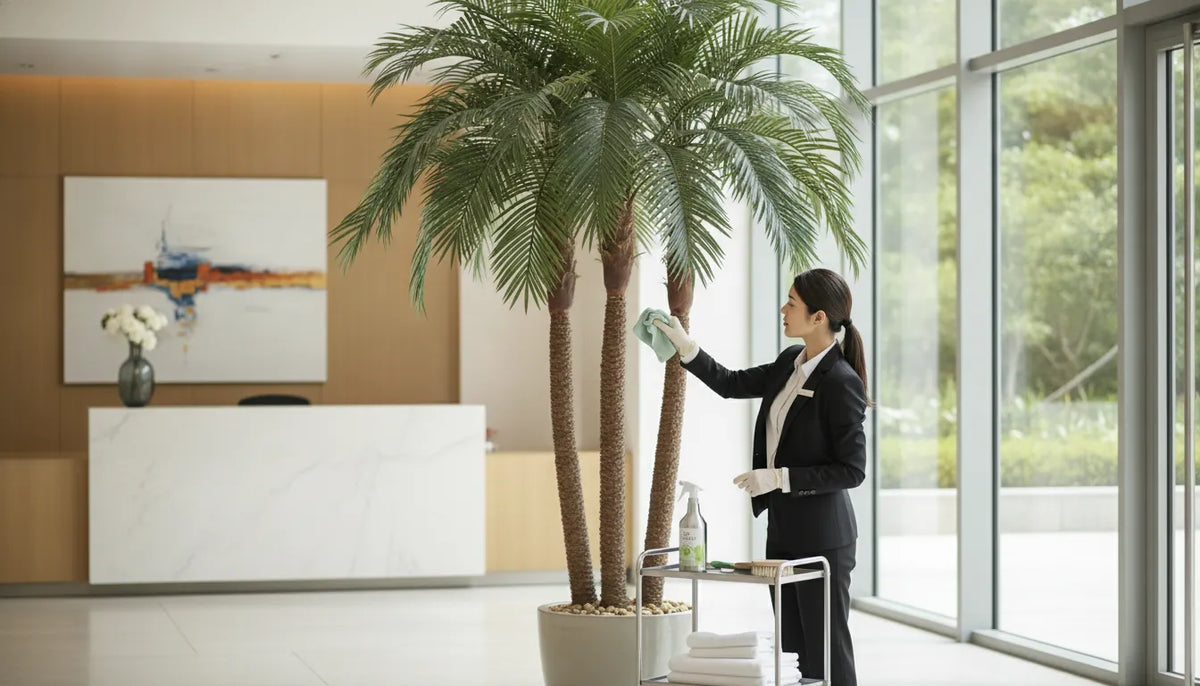
A sculptural artificial palm makes a striking focal point in a living room, hotel lobby, or executive office. Keeping it looking polished doesn’t require complicated products, but it does call for a little care. Start by removing dust gently, paying attention to the creases and connections where debris tends to collect. If you spot a mark, test a mild cleaning method on a hidden area before treating the visible foliage. Learning how to clean and maintain an artificial palm tree can help you protect its finish while keeping the fronds looking natural. Here’s how to choose suitable supplies, clean safely, and care for the tree between deeper touch-ups.
Key Takeaways
- Dust gently and regularly: Use a microfiber cloth or soft brush every few weeks, adjusting the schedule if the tree sits in a dusty or busy space.
- Spot-clean with care: Test a barely damp cloth on a hidden area, use mild soap only if care instructions allow, and dry the spot completely.
- Preserve the tree’s finish and shape: Skip unapproved sprays and harsh tools, handle fronds gently, and check attachments and the base as you clean.
What Supplies Can You Safely Use to Clean an Artificial Palm Tree?
Check Care Instructions and Identify Delicate Materials
Start with the care instructions that came with your tree. Artificial palm fronds can be made from different materials, and finishes may vary, so a cleaning method that works for one tree may not suit another. Check whether the foliage or trunk has delicate coatings, fabric details, or joined sections that need special care. If the instructions aren’t available, contact the seller or manufacturer before using water or cleaning products.
Before you begin, inspect the tree for loose fronds or fragile attachments. Note which areas need a lighter touch, and avoid pulling or bending them while you clean. A quick check can help you choose safe supplies and prevent damage.
Gather a Microfiber Cloth, Soft Brush, and Optional Low-Suction Vacuum
For routine dusting, gather a clean microfiber cloth and a soft-bristled brush. A cloth is useful for broad palm leaves, while a brush can reach around frond bases and into small creases. Work with light strokes so you don’t pull on the foliage or bend its supports. A guide to cleaning artificial trees and plants also recommends a duster, brush, microfiber cloth, or handheld vacuum for removing dust.
A handheld vacuum can help with loose dust, but use it on a low-suction setting and keep it a short distance from the leaves. If it tugs at the fronds, set it aside and use a cloth or brush instead.
Use Lukewarm Water and Mild Soap for Spot-Cleaning
If dusting doesn’t remove a mark, try a small amount of lukewarm water and mild soap. Dampen a microfiber cloth, then gently dab or wipe the affected spot. Don’t soak the foliage: moisture can collect around joints or supports and may be difficult to dry. For broad leaves, a cleaning guide for artificial plants and trees recommends using a damp microfiber cloth.
Use soap sparingly. Then wipe the area with a clean cloth dampened with plain water to remove any soap residue. Blot the spot with a dry, soft cloth, and let it air-dry completely before reshaping the frond.
Test Each Method on a Hidden Area First
Before using water, soap, or a vacuum on visible foliage, test your chosen method on a small, discreet area. A spot on the back of the tree is a good place to start. Apply the method gently, let the area dry, then check for changes in color, texture, or finish. If you notice a change, stop and stick with a gentler option, such as dry dusting with a soft brush.
Testing is especially helpful if you don’t know what materials or finishes the tree uses. Start with the mildest method, and only move to spot-cleaning if dusting doesn’t do the job.
How Do You Clean an Artificial Palm Tree?
Prepare the Area and Stabilize the Tree
Before cleaning, check the care instructions for your tree, especially if it has wired fronds, delicate leaves, or a textured trunk. Clear enough space to move around it without catching the foliage on furniture. For a large tree, work in a spacious room or a sheltered outdoor area with a clean, level surface.
Keep the tree upright if you can. If you need to tilt it, ask someone to steady the trunk and support the fronds as you move it. Place a towel or drop cloth beneath the tree to catch dust and drips. These small steps help protect the finish, nearby furnishings, and the tree’s shape. If you’re unsure how to care for a particular material, review the maker’s instructions before applying water or cleaning products.
Remove Loose Dust from Fronds and Trunk
Start with a clean, dry microfiber cloth or a feather duster. Work from the top of the tree down, gently wiping each frond from its base toward the tip. Support each leaf with one hand as you clean it with the other, and use light strokes to avoid bending or distorting the foliage.
Dust the trunk and visible stems, turning the tree as needed to reach the back. A soft brush can help lift dust from textured areas without scratching them. Regular, gentle dusting is often all an artificial palm needs between deeper cleanings. For more general care advice, see Nearly Natural’s guide to caring for artificial plants.
Brush Folds, Frond Bases, and Tight Spaces
Dust can collect where the fronds meet the trunk and in the folds along each leaf. Use a clean, soft-bristled brush to reach these areas, moving carefully so you don’t snag the foliage or loosen an attachment. A small makeup brush or soft paintbrush can make it easier to clean narrow spaces.
If dust is caught in a crease, hold the frond steady and brush outward rather than pushing debris farther in. Check around the base of each frond and any decorative details. Avoid sharp tools and stiff brushes, which may scratch the finish or damage delicate leaves. A soft toothbrush can also reach creases, as Nearly Natural’s cleaning tips suggest, but use it lightly and only if the material can tolerate brushing.
Spot-Clean Marks with a Damp Cloth
If dry dusting doesn’t remove a mark, dampen a microfiber cloth with lukewarm water and wring it out thoroughly. It should feel barely damp, not wet. Test the cloth on a hidden area first, then gently wipe the mark. Avoid scrubbing, since friction may affect the leaf’s color or finish.
If water alone isn’t enough, check the care instructions before adding a small amount of mild soap. Wipe away any remaining soap with a second cloth lightly dampened with clean water. Keep moisture away from joints, wire connections, and the base. Let the spot dry before deciding whether it needs another pass. For more guidance on cleaning leaves and other faux foliage, refer to the DEI Zinz guide to artificial plants and trees.
Dry the Tree Completely and Reshape the Fronds
After spot-cleaning, blot the area with a dry, soft cloth and leave the tree to air-dry in a well-ventilated space. Check the leaves, frond bases, and trunk before moving it back into place. Avoid using a heater or hair dryer, as heat may affect the materials or finish.
Once the tree is dry, gently arrange the fronds to restore their natural spread. Guide each frond with both hands, supporting it near the base instead of forcing a sharp bend. Step back and view the tree from several angles, adjusting leaves that overlap or sit awkwardly. A thoughtful shape helps a sculptural artificial palm tree look at home in the room while keeping its foliage in good condition.
When Should You Use Gentle Wet Cleaning?
A damp cloth can help remove marks that dry dusting leaves behind, but artificial palm fronds and their supports may need careful handling. Start with the mildest method, and follow the tree’s care instructions whenever they’re available.
Use It Only for Stains or Grime Dusting Won’t Remove
Try dry dusting first. If a frond still has a visible mark or sticky grime, use gentle wet cleaning on that area rather than wiping down the whole tree. This limits moisture exposure and helps preserve the foliage’s finish.
Dampen a soft microfiber cloth with lukewarm water, then wring it out until it feels barely moist. Wipe the mark gently without scrubbing or pulling on the frond. If water alone doesn’t work, use a small amount of mild soap, provided the care instructions allow it. Test the solution on a hidden area first. Artificial plant care guidance recommends wet cleaning only when dusting cannot remove the stain or grime.
Use Minimal Moisture and Keep Water Away from Joints and Supports
Palm fronds connect to the trunk at joints and supports that may be more vulnerable to moisture than the foliage. Don’t spray water directly onto the tree or allow liquid to run toward these connections. Instead, apply moisture to your cloth and wipe the frond gently.
For broad leaves, work from the base toward the tip, supporting each one with your free hand. Blot any remaining moisture with a clean, dry cloth, then let the tree air-dry completely before reshaping the fronds. Avoid harsh cleaners, which may affect protective coatings or change the foliage’s color. The cleaning recommendations for artificial plants and trees also advise using minimal moisture and keeping it away from joints and supports.
Clean the Pot Separately and Protect Its Contents
Treat the pot as a separate part of the cleaning process. Check whether it contains decorative stones, moss, foam, or other materials that could shift or be damaged by water. If you can, cover the opening with a towel or remove loose decorative pieces before cleaning the pot’s exterior.
Choose a cloth that suits the pot’s material, and avoid letting water or cleaning solution seep inside. If the tree is difficult to move, wipe the pot carefully in place, keeping the cloth away from the trunk’s base. Dry the pot before replacing any contents. Cleaning it separately helps protect the pot’s finish and the materials that hold the tree in place, as explained in this guide to artificial palm tree care.
How Often Should You Clean and Maintain an Artificial Palm Tree?
A regular dusting helps preserve an artificial palm tree’s color and detail. The right schedule depends on its location and how quickly dust or residue builds up.
Dust Every Few Weeks and Adjust to Room Conditions
As a starting point, dust your artificial palm tree every few weeks. Use a soft brush or microfiber cloth, moving gently along each frond and around the trunk. Regular cleaning prevents dust from building up and making the foliage look dull.
Check the tree as you clean. If the fronds still look fresh, you can wait a little longer; if you see a film of dust, clean them sooner. A consistent routine is especially useful for large trees, where dust can show on broad fronds. Nearly Natural recommends regular cleaning to help preserve the appearance of artificial plants.
Clean More Often in Dusty, Busy, or Grease-Prone Spaces
Room conditions matter as much as the calendar. A palm near an entryway, in a busy lobby, or beside an open window may collect dust faster than one in a quiet room. In kitchens and dining areas, airborne grease can settle on the leaves and attract dust. Check the fronds regularly, and clean them when they look or feel coated.
For an outdoor artificial palm, inspect it after windy or dusty weather. Gently remove loose dirt, and check the care instructions before using water. Veronneau recommends occasional dusting and gentle rinsing for outdoor palms to remove accumulated dirt. Always follow the instructions for your specific tree, since materials and finishes can vary.
Check for Stains, Loose Parts, and Misshapen Fronds
Use each dusting as a quick condition check. Look for spots that may need attention, fronds that have shifted out of shape, and loose connections where leaves meet the trunk. Catching small changes early makes it easier to care for the tree without pulling or bending its parts.
If a frond looks misshapen, gently guide it back into place rather than forcing it. Check the trunk and base for signs of instability, especially if the tree stands in a busy area. Keeping foliage free of dust and dirt helps maintain its appearance, as Waysaving notes in its artificial plant care advice. For stubborn marks or loose components, consult the care instructions before trying a cleaning product or repair.
How Can You Prevent Dust and Keep the Tree Looking Realistic?
A little prevention can make cleaning easier and help an artificial palm keep its lifelike appearance. Choose its location thoughtfully, remove dust before it builds up, and check the care instructions before applying any cleaning product.
Place It Away from Vents, Cooking Areas, and Busy Walkways
Position your palm away from heating and cooling vents, which can carry dust onto the fronds. Keep it clear of cooking areas, too, since airborne grease can settle on leaves and leave a film that takes more effort to remove. A spot outside busy walkways helps protect the fronds from bumps and keeps the arrangement looking neat.
If possible, choose a location where the tree complements the room without sitting in a high-traffic path. For an outdoor artificial palm, follow the care guidance for your specific tree and setting. Veronneau’s advice on outdoor artificial palms recommends occasional dusting and a gentle rinse to remove accumulated dirt.
Dust Regularly and Clean the Surrounding Space
Dust the fronds every few weeks with a microfiber cloth or soft brush, moving gently along each leaf. Use a soft brush to reach folds and tight spaces without pulling on the foliage. If the palm is near an open window or in a room where dust gathers quickly, check it more often and adjust your routine.
Clean the area around the tree as well. Wipe nearby surfaces and the pot, and vacuum the floor so loose dust is less likely to settle back onto the leaves. Regular care helps prevent buildup that can make foliage look dull. Nearly Natural’s artificial plant care guide also recommends routine cleaning to maintain a plant’s appearance.
Consider an Air Purifier to Reduce Airborne Dust
If dust settles quickly throughout the room, an air purifier with a particle filter may help reduce some airborne particles. Place it where air can circulate freely, and follow the manufacturer’s instructions for maintenance and filter replacement. An air purifier can support your cleaning routine, but it won’t remove dust that has already settled on the fronds.
Pair filtration with simple habits: clean nearby surfaces regularly, keep windows closed when outdoor dust or pollen is high, and avoid placing the palm directly in the path of a vent. The EPA’s guide to home air cleaners explains how filtration can reduce airborne particles indoors.
Use Dust-Repellent Products Only If Care Instructions Allow
Check the care instructions before using a dust-repellent spray, wipe, or cleaner. Some products can leave residue or affect the finish, especially on foliage with delicate coatings or subtle color details. If the instructions don’t recommend a product, stick with a dry microfiber cloth or soft brush.
If you’re considering a cleaner, test it on a hidden area first and let it dry fully. Check for changes in color or texture before applying it to visible fronds. DEI-Zinz’s cleaning advice for artificial plants cautions that some sprays and cleansers may affect leaf integrity. When in doubt, gentle dusting is the safer choice.
Which Cleaning Methods and Products Should You Avoid?
Avoid Harsh Chemicals, Abrasive Brushes, and Rough Paper Towels
Skip bleach, solvents, and strong household cleaners. They can strip protective coatings or alter leaf color. Abrasive brushes and rough paper towels may scratch, snag, or flatten delicate fronds. Instead, use a soft brush or microfiber cloth, moving gently so you don’t tug on the foliage or loosen its attachments.
Specialty artificial-plant cleaners aren’t always a safe choice. DEI Zinz’s care guidance notes that sprays and cleansers are generally unnecessary and may affect a plant’s finish. Check the maker’s instructions before trying a product. If you’re unsure, dust the tree dry or test a mild cleaning method on a hidden area first.
Don’t Hose Down or Soak the Tree Unless Care Instructions Allow It
Avoid hosing down or soaking an indoor artificial palm unless its care instructions specifically allow it. Water can seep into joints, internal supports, or the base, where it may be hard to dry fully. It can also affect decorative materials and finishes.
For routine cleaning, remove dust with a dry cloth or soft brush. If you find a stubborn mark, dab it with a barely damp cloth and dry the area promptly. Outdoor trees may have different care requirements. Veronneau’s advice for outdoor artificial palms describes gently rinsing them to remove dirt. Follow the instructions for your specific tree, rather than applying outdoor guidance to an indoor piece.
Avoid Unapproved Sprays That May Leave Residue or Damage Finishes
Don’t apply furniture polish, leaf shine, dust-repellent sprays, or other products unless the manufacturer approves them. A spray can leave a sticky film that attracts dust, create spots, or change the foliage’s sheen. Products intended for live plants or other materials may not suit artificial leaves.
Start with a dry microfiber cloth or soft brush. For a stubborn mark, test mild soapy water on an inconspicuous spot and check for changes before cleaning the rest of the tree. DEI Zinz’s artificial-plant care advice recommends avoiding specialty cleaners for routine care. Simple, approved methods help preserve the foliage’s finish without leaving residue.
Keep Foliage Out of Prolonged Direct Sunlight
Long periods in strong, direct sunlight may fade or discolor artificial foliage. Place your palm away from unfiltered sun, or soften the light with a sheer curtain. Before settling on a spot, notice how sunlight moves through the room during the day. This small placement choice can help maintain the tree’s color over time.
Check the leaves now and then for changes in color or texture, and follow the manufacturer’s care advice. Regular dusting also helps foliage look fresh. Nearly Natural’s care guide recommends cleaning artificial plants to remove accumulated dust and dirt. If you notice fading, avoid trying to restore the color with polish or spray unless the maker approves it.
How Can You Maintain the Tree’s Shape and Condition?
Regular, gentle care helps an artificial palm keep its graceful silhouette. After cleaning, check how the fronds fall from different angles and make small adjustments as needed. It’s also a good time to look over the trunk, attachments, and base for signs of wear or instability. If you need to store the tree, protect it from dust and moisture while giving the fronds room to keep their shape.
Handle Fronds Gently When Straightening or Repositioning Them
Support each frond near its base and guide it slowly into position. Many artificial palms have wire inside the fronds, but forceful pulling or sharp bends can damage the foliage or loosen its connection to the trunk. Adjust one frond at a time, spreading the leaves naturally rather than arranging them into a rigid, identical pattern.
If a frond resists movement, stop and check the manufacturer’s care instructions instead of forcing it. You can also look at the tree from several angles as you work, so its shape feels balanced throughout the room. Nearly Natural’s artificial plant care guide recommends gentle handling as part of keeping faux foliage looking its best.
Check the Trunk, Frond Attachments, and Base for Wear or Instability
When dusting the tree, take a moment to inspect the trunk, frond attachment points, and base. Look for loose connections, visible wear, or a pot that rocks when lightly touched. If the tree feels unstable, avoid moving it until you can address the issue according to the maker’s instructions. Lift and reposition it by the trunk or base, not by the fronds.
Regular checks can also reveal dust caught around joints or foliage that has shifted out of place. Cleaning the tree gently and dealing with small issues early can help preserve its appearance. Waysaving’s artificial plant maintenance tips highlight routine cleaning as a way to care for faux greenery.
Store the Tree in a Cool, Dry Place Under a Breathable Cover
Before storing your palm, dust it and make sure it is completely dry. Choose a cool, dry spot where the tree won’t be pressed beneath other items. A breathable cover can help keep dust away while allowing air to circulate. Avoid wrapping the foliage tightly in plastic, which may trap moisture or compress the fronds.
Store the tree upright when possible, with enough space around it to prevent sharp bends. When you bring it out again, remove the cover and gently reshape the fronds. For an artificial palm displayed outdoors, follow its specific care instructions for cleaning and storage. Veronneau’s guide to outdoor artificial palm trees offers additional advice on removing dirt and maintaining outdoor palms.
Frequently Asked Questions
Can I use a vacuum to clean an artificial palm tree?
Yes, if the care instructions allow it. Use a handheld vacuum on low suction and hold it slightly away from the fronds. If the leaves pull or bend, stop and use a soft brush or microfiber cloth instead.
Can I spray water directly onto the palm?
It’s safer to dampen a cloth rather than spray the tree. This gives you more control and helps keep moisture away from frond connections, internal supports, and the base.
How often should I clean an artificial palm tree?
Dust it every few weeks as a starting point. Check it more often if it sits near a vent, open window, busy walkway, or cooking area, where dust and residue can build up faster.
What should I do if I’m unsure what the fronds are made of?
Check the care instructions or contact the seller or manufacturer before using water or cleaning products. In the meantime, use a clean, dry microfiber cloth or soft brush, and test any method on a hidden area first.
How can I keep the fronds from looking misshapen after cleaning?
Once the tree is fully dry, support each frond near its base and gently guide it into place. Avoid sharp bends or pulling, and check the tree from a few angles to make sure the shape looks balanced.


