

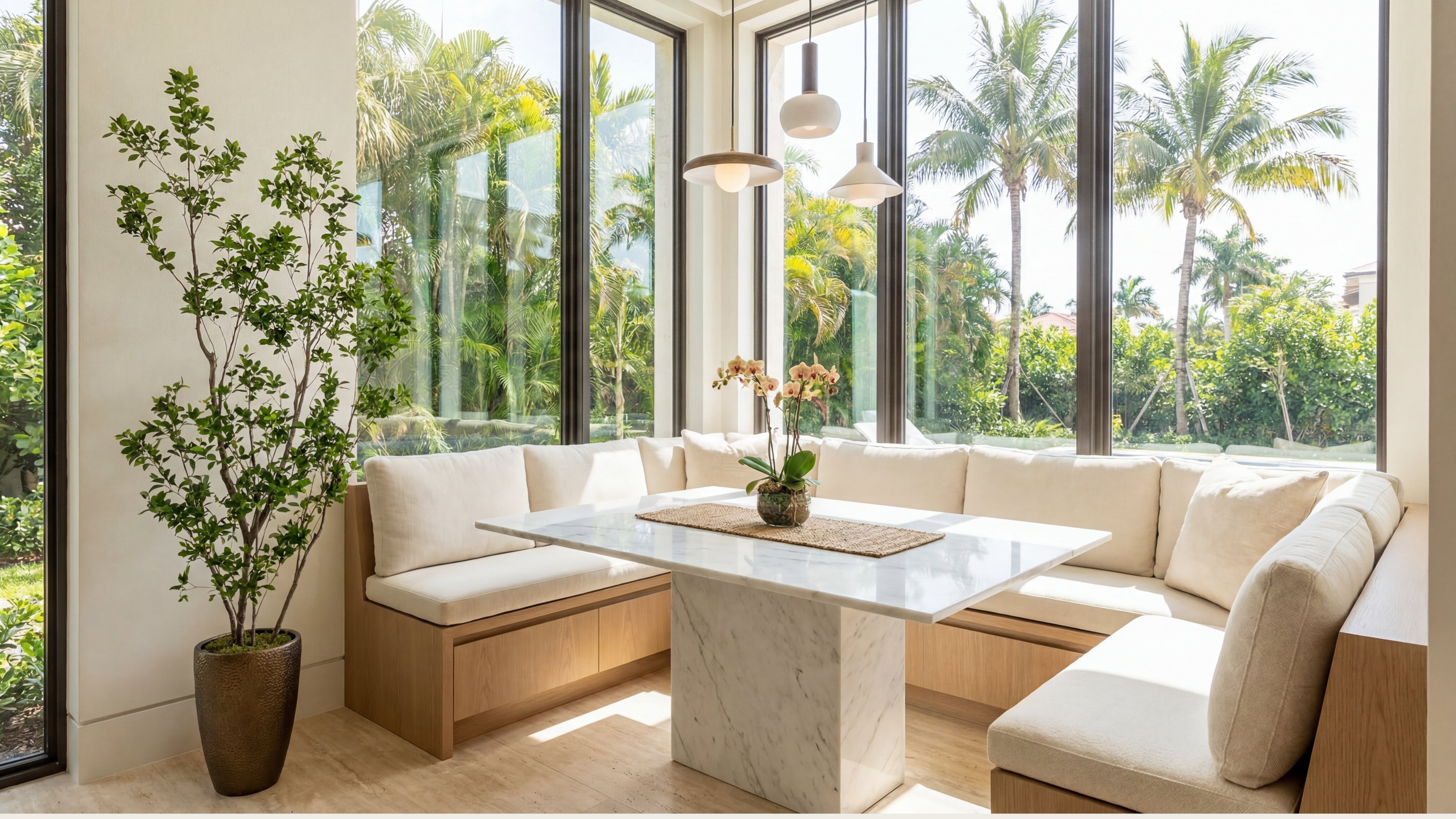
High-end interior designers are getting into decorating with faux plants in places from Water Street Tampa high-rises to Sarasota estates as a way to ground luxury spaces. Artificial greenery used to be a huge interior design no-no, but advancements in material development have transformed public perception.
These days, designers often specify hyper-realistic permanent botanicals to bring architectural stature and organic texture into spaces. This transition addresses low-light spatial dilemmas while pairing superbly with an effortless, luxurious turn-key lifestyle that high-net-worth clientele seek.
Want a preview of how this can heighten your next project? Keep reading for why a few of the biggest designers are never looking back.
Key Takeaways
-
Artistic Material Evolution: Advanced polymers and natural wood trunks have entirely replaced cheap, glossy silk materials. These modern permanent botanicals easily pass the close visual and tactile inspection of affluent clients.
-
Solving Architectural Obstacles: Modern floor plans often feature deep, low-light interior corridors and specialized UV-tinted glass walls. High-end faux plants allow decorators to bring lush greenery into these challenging spaces without risk of plant death.
-
Low-Maintenance Luxury Lifestyle: Discerning clients demand lock-and-leave convenience for their luxury vacation properties and primary residences. Permanent greenery eliminates the need for ongoing watering services, destructive pests, and mold.
-
Flawless Spatial Proportions: Designers gain absolute control over the height, canopy spread, and structural weight of their botanical installations. This ensures that grand, double-height rooms maintain their carefully planned balance permanently.
Decorating with Faux Plants: What Changed?
The era of shiny, fraying fake plants is officially over. Today’s luxury permanent botanicals are manufactured as fine art replicas. Decorating with faux plants uses cutting-edge material science to flawlessly mimic the exact weight, texture, and organic variation found in living nature.
Material Innovation and Fine Art Manufacturing
Modern permanent botanicals leave cheap construction in the past. Today's luxury replicas are treated as fine art sculptures. Manufacturers use advanced chemistry to fool the senses:
-
Real-Touch Polymers: Specialized matte-finish coatings remove the telltale plastic shine. They replicate the authentic, slightly waxy texture of live leaves.
-
Hand-Painted Gradients: Stems and leaves feature subtle imperfections and varied color shading. They perfectly mimic new-growth tips versus mature foliage.
-
Preserved Organic Elements: Trees utilize sustainably sourced, real wood trunks. The wood is water-treated for preservation, and faux foliage is meticulously grafted on by hand.
Passing the Discerning Client Test
Because of these technological shifts, you can confidently place these pieces in high-traffic zones:
-
Visual Fidelity: Replicas easily pass close-up visual inspections by affluent homeowners and guests.
-
Tactile Realism: Leaves feel organically heavy and pliable rather than rigid or papery.
-
Portfolio Integrity: Your high-end design portfolio maintains an elite, cohesive aesthetic without being cheapened by low-grade accents.
How Do Modern Floor Plans Demand Artificial Solutions?
Contemporary architecture creates beautiful spaces, but its deep layouts and heavily filtered windows present major survival challenges for living greenery. High-end faux plants offer designers an elegant workaround to introduce vibrant, organic life into light-starved indoor microclimates.
Navigating Low-Light Blind Spots
Modern luxury architecture introduces massive logistical headaches for keeping live plants healthy. Sprawling floor plans often create zones where natural sunlight cannot penetrate:
-
Deep Interior Corridors: Windowless hallways and entry vestibules receive zero usable daylight.
-
Secondary Luxury Spaces: Walk-in closets, home theaters, and powder rooms are left entirely dark for long stretches.
-
Elevator Lobbies: High-rise entry points require organic softening but completely lack solar exposure.
The UV-Tinted Glass Trap
Conversely, the massive glass walls found in luxury high-rises create a paradox that starves live vegetation:
-
Photosynthesis Starvation: Modern windows feature high-performance UV-inhibiting tints. These tints protect your custom furniture, fine art, and hardwood floors from sun damage.
-
Spectral Filtering: This filtered glass strips away the specific light wave spectrums that living plants require to survive. The result is rapid, leggy growth and eventual death.
-
The Faux Advantage: Premium permanent botanicals look pristine sitting directly next to UV-protected glass walls year after year. They will not fade, yellow, or degrade.
Why Do Clients Prefer Low-Maintenance Luxury?
Wealthy homeowners value peace of mind and time savings most of all. Therefore, permanent botanicals align perfectly with the modern lock-and-leave lifestyle and eliminate structural risks (water damage and indoor soil pests), as well as perpetual plant maintenance.
Preserving Time and Peace of Mind
Luxury is, in essence, all about saving time and peace of mind. Just like hoteliers, wealthy homeowners—especially those with second homes on the beach in Florida—prefer no-continuous-operations solutions:
-
Zero Travel Anxiety: Homeowners can lock up a penthouse for six months. They return to find their greenery looking exactly as vibrant as the day they left.
-
No Maintenance Contracts: Bypassing the need to hire indoor plant-watering services. This keeps private residences completely private while clients are away.
-
Predictable Visual Layouts: The vignette stays styled exactly as you intended on day one. There is no unexpected overgrowth or awkward bare spots.
Safeguarding Interior Finishes
Live soil and regular watering schedules introduce physical risks to high-end real estate. Permanent options eliminate these hazards:
-
Preventing Water Damage: No leaking saucers or condensation rings. Your expensive custom rugs and site-finished hardwood floors remain completely safe.
-
Hypoallergenic Spaces: Eradicating the risk of indoor mold spores, damp soil pathogens, and airborne pollen.
-
Pest Eradication: Zero soil means avoiding annoying infestations of fungus gnats, mealybugs, and spider mites. These pests quickly spread and ruin a pristine interior.
Can Faux Plants Truly Solve Spatial Scale Issues?
Achieving flawless proportion is one of the greatest challenges in luxury interior styling. Customizable permanent plants grant decorators absolute mathematical control over height and canopy spread, enabling seamless design integration without structural weight limits or shock-induced leaf loss.
Perfect Control Over Proportions
In interior decoration, scale and proportion are everything. When you draft a rendering for a double-height great room, you require precise dimensions to balance the soaring vertical architecture:
-
Engineered Silhouettes: You can specify the exact height, canopy spread, and branch density needed. This allows you to perfectly frame a fireplace or anchor a grand staircase.
-
Eliminating Leaf-Drop Shock: A live tree of massive scale is highly susceptible to climate shock. Moving it indoors often causes it to drop half its leaves, ruining your room's intended balance.
-
Structural Lightweight Sizing: Custom faux installations provide towering height without the crushing weight. You avoid dealing with massive root balls and water-logged soil containers.
Versatile Custom Placement
Permanent options expand where and how you can introduce green elements. You are no longer constrained by structural weight or plumbing access:
-
High-Shelf Styling: Place trailing greenery on top of tall built-in cabinetry where watering would normally require a ladder.
-
Bespoke Florals: Arrange delicate architectural blooms like Calla Lilies and Orchids into custom, turn-key centerpieces. They never fade or drop sticky petals on dining surfaces.
-
Consistent Year-Round Textures: Maintain a lush, tropical, or Mediterranean feel regardless of shifting seasonal light changes outside.
Ready to Elevate Your Next Design Project?
Specifying permanent botanicals is not a shortcut. It is about raising the lifespan, elegance, and function of luxury design. The removed risks of light deprivation, water damage & seasonal decay allow you to deliver perfectly pristine, biophilic spaces again and again for years down the line.
If you are an interior designer, architect, or home decorator in the competitive Florida luxury market, decorating with faux plants is your edge. Having a custom botanical artistry trade partner you can trust changes the game. check our website at jardindumonde.com for more information.
Frequently Asked Questions
Q: Are faux plants safe for households with pets?
A: Yes. Houseplants, such as fiddle-leaf figs, peace lilies, and snake plants, are extremely poisonous to cats and dogs. However, with artificial plants, there is absolutely no risk of chemical poisoning or sap itch. So, you will not find yourself having to make a sudden trip to the vet.
Q: How do designers avoid looking unnatural when styling fake greenery?
A: The main trick is to use the fake foliage only where a live plant could realistically survive. Do not keep fake trees in dark, completely black interior basements. Place them instead near soft accent lighting, windows, or large entryways where natural light sells it.
Q: Can indoor permanent botanicals be placed outside on a patio?
A: Standard indoor faux plants are not made with UV stabilizers and weatherproof coatings built right in, but only when specially engineered for outdoor usage and labeled. The leaf material gets broken down rapidly by the hot Florida sun, and within months, green pigments will become completely degraded and appear blue.
Q: How do you keep high-end faux plants clean and dust-free?
A: Caring for luxury permanent botanicals has pretty low upkeep. Dust off surfaces with a microfiber cloth, feather duster, or even compressed air as needed every two weeks or so. It maintains the freshness of matte-finish leaves without resorting to heavy, sticky leaf-shine sprays.


