

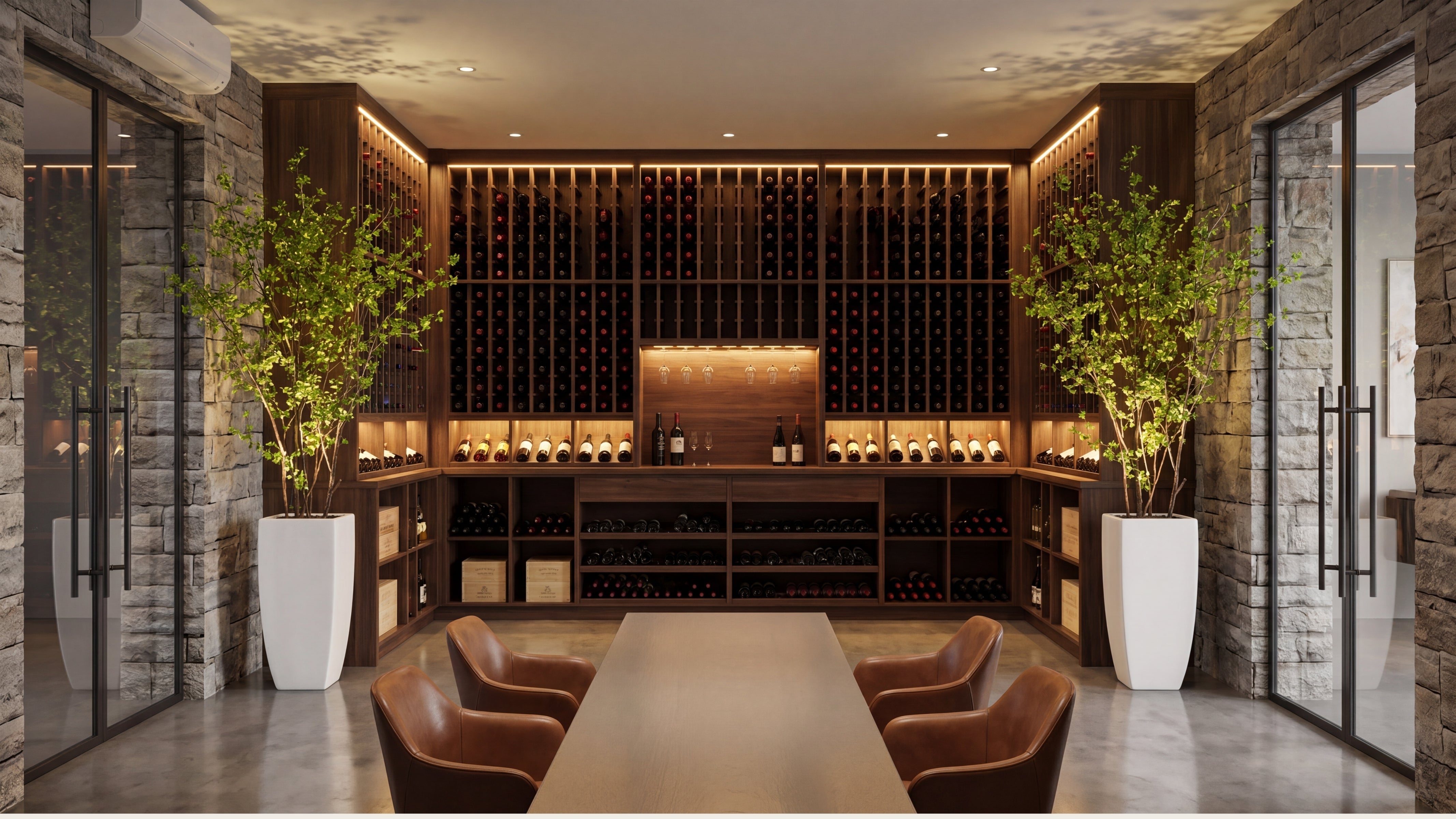
Across the world’s most exclusive properties, a quiet, sophisticated shift has taken place. Master designers now favor the flawless, year-round perfection of bespoke luxury artificial plants.
When styled with precise architectural intent, these premium masterpieces cease to be mere imitations. Instead, they become structural design elements. We look to three distinct design philosophies practiced by the world’s most elite interior houses.
A side-by-side comparison of a modern high-rise living room, showing the space on the left and the same interior styled with strategic permanent trees, grasses, and architectural succulents on the right.
Key Takeaways
- Absolute Aesthetic Control: True luxury shifts toward absolute aesthetic control using high-fidelity permanent plants. These bespoke elements act as structural design layers.
- Diverse Design Philosophies: Elite homes leverage distinct botanical styles. Each aesthetic creates a targeted sensory atmosphere tailored to the property's architecture.
- Overcoming Environmental Limits: Luxury artificial plants allow designers to bypass natural constraints like high-altitude winds. Spaces like penthouse terraces can seamlessly host grand, majestic greenery.
- The Rules of Elite Styling: Flawless curation relies on strict discipline and high-end sculptural planters. Restraint ensures the final installation looks entirely intentional.
The Monastic Desert Sanctuary
Inspired by Kelly Wearstler’s Brutalist Materiality
Renowned for her bold use of texture and scale, Wearstler pairs raw elements with refined geometry. She frequently juxtaposes massive, weathered stone forms against sharp, structural botanical silhouettes.
-
The Design Philosophy: This aesthetic avoids busy, complicated floral arrangements. Instead, it relies on a strict, minimalist palette of sand, charcoal, and deep agave green.
- The Premium Execution: Designers utilize museum-quality permanent succulents featuring thick, matte-polymer leaves. These pieces are anchored inside heavy concrete vessels. A premier example is Kelly Wearstler’s Beverly Hills Hillcrest estate, featured in Architectural Digest. She masterfully pairs oversized structural succulents with brutalist concrete forms. These specialized luxury artificial plants ensure sharp geometry remains completely flawless over time.
 A minimalist brutalist loggia featuring a large permanent agave in a dark concrete urn contrasted against a light travertine wall, with a linear spine of faux grasses running along a poolside path.
Where Best to Style
This striking, minimalist aesthetic is ideally suited for modern, brutalist, or mid-century architectural properties. It thrives in deeply shaded low-light loggias, covered entryways, and arid outdoor lounges. It also makes a sophisticated statement in sleek urban spaces and glass-fronted pool pavilions.
Permanent Botanicals Best Suited to This Styling
-
Symmetrical Rosette Succulents (Agave-Style Plants): Thick-leafed, low-profile permanent succulents that feature smooth, matte finishes and pristine geometric shapes. These look visually heavy and ground the base of concrete urns.
-
Tall Architectural Desert Grasses: Fine-textured, vertical permanent grasses that provide clean, sharp lines to frame corridors or entryways. They soften brutalist concrete edges without adding colorful or messy foliage clutter.
How Best to Style & Placement
-
The Travertine Contrast: Position a singular, oversized permanent Agave directly against a smooth, light limestone wall. The sharp green silhouette acts as a piece of living gallery art.
-
Asymmetrical Pairing: Place an oversized concrete urn containing a structural succulent on one side of a fireplace. Leave the other side completely open. This creates a modern, designer-forward atmosphere.
-
The Linear Spine: Arrange a perfectly spaced series of identical concrete pots along a poolside path. This clean alignment emphasizes the architecture of the space.
The Quiet Luxury Mediterranean Estate
Inspired by Marie Flanigan’s Timeless European Elegance
Marie Flanigan composes spaces that feel steeped in heritage, classic architecture, and quiet wealth. Her approach relies heavily on balance, classical proportions, and the romantic textures of the European countryside.
- The Design Philosophy: Think hand-crafted herringbone pavers, soft limestone fountains, and the silvery-green tones of the French Riviera. The ultimate goal is an atmosphere of effortless, permanent elegance.
- The Premium Execution: Flanigan’s signature look incorporates pairs of stately, sculpted Mediterranean olive trees framing an entryway. A celebrated example is the Malibu beach estate of lifestyle tastemaker Camille Styles, highlighted by Architectural Digest. To achieve this look without constant leaf-drop, decorators deploy custom-fabricated luxury artificial plants. They offer romantic charm without a single fallen leaf.

A sun-drenched Mediterranean estate courtyard featuring a symmetrical pair of permanent olive trees framing a grand arched entryway, surrounded by potted citrus trees and a linear alignment of cypresses.
Where Best to Style
This timeless look belongs in classically designed architectural spaces. It is best suited for grand residential entryways, sprawling courtyard loggias, and sun-drenched stone patios. It also works beautifully near outdoor dining areas where live trees would drop unwanted debris.
Permanent Botanicals Best Suited to This Styling
-
The Mediterranean Olive Tree: Their definitive signature piece in the tree catalog. It is specifically designed with natural, gnarled hardwood trunks and multi-toned, silvery-green leaves. It provides that effortless, sun-drenched Amalfi Coast look.
-
The Traditional Boxwood Topiary: The exact product line used to introduce formal European geometry. These feature tightly clipped, crisp green foliage profiles perfect for symmetrical framing on stone terraces.
-
The Coastal Citrus Arrangement: Found under their specialized botanical florals catalog, this product line pairs deep, glossy green citrus leaves with incredibly realistic, hand-detailed fruit. It adds a subtle pop of European color.
How Best to Style & Placement
-
Symmetrical Framing: Place an identical pair of sculpted olive trees on either side of a grand front entrance. This balanced layout immediately communicates a sense of order.
-
The Courtyard Cluster: Group three permanent trees of varying heights in an unadorned corner of a stone terrace. This tiered arrangement breaks up hard architectural angles with soft texture.
-
Linear Alignment: Position a row of matching, closely spaced Italian Cypresses along a limestone boundary wall. This creates a clean, vertical hedge that offers an elegant green backdrop.
The High-Rise Earth & Air Pavilion
Inspired by Axel Vervoordt’s Raw Sophistication
Belgian designer Axel Vervoordt is the ultimate master of wabi-sabi luxury. He blends ancient history, muted earth tones, and pure elemental textures.
-
The Design Philosophy: This style trades flashy, loud tropical geometry for an atmosphere of calm permanence. It pairs muted, wind-swept textures with a disciplined palette of sage greens, parched earth, and charcoal.
-
The Premium Execution: A magnificent real-world blueprint belongs to actor Robert De Niro. He co-commissioned Vervoordt to design the legendary high-rise sanctuary atop New York City's Greenwich Hotel. The space pairs rough-hewn reclaimed timber and structural stone with breathtaking high-altitude views.

A luxury high-rise penthouse terrace at sunset featuring sleek permanent grasses and succulents in concrete planters, with multi-trunk permanent trees framing the floor-to-ceiling glass sliding doors.
Where Best to Style
This elevated aesthetic is engineered specifically for exposed, high-altitude spaces. It thrives on high-rise penthouse terraces, expansive wrap-around balconies, and covered rooftop pavilions. It is equally spectacular in minimalist pool loggias and modern glass-enclosed atriums.
Permanent Botanicals Best Suited to This Styling
-
The Mediterranean Olive & Shady Fiddle-Leaf Trees: The definitive structural centerpieces of their tree catalog. These premium permanent products are engineered with authentic, multi-trunk hardwood and delicate foliage profiles. They deliver a sophisticated, living-sculpture effect on windswept terraces.
-
The Desert Maverick Succulent Collections: Hand-selected pieces from their dedicated succulent inventory. This product line features thick, matte-finished structural profiles. They bring weighted geometric grounding and a quiet, wabi-sabi permanence to low-profile stone vessels.
-
The Savannah Wild Grass Installations: Curated directly from their specialized grasses catalog. This specific product line features tall, ultra-fine textured blades. They are designed to sway gracefully in high-altitude currents, casting soft, architectural shadows without creating maintenance clutter.
How Best to Style & Placement
-
The Frame Technique: Flank the main threshold with a matching pair of twelve-foot Jardin Du Monde permanent trees. This framing anchors the transition between your indoor living area and the terrace.
-
Corner Anchoring: Position a multi-tiered cluster of varying-height permanent trees in the furthest corner of the terrace. This breaks up hard glass or steel sky rail angles.
-
The Linear Spine: Arrange a strict, uniform row of identical planters containing sleek permanent grasses along a blank wall. This creates a living architectural partition that adds movement.
The Elite Blueprint: Essential Rules for Styling Premium Greenery
To ensure your permanent botanicals look entirely authentic and exclusive, adhere to these styling principles:
The Law of the Sculptural Planter
Never compromise on the vessel. An exquisite botanical demands an equally extraordinary container. Seek out hand-carved limestone, antique terracotta, or heavy bronze urns. The texture and weight of the pot anchor the luxury illusion.
The Law of Organic Top Dressing
Completely conceal the internal base of the plant. Fill the upper rim of your planter with authentic, high-quality materials. Use polished black river pebbles, real split stones, or premium, UV-treated preserved forest moss.
The Law of Intentional Restraint
Avoid crowding your loggia or lanai with a chaotic jumble of unrelated species. Instead, lean into controlled naturalism. Select a singular, magnificent statement piece or a deliberate, odd-numbered cluster of luxury artificial plants.
Summing Up
Ultimately, designing with luxury artificial plants is an act of pure creative liberation. By stepping away from environmental limitations, you are empowered to compose a sanctuary based entirely on aesthetic impact. The result is a beautifully scaled, masterfully curated space. It remains completely immaculate and perpetually ready to welcome you home.
Frequently Asked Questions
Q: How do you prevent luxury outdoor artificial plants from fading in the sun?
A: Select permanent plants labeled with integrated UV inhibitors rather than mere surface coatings. For maximum protection in highly exposed, south-facing locations, apply a specialized UV-protectant spray at the beginning of each season.
Q: Can premium artificial plants withstand freezing winter temperatures and heavy rain?
A: Yes, high-end permanent botanicals engineered from marine-grade polymers are built to survive extreme weather. However, ensure your heavy planters have proper drainage holes so that accumulating rainwater doesn't pool and damage the base.
Q: How often do luxury artificial plants require cleaning and maintenance?
A: Upkeep is remarkably minimal. Simply use a static duster or a hairdryer on its coolest setting once a month. Follow this with a gentle wipe-down using a damp microfiber cloth once a year.
Q: Are luxury permanent plants safe to use in homes with curious pets?
A: Absolutely. Choosing premium permanent greenery is one of the most effective ways to design a lush interior safely. Unlike many popular living species that are highly toxic, permanent replicas are completely non-toxic and pollen-free.


