

News
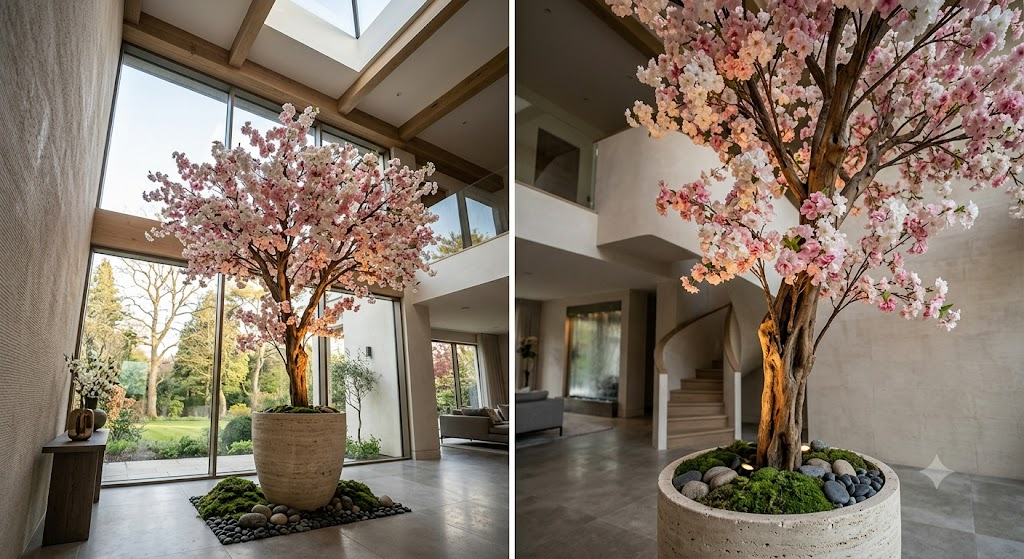

The First Interior Designer Brought Home a Branch
Long before interior design had a name, humans were bringing nature into the spaces they inhabited. Explore the ancient relationship between architecture, botanical art and our instinct to live alongside the natural world and how Jardin du Monde reinterprets that connection through permanent botanical compositions created for contemporary luxury interiors.
Learn more
Top Artificial Olive Trees for Sale for Luxury Design
Connect With Us! At Jardin du Monde, we bridge the beauty of nature with the permanence of art. Our handcrafted artificial olive trees for sale are meticulously elevated into permanent botanical sculptures—capturing the poetic grace, delicate foliage, and sculptured silhouette of the Mediterranean, designed to endure effortlessly and eternally. For centuries, the olive tree has stood as a timeless emblem of peace, valor, and noble serenity. Today, it ascends as a vital architectural centerpiece—enriching prestigious interior spaces, exclusive boutique hotels, and finely curated private residences worldwide. Yet, cultivating living trees indoors often demands impossible compromise. Restricted by deep soil requirements and unyielding sunlight, natural specimens frequently lose their composure, shedding their beauty within months. Key Takeaways Architectural Longevity: Museum-grade trees from Jardin du Monde bring this kind of relaxed Mediterranean elegance indoors, without fuss. They reduce leaf shed, trunk decay, and soil contamination basically completely. Proportional Harmony: Choosing the right scale just anchors large spaces so well. A 10 to 14-foot specimen hits that sweet spot. Furthermore, it works especially well in double-height rooms. Vessel Integration: Pair your tree with aged terracotta, hand-carved stone, or even bronze planters. It creates a smooth bridge between living, calm-looking texture and refined interior surfaces, like everything is meant to be there. Investment Value: High-end artificial olive trees keep their sculptural character for decades. They also prevent recurring landscaping charges, and they cut down on ongoing replacement expenses, which is kind of the whole point. Where Can You Find Premier Artificial Olive Trees for Sale for Luxury Interiors? Luxury hotel lobby interior at dusk with a massive faux olive tree and custom circular bench seating. Green velvet chairs and a city view are visible. Get handmade artificial olive trees for sale designed for luxury spaces. These everlasting botanical structures add instant Mediterranean warmth to the space. The Old-World Heritage Meets Modern-Day Interior Architecture Silver-gray foliage and light branches give a gentle texture without visual noise. In the meantime, a light canopy softens the light and gently caresses incoming sunlight onto travertine and limewash. Artisan Design Markers Designers who have an acumen for what to consider in each Jardin du Monde specimen notice the crucial details: Real Wood Trunks: Naturally seasoned branches (inverted) from sustainable orchards, gnarled trunks. Silk Foliage with Multiple Tones: The soft leaves in muted sage and silver catch natural light beautifully. Realistic Faux Fruit: Your selections of truly realistic faux fruit produce olives that have been placed by hand in positions that show different, natural maturity levels. Design Insight Position your olive tree to command the space against a floor-to-ceiling window. As twilight settles or dawn breaks, subtle side lighting captures the glass, brilliantly accentuating the delicate shimmer of the foliage and the authentic, weathered grain of its sculpted bark. Sizing & Scaling Guide for High-Ceiling Estates One of the most common design errors when evaluating artificial olive trees for sale is under-scaling the specimen. A tree that is too small resembles a potted houseplant rather than an architectural feature. Room Ceiling Height Recommended Tree Height Ideal Vessel Style Ideal Placement 8 – 10 Feet 6.5 – 8 Feet Weathered Italian Terracotta / Woven Stoneware Reading Nooks, Dining Room Corners 10 – 14 Feet 9 – 12 Feet Hand-Carved Travertine / Aged Clay Amphora Great Rooms, Grand Foyers, Stairwells 15+ Feet / Vaulted 12 – 16 Feet+ Custom Built-in Stone Planters / Bronze Basins Double-Height Atriums, Hotel Lobbies Synthetic Olive Trees and Expensive Pots to Go with Them Museum-quality olive tree from Jardin du Monde is beautiful in the right container. In fact, it is the planter that provides visual weight — anchoring your canopy into your architecture. Antique Tuscan Amphoras: Long-used Clay Vessels with a patinated surface imbues it with deep, historical significance. As an example, they work beautifully for Mediterranean or Spanish Revival estates. Concrete Minimalist Cylinders: On the other hand, sleek ochre planters provide a streamlined contrast in simplicity. This is why they fit seamlessly into a modern or Japandi-style interior. Custom Millwork Furnishings: Finally, you can intersperse tree bases in stone planters or custom millwork. As a result, it establishes an evergreen and architectural greenhouse vibe. Connect With Us! Synthetic Olive Trees and Expensive Pots to Go with Them Museum-quality olive tree from Jardin du Monde is beautiful in the right container. In fact, it is the planter that provides visual weight — anchoring your canopy into your architecture. Antique Tuscan Amphoras: Long-used Clay Vessels with a patinated surface imbues it with deep, historical significance. As an example, they work beautifully for Mediterranean or Spanish Revival estates. Concrete Minimalist Cylinders: On the other hand, sleek ochre planters provide a streamlined contrast in simplicity. This is why they fit seamlessly into a modern or Japandi-style interior. Custom Millwork Furnishings: Finally, you can intersperse tree bases in stone planters or custom millwork. As a result, it establishes an evergreen and architectural greenhouse vibe. How Do You Style Faux Olive Trees Across Luxury Aesthetics? A sun-drenched, modern organic living room featuring textured limewash walls, light oak floors, large windows with garden views, and a large, central faux olive tree in a rustic stone planter. Muted linen furnishings, a minimal coffee table with books, and a simple lamp complete the calm, Learn how to incorporate these sculptural botanical design pieces into your favorite interior styles effortlessly. Modern Organic & Warm Minimalism: Use daintier silver green foliage and team this with whitewashed limewash walls, natural light oak floors, and muted linen textiles. This makes the space calm, airy, and grounded with absolutely no clutter. Classic Mediterranean & Tuscan Revival: Deep, gnarled wood trunks act as frames around rustic hand-chiseled stone arches or raw dark timber ceiling beams. Hence, this combination brings historical depth, rustic character, and real Old-World warmth to the design. Japandi & Wabi-Sabi: Emphasise natural organic asymmetry, placing a lone sculptural tree sparsely canopied against a smooth microcement backdrop. Of course, this deliberate design creates a beautiful, serene centerpiece that celebrates quiet elegance. How Do You Style and Shape Your Tree from Unboxing to Installation? An interior designer shapes a large artificial olive tree in a sun-drenched, modern organic living room. Make your new specimen a real artisanal defining work with just a couple of purpose-driven changes once delivered. Methods of Bending the Branch: Selectively bend those outer main stems down and a little to the outside from every central trunk. By doing this, you emulate the organic growth patterns of your plants seeking out sun, avoiding stiff-looking vertical lines. Canopy Fluffing: Gently tease smaller inner branches apart to create the illusion of three-dimensionality and reduce the appearance of flat planes. Then arrange key leaves one by one facing out and slightly up towards the main natural room light sources for maximum realism. Top Dressing & Grounding: Use heavy pea gravel base weights and structural foam to center the cultivation pot inside of your decorative planter. Finally, fill the surface to be level with untouched natural dried forest moss, slate chips, or smooth river pebbles that mould a convincing soil line. Elevate Your Sanctuary Incorporating an artisan specimen brings natural harmony, historic texture, and refined tranquility into grand spaces. To begin, select the ideal scale among the finest artificial olive trees for sale available today at Jardin du Monde. Then, pair natural materials with an architectural vessel. As a result, you transform empty corners into permanent botanical masterpieces. Frequently Asked Questions Q: Why are high-end trees from Jardin du Monde preferred over live trees for indoor luxury spaces? A: Live olive trees demand six hours of direct sunlight daily and deep soil drainage. Consequently, indoor environments cause them to shed leaves quickly and deteriorate. In contrast, Jardin du Monde trees offer identical beauty with zero maintenance. Q: Is there any way of knowing if artificial olive trees for sale are good quality? A: Seek out a real, hand-finished wooden chest (not molded plastic). In addition, the higher quality trees come with dual-color silk leaves on both sides and pliable branches that you can easily shape yourself! Q: What is the best way to clean and care for a luxury tree from Jardin du Monde? A: Maintenance is exceptionally simple. Every couple of months, simply wipe the leaves off with a soft microfiber cloth. Or you can give the top bar of your canopy a light comet dusting with cool compressed air to keep it fresh. Q: How do I cover the base pot when buying artificial olive trees? A: To start, secure the base pot inside your decorative vessel. Next, add pea gravel for stability. Finally, top the surface with preserved moss or river stones to create a natural soil line. Connect With Us!
Learn more
Why Superyachts Are Replacing Fresh Florals with Permanent Botanical Art
Discover why superyacht designers are turning to permanent botanical art to create sophisticated, enduring interiors without the limitations of fresh florals.
Learn more
Most Realistic Fake Plants for Dark Rooms and Luxury Baths
Connect With Us! Subterranean wine cellars, windowless spa baths, and dim foyers share a common architectural dilemma. Living flora simply cannot survive in these dark spaces without constant sunlight. High-caliber artificial botanicals eliminate lighting constraints entirely. You can easily elevate shadow-filled rooms into serene, botanical sanctuaries. Discover how to select the most realistic fake plants for dark rooms and luxury baths. Create an evergreen retreat using museum-grade designs from Jardin du Monde. Key Takeaways Zero-Light Flourishing: Real plants wither away in amorphous dark, humid environments, but their artificial counterparts remain perfect indefinitely. Museum-Quality Realism: Seek out real-touch silk, natural wooden trunks, and leaf veining hand-painted in. Architectural Balance: Large specimens with natural stone planters will anchor the overall look of your interior design. A Bargain For Your Budget: Fewer routine plant replacements mean cost savings without compromising the beauty of your estate. Why Choose Artificial Plants for Low-Light Interior Spaces? Living plants require strong, natural sunlight to complete photosynthesis. In dim hallways or spa suites, real leaves quickly turn yellow and drop. Low-light areas also trap ambient humidity. This moisture often breeds unwanted soil mold, fungal gnats, and root decay. The most realistic fake plants for dark rooms and luxury baths solve these maintenance issues completely. They deliver lush, vibrant greenery without demanding window access or messy watering routines. Design Insight Position artificial trees beneath subtle architectural downlights. Warm ceiling spotlights highlight intricate leaf textures and cast elegant, organic shadows across bare walls. What Makes a Faux Botanical Look Completely Authentic? A close-up photograph captures a large-leafed fiddle-leaf fig (Ficus lyrata) plant with prominent green leaves in a weathered terracotta pot, which rests on a dark wooden table. A brass plaque engraved with "Jardin du Monde" is affixed to the front of the pot. In the background is a blurred library with dark wooden bookshelves filled with books, a globe, and a warm lit lamp. Under close inspection, mass-manufactured greenery appears shiny, stiff, and fake. True botanical realism needs artisanal labor and high-end materials. Natural Wood Logs: Real trees have real natural wood trunks, which are sustainably harvested and kiln-dried. Real-Touch Polymers: Non-realistic-looking faux leaves utilizing soft-feeling materials that replicate the feel of density of living foliage. Multi-Tonal Pigmentation: High-end leaves feature varied color gradients, lighter young shoots, and delicate veining. Asymmetrical Canopies: Hand-wired branches allow you to shape natural, organic imperfections into the canopy. Jardin du Monde crafts every specimen using these exact fine-art standards. Each piece brings genuine organic beauty into your private sanctuary. Which Specimen Types Excel in Luxury Bathrooms and Dark Rooms? Certain botanical species adapt exceptionally well to artificial rendering. Their natural forms translate beautifully into high-end silk and polymer creations. Space Category Recommended Botanical Species Aesthetic & Design Purpose Spa Bathrooms Faux Maidenhair Ferns Silk Orchids Cascading Ivy The subtle, moisture-resistant textures applied around vanity mirrors, soaking tubs and marble ledges make each area feel like a welcoming wellness retreat. Dark Rooms Grand Fiddle Leaf Figs Sculptural Olive Trees Broad-Leaf Birds of Paradise Anchors shadowed corners and double-height architectural volumes with dramatic, light-reflecting foliage that thrives without sunlight. Connect With Us! 1. Faux Maidenhair Ferns and Cascading Vines Delicate ferns love high-humidity environments visually. However, real ferns drop tiny leaves constantly when neglected. Faux ferns stay lush beside soaking tubs forever. 2. Sculptural Olive Trees The muted, silver-green leaves of an olive tree brighten dark corners effortlessly. Their airy canopy structure prevents small rooms from feeling visually crowded. 3. Real-Touch Silk Orchids An elegant white orchid instantly transforms a marble vanity into a five-star resort spa. Faux orchids maintain perfect, timeless blooms without delicate climate control. How Do You Style Faux Greenery in Dim Spa Spaces? A close-up of a potted white orchid on a marble countertop in a dimly lit bathroom, with a grey towel and spa toiletries. Design Challenge Architectural Solution Recommended Jardin du Monde Specimen Windowless Powder Rooms Add delicate foliage beside vanity mirrors. Real-Touch White Phalaenopsis Orchid Deep Soaking Tub Alcoves Hang trailing greenery or place a lush floor fern. Hand-Crafted Faux Boston Fern Shadowed Great Room Corners Anchor tall ceilings with a sweeping tree canopy. Artisan Faux Olive Tree Design Insights Always switch out your plant into an elevated decorative pot. Visual grounding comes from hand-carved marble, weathered travertine, or patinated clay pots. Place a thin layer of natural dried moss or river stones on top of the interior base pot. That little detail cements the illusion of unforced organic growth. Curate Your Interior Sanctuary with Jardin du Monde Your Place, Your Haven: Jardin du Monde A dark architectural space needs the eternal beauty of greenery. Remove any lighting obstruction and create a peaceful garden in your house. Visit Jardin du Monde to find the most realistic fake plants for dark corners and high-end bathrooms. Create your bespoke botanical statement today. Frequently Asked Questions Q: What are some of the most realistic fake plants available for dark rooms and luxury baths? A: Jardin du Monde specializes in a limited range of museum-quality, artificial botanicals. Designed with natural trunks, multi-tonal Silk foliage, and lifelike finishes meant for high-end spaces. Q: Can high-end artificial plants be ruined in luxury bathrooms that have excess moisture? A: No. The premium polymer and treated silk materials stand up to ambient bathroom steam and humidity without warping, fading, or mildewing. Q: How do I clean artificial greens that are used in windowless, low-light areas? How often should I clean the leaves? A: Wipe down the leaves with a moist microfiber cloth every few weeks, Clemens recommends. With this easy care, the foliage remains perfectly clean and well-coloured in matte colours. Q: I have a fake tree, and it will be in the corner of a dark room. How do I style it? A: Set your tree in a heavy stone planter, customize the branches outward haphazardly, and finish off the bottom with authentic preserved moss. Place a dim floor spotlight up to create smooth organic leaf shadows. Connect With Us!
Learn more
Luxury's Next Competitive Advantage Isn't Design. It's Environmental Identity.
For decades, luxury has been measured by craftsmanship, heritage, and exclusivity. But the next generation of discerning clients isn't simply investing in exceptional objects—they're investing in environments that shape how they think, feel, and live. In this article, I introduce the concept of Environmental Identity: the idea that our surroundings quietly reinforce our emotions, behaviors, and sense of self. As AI increasingly handles the transactional aspects of luxury, the physical environment becomes the most meaningful differentiator. Discover why botanical art should no longer be viewed as decoration, but as an essential architectural element that transforms beautiful spaces into unforgettable experiences. The future of luxury belongs not to those who create the finest objects, but to those who design the environments people never want to leave.
Learn more
Violet Foncé, Saffron & Magenta: How to Style Faux Orchids
Connect With Us! In the world of elite interior design, a home's true character is whispered through its final, most intimate details. While standard arrangements quickly lose their luster, a new dawn of permanent botanical couture has officially arrived to take their place. Leading this quiet revolution is the iconic Jardin du Monde collection of faux orchids, an authority that has completely re-imagined permanent greenery for the modern connoisseur. Their latest curated release steps entirely away from the predictable, introducing a breathtaking trifecta of rare, intoxicating colorways: deep Violet Foncé, radiant Saffron, and runway-ready Magenta. Far beyond simple decoration, these high-fidelity faux orchid masterpieces function as living sculptures. They offer a flawless, maintenance-free medium to infuse high-end residences, private yachts, and boutique hotels with a sense of curated, year-round luxury. Key Takeaways Elevated Color Palette: The Jardin du Monde permanent collection adds deep Violet Foncé, luminous Saffron, and saturated Magenta colors to elevate interior spaces. Masterful Textural Realism: Textual and ultimately realistic "high-end" artificial orchids with polymer petals that are real-touch, aerial roots, not just indistinguishable from live plants. Architecture Styling Potential: They instantly elevate the look of a foyer, dining table, and desk — styled with these statement botanicals in hand-thrown terracotta or raw marble vessels. Longevity: Permanent orchid bouquets do not wilt or leave petals lying on the table, and their colors are as vibrant, warm, and inviting as they were from day one. Premium Curation Profiles: The Jardin du Monde Permanent Faux Orchids An editorial-style approach for color & texture is a must if you want to design the most visually impactful luxury space. White phalaenopsis orchids are certainly classic, but they do tend to fade into the background in clean-lined, modern neutral spaces. The use of fresh exotic flowers to decorate home walls, table sides, or office desks is the best way in this context. And that is why Martha Stewart loves filling her house with a big, lush, diverse slew of orchids showing throughout. By contrast, the Jardin du Monde orchid catalog focuses on rare, historically significant botanical tones. These pieces are engineered to act as vibrant focal points within a room. Violet Foncé: The Velvet Midnight Dark purple petals of multiple tones all over against a midnight background are the key feature for this type called Violet Foncé Phalaenopsis. It is a thick velvet Italian textile that absorbs and reflects light. Petal Engineering: The petals are painted with a realistic matte finish and subtle black-violet veining that reaches its deepest tone at the column. Designing with Expression: Bring the luxury and intrigue of a classic European romance to moody, textural rooms with this dramatic orchid. These dark, almost inky plum hues are especially beloved by style-loving icons like Victoria Beckham to anchor her ultra-minimalist office. Saffron: The Luminous Horizon Flaunting a yellow-orange hue, the Saffron Cymbidium Orchid looks to provide a warm contrast to those cool interior palettes we often see. It is a unique shade of amber with light terracotta undertones. Petal Engineering: Each flower has a lightly speckled labellum and a dark crimson pad. This follows the subtle, true-to-nature divergences of wild tropical lines. Design Expression: Inspired by a Mediterranean sunset at golden hour, perfect for bringing light into minimal spaces. Rock legend Sir Elton John, for example, a distinguished orchid lover, has historically used warm amber-tinted yellow orchids to imbue his musical empire with an inviting, sun-drenched energy. Magenta: The Couture Statement Couture Magenta Vanda Orchid is a bold choice for spaces full of confidence. It features a bold, very bright pink-lavender that just pops. Engineering the Petals: The petals are made of advanced real-touch polymers. They mimic the dense, semi-translucent feel of a natural orchid and make sure that the brilliant colour looks real rather than clinical. Design Expression: This variety is excellent as an independent piece of art in high-contrast modern designs. For instance, even fashion mogul Donatella Versace utilizes jet-fueled jewel-toned magenta flora in her entries to promote a brazen high-octane luxe vibe. Connect With Us! How to Style Faux Orchids for High-End Interiors Integrating these statement botanicals into a luxury environment requires careful attention to scale, vessel selection, and surrounding textures. Orchid Variety Ideal Vessel Companion Best Architectural Placement Pairing Textures Violet Foncé Fluted Matte Black Marble Minimalist Executive Desks, Dark-Paneled Libraries Polished Brass, Smoked Glass, Dark Walnut Saffron Aged Italian Terracotta Expansive Sunlit Kitchen Islands, Limestone Fireplaces Travertine, Raw Linen, Bleached Oak Magenta Hand-Blown Murano Glass Grand Foyer Consoles, Contemporary Dining Centerpieces Lacquered Surfaces, White Quartz, Brushed Nickel Styling the Violet Foncé in the Executive Office or Library Deep, dark spaces require accents that offer textural contrast rather than bright color pops. The Violet Foncé orchid anchors masculine or moody rooms without disrupting the established design tone. The Planter Setup: Pot the Violet Foncé orchid into a heavy, fluted matte black marble or dark bronze container. The Dressing: Fill the base with tightly packed preserved charcoal forest moss and shards of little black volcanic rock. The Placement: Arrange on an executive desk or a built-in library bookshelf. The dark petals will enjoy what light there is from the overhead lamps. They'll lend elegance and decadence to the space as they shimmer. Styling the Saffron Orchid in the Open-Concept Kitchen Modern estate living requires a welcoming warmth in the heart. Saffron Orchid brings warmth to crisp, white marble counters and stone islands. The Planter Setup: Use a real Italy-made hand-thrown terracotta pot placed into a rustic stone urn, with additional Saffron orchids planted around it. The Dressing: Seal the foundation in naturally shaded, uncolored sheet moss and time-worn river stones for an earthy look to further underline primitive sensibility. Where You Should Put It: Prop it beautifully on a limestone fireplace mantel or an extravagant kitchen island. Coordinate it with raw linen runners/bleached oak for a laid-back, Mediterranean-style mood. Styling the Magenta Orchid for the Grand Foyer When it comes to a property, first impressions set the tone for everything. At the doorway, an arrangement of bold Magenta orchids makes a striking design statement that invites guests to enter your home. The Planter: Grouping three Magenta orchids together in a wide, shallow bowl made of polished white quartz or Murano hand-blown glass makes for an arresting display. The Dressing: Spread clean white marble pebbles to cover the ground. This preserves a clean and contemporary aesthetic, with no distractions whatsoever from the colorful blooms. The Arrangement: Lay it out on a simple glass or lacquered wood console in the grand entry. It will act as a bold, sculptural greeting for guests. The Technical Artistry of Jardin du Monde The reason elite interior designers specify Jardin du Monde permanent orchids comes down to their superior engineering. Traditional silk flowers quickly reveal their synthetic nature through fraying edges, faded colors, and rigid, unrealistic plastic stems. True-to-Life Details: Jardin du Monde botanicals feature flexible, core-wired stems. This allows decorators to shape the orchids into natural, cascading silhouettes. Lifelike Roots: The bases of the plants include realistic aerial roots and new-growth faux buds. These mimic the natural lifecycle of a living plant, ensuring authenticity from every angle. Long-Term Durability: The vibrant colors are mixed directly into the polymer base, making them highly resistant to fading under bright indoor lights. This guarantees long-term beauty for your interior design assets. Enduring Elegance of Orchids Premium permanent orchids allow designers and homeowners to have total control over a space's color palette and tone. And it only takes the more unusual tones of its Jardin du Monde collection—Violet Foncé, Saffron and Magenta—to produce lasting memories in your interiors. Utilized alongside cut silk vessels and styled in a considered manner, these exquisite faux orchids translate into perennial organic beauty along with architectural drama to enter the luxury property. Frequently Asked Questions Q: How do you clean and maintain the real-touch petals of luxury faux orchids? A: Once every month, repeat the process, and this time, just remove some dust from the petals. This can be done simply by wiping with a damp lint-free microfiber cloth. Do not use chemical sprays or glass cleaner because they will "eat" the matte, realistic coating, giving those petals their texture. Q: Can you bend or shape the main stem of a Jardin du Monde orchid? A: Yes. The internal steel wire armatures of the main flower spikes and aerial roots. It enables you to lightly curve stems as dictated by the particular shape of your vase, rather than forcing them into an upright position in a seemingly random bowl that only seems heavy enough for light flowering life. Q: What should you use to fill the base of the planter to make the orchid look real? A: Do not use synthetic plastics or bright green dyed mosses to achieve the illusion. Use preserved real forest moss, natural dark mulch, or river stones instead. They are natural elements that lend organic textures to the composition perfectly. Q: Are these high-end faux orchids safe to display in high-humidity spaces like master bathrooms? A: Absolutely. Also, the leaves and stems are crafted from long-lasting, non-porous plastic rather than delicate fabrics that require fussing with; they're also impervious to any humidity or high moisture levels in bathrooms — they'll never warp (or come unglued) or grow mould. This toughness allows you to create sumptuous colour accents in premium spa suites — without the risk of structural failure. Connect With Us!
Learn more
Elevate Fine Interiors with Luxury Artificial Trees
Connect With Us! Soaring ceilings and expansive glass facades define modern luxury architecture, yet they create environments hostile to living flora. Consequently, inconsistent sunlight and indoor climate control make maintaining a towering living tree a logistical battle. This reality has driven elite designers to transition to high-fidelity permanent botanical art. Ultimately, incorporating luxury artificial trees into an interior or exterior landscape allows sophisticated projects to establish structural permanence and flawless, year-round elegance without compromising visual excellence. Key Takeaways Architectural Anchor: True luxury permanent trees serve as foundational structural design elements rather than simple background decor. Specifically, they provide essential scale and organic asymmetry to grand spaces without the maintenance challenges of living flora. Premium Material Standards: High-fidelity botanicals completely discard cheap plastics in favor of real, cured timber trunks and real-touch polymers. As a result, this meticulous craftsmanship ensures that every individual piece features a unique and highly accurate natural texture. All-Weather Engineering: Exterior variants utilize core-infused UV inhibitors and heavy-duty inner steel armatures to withstand extreme elements. Therefore, this durable design prevents foliage fading and structural damage on exposed penthouse terraces or poolside decks. Seamless Botanical Flow: Aligning the plant species between indoor rooms and outdoor loggias creates a unified visual extension that doubles a property's perceived footprint. By implementing this design strategy, designers maintain a flawless aesthetic across the entire estate through every season. The Evolution of Permanent Botanical Artistry But to be in keeping with an editorial, couture aesthetic, a permanent display has to shake off all associations of old mass-market plastic plants. Instead, genuine luxury artificial trees are works of art, delicately constructed to focus on botanical replication, organic irregularity, and architectural durability. Key Luxury Design Features True luxury faux trees are defined by several essential craftsmanship standards: Genuine Preserved Natural Timbers The top-grade manufacturing construction consists primarily of true salvaged organic timber trunks. Furthermore, harvested and cured sustainably, these natural trunks preserve their raw bark surface, organic twists, and age rings. This guarantees that each tree stays true to type; hence, no two specimens are the same. The Real-Touch Thresholds Super high-end foliage utterly rejects the gleaming, homogenous plastic look you see with lower price points. Rather, it uses high-end polymers of polyurethane and silk-blend that imitate the touch, soft, vein-styled texture of a live leaf with coolants. Accordingly, the light reflected in the lignin, even closely inspected, has a soft and natural matte finish. Controlled Imperfection Nature is beautifully flawed. In this way, high-fidelity permanent trees mirror this reality by featuring variable foliage density, young new-growth leaves at the branch tips, and multi-toned gradients that mimic a life spent turning toward the sun. Connect With Us! Curation: Shaping the Grand Foyer and Fine Interiors When designing for indoor grand spaces, the primary rule is scaling to match the architecture. For example, a standard six-foot tree disappears when placed underneath a vaulted or double-height ceiling. Thus, elite spaces demand monumental, sculptural statements. Botanical Choice Visual Pairing Best Structural Placement Mediterranean Olive Reclaimed Limestone & Travertine Expansive, light-filled marble foyers Japanese Maple Sleek Polished Concrete & Terrazzo Contemporary minimalist living rooms Ficus Benjamina Aged Italian Terracotta Urns Traditional European-style sunrooms Species Spotlight for Luxury Homes Mediterranean Olive: Finally, to give your home that sophisticated European appeal, but with light, airy warmth. The iconic silvery-gray-green foliage casts gentle shadows across wide swaths, thereby anchoring minimalist spaces without being assertive. Architectural Japanese Maple: When your interior calls for a structured, classical geometry, go grand with an imposing Ficus Benjamina or Architectural Japanese Maple that has layered, multi-dimensional canopies that provide notes of texture against the starkness of modern designs. The Designer's Curation Tip Crucially, a luxury artificial tree must never remain in its black plastic starter pot. Designers slip-pot these installations into heavy museum-grade vessels—such as hand-thrown Italian terracotta, raw concrete planters, or antique stone urns. Then, to complete the illusion, pack the base with real preserved forest moss, dark river stones, or aged French mulch, anchoring the tree into the room's design layout. Designing Spaces with Luxury Artificial Trees The modern estate does not stop at the glass doors; instead, it flows onto loggias, limestone terraces, outdoor kitchens, and poolside decks. However, managing living outdoor trees in exposed areas introduces constant challenges. For instance, strong penthouse winds, intense UV exposure, and shifting seasonal temperatures frequently leave living landscape designs looking thin, scorched, or entirely bare. Fortunately, this climate reality is where weather-engineered exterior artificial trees excel, offering flawless curb appeal and pristine structures 365 days a year. The Science Behind Outdoor Longevity While interior faux trees focus on tactile softness, exterior versions are triumphs of materials science: Infused UV Protectant: Most faux plants offer only a simple UV coating spray on the surface, which wears off with rain, causing the leaves to fade or discolor in the very first season. In contrast, identical flooring trees for the outdoors attain true exterior luxury via integral pigments. UV-inhibiting chemicals are blended right into the high-density polyethylene polymer throughout molding, simultaneously creating colours resembling rich forest greens and deep verdigris tones to prevent fading from solar rays. Robust Infrastructure: These exteriors are built on heavy-duty, galvanised steel armatures and water-resistant fiberglass cores. As such, they withstand high-altitude winds battering skyscraper balconies or seasonal torrential downpours without breaking their form and even without shedding branches. Strategic Exterior Applications Elite Penthouse Terrace: Top floors' balconies are wind microclimates that rip real plants to shreds. However, no structural soil or complex irrigation systems needed; these “living walls” provide instant architectural privacy by framing an outdoor lounge and are easy to set up as structural faux Italian Cypresses or manicured Boxwood Topiaries. The Beauty of the Poolside: Live trees continually shed sap, leaves, and aggressive roots that can wreck expensive pool liners or overwork filtration systems. On the other hand, a high-fidelity faux Areca or Kentia Palms gives you a crisp, resort-like look without any pool stain contamination or leaf clearing maintenance—it looks just the same! Designing with Jardin du Monde Heritage When selecting permanent greenery, incorporating the design philosophy of an established botanical authority ensures cohesive aesthetic execution. For example, for those drawn to the romanticism of European estates, referencing the curation and plant profiles found at Jardin du Monde serves as an excellent blueprint. Known for celebrating historical European arboriculture, their focus on traditional varieties thus provides the perfect framework for choosing high-fidelity permanent equivalents. Implementing the "Visual Extension" Rule Here are a few design tricks you can use to create that smooth indoor-outdoor transition: Align the Species: If your interior dining space opens out through a wall of glass onto an open terrace, create the visual continuity in materials and style by placing an interior luxury faux Olive tree next to a set of weather-resistant outdoor Olive trees directly outside onto the limestone patio. Create Spatial Symmetry: This strategy visually obscures the lines of the home and essentially doubles what looks like the footprint of the estate while giving it a scrubbed appearance that requires little or no upkeep. Summing Up In conclusion, investing in premium luxury artificial trees that are well-structured gives designers and homeowners complete control over their environment. Ultimately, it can seemingly preserve the same classic natural beauty (and grand scale of architecture) while maintaining a perfectly manicured look across all four seasons. Frequently Asked Questions Q: How do you clean and maintain high-end artificial trees? A: Luxury permanent botanicals require very little regular cleaning. However, to maintain quality and prevent dust from building up on the petals and leaves, it is recommended that you use a feather duster once every 3-4 months. Alternatively, wipe the foliage lightly with a microfiber cloth or give it an occasional go with a feather duster, ideally once a month. Lastly, to remove the dust that settles on the bark and branch joints, soft artist's paintbrushes are great for delicate, real-touch textures. Q: Do luxury artificial trees come already potted in decorative planters? A: Most premium faux trees arrive stabilized in a weighted, black plastic nursery starter pot. However, this basic foundation is designed specifically to be placed inside a larger, decorative vessel of your own choosing. This allows you the design freedom to match the final planter perfectly to your property's unique interior or exterior architecture. Q: How do you properly shape or "fluff" a luxury tree after unboxing it? A: High-end trees are packaged for transport, and this means the canopy will look compressed on unpacking. You will begin with the lower branches and work your way upward while gently finger-bending the wired steel armatures outward and downward into an organic, full silhouette. While making your farm to simulate realistic plant growth, be sure not to make a perfect shape. Q: Can luxury indoor artificial trees be used outside on a covered patio? A: Indoor greenery is made from fabrics that are soft to the touch but will rapidly deteriorate or fade in moisture, wind, and ambient UV light. Therefore, for terraces, loggias, or pool decks: always ask for variants constructed with UV-inhibitors infused into the core and trunk made of weather-resistant fiberglass. Connect With Us!
Learn more
Design Commercial Spaces with Premium Realistic Faux Plants
Connect With Us! Modern commercial architecture treats greenery as an essential structural element. It shapes visitor behavior and defines spatial flow. However, introducing living flora into high-traffic interiors presents severe logistical and financial liabilities. This is due to inadequate natural light and constant maintenance disruptions. Consequently, this friction has fueled the rise of permanent botanical landscaping. Designing commercial spaces with premium, realistic faux plants offers a strategic alternative. It allows architects to capture the aesthetic benefits of nature with absolute permanence. Best of all, it guarantees zero operational friction. A soaring, multi-story luxury hotel lobby featuring floor-to-ceiling glass, a grand chandelier, and a massive, realistically crafted artificial olive tree in an ornate planter as its central anchor. Key Takeaways Strategic Brand Elevation: High-fidelity permanent botanicals instantly communicate luxury and wellness. They also highlight a keen attention to detail. Overcoming Architectural Constraints: Premium faux plants allow designers to install massive green features anywhere. They work perfectly in low-light or weight-sensitive zones. Uncompromising Botanical Realism: Elite faux flora utilizes natural cured timbers and organic asymmetry. These elements completely transcend the mass-market plastic look. Drastic Cost Optimization: Transitioning to permanent landscaping eliminates ongoing specialized labor. It also cuts costs for replacement plants and water infrastructure. The Strategic Power of Biophilic Commercial Design Biophilic design connects building occupants more closely to nature. Today, it is a data-driven commercial necessity, not a luxury trend. Specifically, environmental psychology studies consistently show that visible greenery yields measurable returns. In corporate offices, it reduces employee stress and boosts cognitive productivity. Meanwhile, in retail and hospitality environments, it increases customer dwell time. Longer visits directly correlate with higher average transaction values. The Limitations of Living in Indoor Greenery Historically, large-scale biophilic layouts required living green walls or heavy indoor trees. However, the commercial lifecycle of indoor living trees is notoriously short. Environmental Deprivation: Living trees experience cyclical leaf drop and structural thinning indoors. This is caused by a lack of UV rays and harsh HVAC systems. Aesthetic Degradation: Consequently, the foliage suffers from eventual browning. This creates an unappealing visual aesthetic that damages a business's premium reputation. The Permanent Botanical Solution Architects can reliably implement sweeping, multi-story botanical landmarks by using premium faux plants. Ultimately, these high-fidelity installations remain perfectly manicured from opening day onward. Their flawless appearance is completely independent of internal environmental conditions. The Anatomy of Commercial-Grade Realistic Faux Plants Permanent plants must pass the closest visual and tactile inspection. This keeps the design integrity of luxury showrooms, lobbies, and upscale restaurants intact. They must look entirely indistinguishable from their living counterparts. Achieving this standard requires meticulous material engineering and an artistic commitment to organic imperfection. 1. Naturally Sourced, Cured Timbers Mass-market faux plants are easily spotted by their uniform, injection-molded plastic trunks. Conversely, premium realistic faux trees utilize real, salvaged natural wood trunks. These timbers are sustainably harvested, carefully debarked, and thermally cured. This process eliminates any pests or moisture. Because the foundation relies on natural wood, authentic bark textures and natural splits are beautifully preserved. This guarantees that no two fabrications are identical, bringing genuine organic personality into the built environment. 2. Advanced "Real-Touch" Polymers The foliage of high-end permanent botanicals completely abandons glossy, translucent fabrics. Instead, it utilizes advanced polyurethane and specialized silk-poly blends. These materials replicate the exact tactile density and cool surface temperature of live leaves. They even capture the intricate vein structures perfectly. When light hits a premium faux leaf, it produces no synthetic glare. Rather, it scatters softly across a realistic matte finish. This finish beautifully mirrors the natural reflectivity of healthy plant tissue. 3. Asymmetric Canopy Engineering Nature is beautifully irregular. In contrast, cheap artificial plants are manufactured to look perfectly symmetrical. This design choice immediately signals their synthetic origins to the human eye. Premium fabricators intentionally design subtle imperfections into the canopy. This includes variable leaf sizes and multi-toned color gradients that mimic varying leaf maturities. They also add new-growth shoots at the tips of the branches. By engineering organic asymmetry, the plant looks as though it grew naturally within that specific architectural space. Connect With Us! Spatial Curation Across Premium Sectors A bustling, multi-story commercial atrium featuring a variety of high-fidelity artificial greenery, including a large Japanese maple tree, potted olive trees, a lush green wall, and cascading vines that elevate the modern glass-and-concrete corporate architecture. Different commercial sectors demand distinct botanical strategies. These help maximize space utilization, direct foot traffic, and set the right atmospheric tone. Commercial Sector Recommended Botanical Application Strategic Design Function Corporate Lobbies Monumental Faux Trees (12ft - 16ft) Establishes scale, commands attention, and warms cold finishes. Boutique Hospitality Permanent Foliage Ceilings & Canopy Wraps Creates an intimate, immersive, and highly photogenic experience. Luxury Retail Framed Minimalist Green Walls & Accents Directs pedestrian flow and elevates premium product merchandise. Upscale Dining High-Density Faux Planter Dividers Provides natural acoustic dampening and private spatial zoning. Corporate Atriums and Office Hubs Grand architectural materials can often feel cold and institutional in double-height corporate foyers. This is especially true for polished terrazzo, raw concrete, and floor-to-ceiling glass. Introducing a towering, 14-foot permanent Mediterranean Olive or Black Olive Tree instantly softens these hard lines. Furthermore, premium faux trees require no heavy soil beds or structural slab reinforcement. They also eliminate the need for complex under-floor drainage lines. Consequently, they can be placed seamlessly on existing structural floors or integrated into elevated mezzanine workspace decks. Hospitality and Restaurant Environments For high-end restaurants and boutique hotel lounges, creating intimate guest experiences is paramount. Designers frequently use dense rows of faux Snake Plants or Fiddle Leaf Figs as organic dividers. They also use structured Faux Boxwoods inside custom banquette planters. This approach creates natural zoning and privacy between tables without building dark, restrictive walls. Additionally, the complex, multi-layered surfaces of premium faux leaves act as excellent natural acoustic dampening panels. They absorb conversational echo and ambient kitchen noise to create a more relaxed, upscale dining atmosphere. The Engineering of Commercial Safety and Durability Designing commercial spaces with premium, realistic faux plants requires strict adherence to building codes. It also demands long-term asset protection. True commercial-grade botanicals are engineered specifically to meet these rigorous regulatory standards. Fire Retardancy Compliance In commercial architecture, public safety is non-negotiable. Ordinary residential faux plants pose a significant fire hazard. Therefore, premium commercial-grade faux plants are manufactured using Inherently Fire Retardant (IFR) chemicals. These are fused directly into the polymer matrix during the raw material stage. Unlike topical fire-retardant sprays, IFR botanicals provide permanent flame-suppressant properties. Topical sprays can wash away during cleaning or leave a chalky film. IFR materials comply with strict global commercial fire codes, such as Class A NFPA 701 standards. Structural Integrity and Commercial Traffic Public commercial zones subject interior elements to constant physical wear and tear. To combat this, premium permanent plants feature internal galvanized steel armatures. They also include heavy-duty wire cores inside the branches. This structural engineering allows building managers to clean, dust, and reshape the canopy over the years of service. They can do this easily without risking branch breakage or foliage loss. Operational Excellence and Financial ROI Immature live plants may have lower initial procurement costs than premium faux plants. However, the long-term return on investment for faux plants is immediate and substantial. Maintaining living plants inside a commercial building requires a perpetual capital expenditure loop: Horticultural Service Contracts: Technicians must visit weekly to prune, water, feed, and rotate species. Replacement Logistics: Living indoor trees inevitably thin out and die. This forces facility managers to fund and coordinate disruptive, biannual replacements. Pest Control Risks: Living soil attracts fungus gnats, aphids, and mites. These pests can easily migrate into HVAC systems, causing air quality issues. By specifying premium faux plants, a commercial property locks in its biophilic aesthetic for a single expense. Ongoing maintenance is reduced to simple, low-cost monthly dusting carried out by the existing cleaning staff. The facility avoids the risk of water leaks from hidden irrigation lines. It also eliminates pesticide chemicals and the visual embarrassment of dying greenery. Mastering the Natural Illusion Integrating premium permanent botanicals into commercial spaces allows brands to achieve an ideal balance. They get natural beauty paired with operational efficiency. By prioritizing natural timber bases, architects can craft magnificent biophilic installations. Real-touch material engineering and code-compliant structural safety keep these pieces flawlessly preserved through every season. Ultimately, designing commercial spaces with premium, realistic faux plants allows organizations to create inspiring, wellness-focused environments. These spaces captivate clients, elevate employees, and proudly protect the brand's long-term visual identity. Check jardindumonde.com for more information. Frequently Asked Questions Q: How do you prevent premium faux plants from fading under bright commercial lighting or skylights? A: Commercial-grade faux plants for high-light spaces have UV-inhibiting chemicals impregnated within the foliage core. This keeps the polymers from hardening or cracking as time goes on. It prevents them from fading into an unnatural blue tint under harsh spotlights or underneath the direct sunlight through building skylights. Q: What is the best way to clean and dust large-scale permanent plant installations? A: Maintenance teams can dust the leaves monthly using a microfiber cloth or static duster. For high-density green walls or vertical tree canopies, low-setting compressed air is very effective. You may also want to use a painter's brush with soft bristles, as it can remove dirt that might be stuck in any corners or joints with no harm. Q: Can premium realistic faux plants be securely anchored in high-traffic retail or airport environments? A: Yes. Commercial-grade fabrications are engineered with heavily weighted concrete bases inside their starter pots. Designers securely anchor these bases directly into sub-floor structures or heavy built-in troughs. They can also use industrial brackets and weighted gravel ballasts to ensure they cannot be knocked over by crowds. Q: How do interior designers transition the look of permanent greenery through changing seasons? A: Instead of replacing an entire tree, designers can subtly shift the seasonal tone using the planter vessels. They can also alter the base dressings. Swapping out bright summer stones for rich, dark barks or warm-toned container surrounds reflects changing seasonal aesthetics easily. This keeps the core botanical structure completely intact. Connect With Us!
Learn more
Elite Curation Secrets with Luxury Artificial Plants
Connect With Us! Across the world’s most exclusive properties, a quiet, sophisticated shift has taken place. Master designers now favor the flawless, year-round perfection of bespoke luxury artificial plants. When styled with precise architectural intent, these premium masterpieces cease to be mere imitations. Instead, they become structural design elements. We look to three distinct design philosophies practiced by the world’s most elite interior houses. A side-by-side comparison of a modern high-rise living room, showing the space on the left and the same interior styled with strategic permanent trees, grasses, and architectural succulents on the right. Key Takeaways Absolute Aesthetic Control: True luxury shifts toward absolute aesthetic control using high-fidelity permanent plants. These bespoke elements act as structural design layers. Diverse Design Philosophies: Elite homes leverage distinct botanical styles. Each aesthetic creates a targeted sensory atmosphere tailored to the property's architecture. Overcoming Environmental Limits: Luxury artificial plants allow designers to bypass natural constraints like high-altitude winds. Spaces like penthouse terraces can seamlessly host grand, majestic greenery. The Rules of Elite Styling: Flawless curation relies on strict discipline and high-end sculptural planters. Restraint ensures the final installation looks entirely intentional. The Monastic Desert Sanctuary Inspired by Kelly Wearstler’s Brutalist Materiality Renowned for her bold use of texture and scale, Wearstler pairs raw elements with refined geometry. She frequently juxtaposes massive, weathered stone forms against sharp, structural botanical silhouettes. The Design Philosophy: This aesthetic avoids busy, complicated floral arrangements. Instead, it relies on a strict, minimalist palette of sand, charcoal, and deep agave green. The Premium Execution: Designers utilize museum-quality permanent succulents featuring thick, matte-polymer leaves. These pieces are anchored inside heavy concrete vessels. A premier example is Kelly Wearstler’s Beverly Hills Hillcrest estate, featured in Architectural Digest. She masterfully pairs oversized structural succulents with brutalist concrete forms. These specialized luxury artificial plants ensure sharp geometry remains completely flawless over time. A minimalist brutalist loggia featuring a large permanent agave in a dark concrete urn contrasted against a light travertine wall, with a linear spine of faux grasses running along a poolside path. Where Best to Style This striking, minimalist aesthetic is ideally suited for modern, brutalist, or mid-century architectural properties. It thrives in deeply shaded low-light loggias, covered entryways, and arid outdoor lounges. It also makes a sophisticated statement in sleek urban spaces and glass-fronted pool pavilions. Permanent Botanicals Best Suited to This Styling Symmetrical Rosette Succulents (Agave-Style Plants): Thick-leafed, low-profile permanent succulents that feature smooth, matte finishes and pristine geometric shapes. These look visually heavy and ground the base of concrete urns. Tall Architectural Desert Grasses: Fine-textured, vertical permanent grasses that provide clean, sharp lines to frame corridors or entryways. They soften brutalist concrete edges without adding colorful or messy foliage clutter. How Best to Style & Placement The Travertine Contrast: Position a singular, oversized permanent Agave directly against a smooth, light limestone wall. The sharp green silhouette acts as a piece of living gallery art. Asymmetrical Pairing: Place an oversized concrete urn containing a structural succulent on one side of a fireplace. Leave the other side completely open. This creates a modern, designer-forward atmosphere. The Linear Spine: Arrange a perfectly spaced series of identical concrete pots along a poolside path. This clean alignment emphasizes the architecture of the space. Connect With Us! The Quiet Luxury Mediterranean Estate Inspired by Marie Flanigan’s Timeless European Elegance Marie Flanigan composes spaces that feel steeped in heritage, classic architecture, and quiet wealth. Her approach relies heavily on balance, classical proportions, and the romantic textures of the European countryside. The Design Philosophy: Think hand-crafted herringbone pavers, soft limestone fountains, and the silvery-green tones of the French Riviera. The ultimate goal is an atmosphere of effortless, permanent elegance. The Premium Execution: Flanigan’s signature look incorporates pairs of stately, sculpted Mediterranean olive trees framing an entryway. A celebrated example is the Malibu beach estate of lifestyle tastemaker Camille Styles, highlighted by Architectural Digest. To achieve this look without constant leaf-drop, decorators deploy custom-fabricated luxury artificial plants. They offer romantic charm without a single fallen leaf. A sun-drenched Mediterranean estate courtyard featuring a symmetrical pair of permanent olive trees framing a grand arched entryway, surrounded by potted citrus trees and a linear alignment of cypresses. Where Best to Style This timeless look belongs in classically designed architectural spaces. It is best suited for grand residential entryways, sprawling courtyard loggias, and sun-drenched stone patios. It also works beautifully near outdoor dining areas where live trees would drop unwanted debris. Permanent Botanicals Best Suited to This Styling The Mediterranean Olive Tree: Their definitive signature piece in the tree catalog. It is specifically designed with natural, gnarled hardwood trunks and multi-toned, silvery-green leaves. It provides that effortless, sun-drenched Amalfi Coast look. The Traditional Boxwood Topiary: The exact product line used to introduce formal European geometry. These feature tightly clipped, crisp green foliage profiles perfect for symmetrical framing on stone terraces. The Coastal Citrus Arrangement: Found under their specialized botanical florals catalog, this product line pairs deep, glossy green citrus leaves with incredibly realistic, hand-detailed fruit. It adds a subtle pop of European color. How Best to Style & Placement Symmetrical Framing: Place an identical pair of sculpted olive trees on either side of a grand front entrance. This balanced layout immediately communicates a sense of order. The Courtyard Cluster: Group three permanent trees of varying heights in an unadorned corner of a stone terrace. This tiered arrangement breaks up hard architectural angles with soft texture. Linear Alignment: Position a row of matching, closely spaced Italian Cypresses along a limestone boundary wall. This creates a clean, vertical hedge that offers an elegant green backdrop. The High-Rise Earth & Air Pavilion Inspired by Axel Vervoordt’s Raw Sophistication Belgian designer Axel Vervoordt is the ultimate master of wabi-sabi luxury. He blends ancient history, muted earth tones, and pure elemental textures. The Design Philosophy: This style trades flashy, loud tropical geometry for an atmosphere of calm permanence. It pairs muted, wind-swept textures with a disciplined palette of sage greens, parched earth, and charcoal. The Premium Execution: A magnificent real-world blueprint belongs to actor Robert De Niro. He co-commissioned Vervoordt to design the legendary high-rise sanctuary atop New York City's Greenwich Hotel. The space pairs rough-hewn reclaimed timber and structural stone with breathtaking high-altitude views. A luxury high-rise penthouse terrace at sunset featuring sleek permanent grasses and succulents in concrete planters, with multi-trunk permanent trees framing the floor-to-ceiling glass sliding doors. Where Best to Style This elevated aesthetic is engineered specifically for exposed, high-altitude spaces. It thrives on high-rise penthouse terraces, expansive wrap-around balconies, and covered rooftop pavilions. It is equally spectacular in minimalist pool loggias and modern glass-enclosed atriums. Permanent Botanicals Best Suited to This Styling The Mediterranean Olive & Shady Fiddle-Leaf Trees: The definitive structural centerpieces of their tree catalog. These premium permanent products are engineered with authentic, multi-trunk hardwood and delicate foliage profiles. They deliver a sophisticated, living-sculpture effect on windswept terraces. The Desert Maverick Succulent Collections: Hand-selected pieces from their dedicated succulent inventory. This product line features thick, matte-finished structural profiles. They bring weighted geometric grounding and a quiet, wabi-sabi permanence to low-profile stone vessels. The Savannah Wild Grass Installations: Curated directly from their specialized grasses catalog. This specific product line features tall, ultra-fine textured blades. They are designed to sway gracefully in high-altitude currents, casting soft, architectural shadows without creating maintenance clutter. How Best to Style & Placement The Frame Technique: Flank the main threshold with a matching pair of twelve-foot Jardin Du Monde permanent trees. This framing anchors the transition between your indoor living area and the terrace. Corner Anchoring: Position a multi-tiered cluster of varying-height permanent trees in the furthest corner of the terrace. This breaks up hard glass or steel sky rail angles. The Linear Spine: Arrange a strict, uniform row of identical planters containing sleek permanent grasses along a blank wall. This creates a living architectural partition that adds movement. The Elite Blueprint: Essential Rules for Styling Premium Greenery To ensure your permanent botanicals look entirely authentic and exclusive, adhere to these styling principles: The Law of the Sculptural Planter Never compromise on the vessel. An exquisite botanical demands an equally extraordinary container. Seek out hand-carved limestone, antique terracotta, or heavy bronze urns. The texture and weight of the pot anchor the luxury illusion. The Law of Organic Top Dressing Completely conceal the internal base of the plant. Fill the upper rim of your planter with authentic, high-quality materials. Use polished black river pebbles, real split stones, or premium, UV-treated preserved forest moss. The Law of Intentional Restraint Avoid crowding your loggia or lanai with a chaotic jumble of unrelated species. Instead, lean into controlled naturalism. Select a singular, magnificent statement piece or a deliberate, odd-numbered cluster of luxury artificial plants. Summing Up Ultimately, designing with luxury artificial plants is an act of pure creative liberation. By stepping away from environmental limitations, you are empowered to compose a sanctuary based entirely on aesthetic impact. The result is a beautifully scaled, masterfully curated space. It remains completely immaculate and perpetually ready to welcome you home. Frequently Asked Questions Q: How do you prevent luxury outdoor artificial plants from fading in the sun? A: Select permanent plants labeled with integrated UV inhibitors rather than mere surface coatings. For maximum protection in highly exposed, south-facing locations, apply a specialized UV-protectant spray at the beginning of each season. Q: Can premium artificial plants withstand freezing winter temperatures and heavy rain? A: Yes, high-end permanent botanicals engineered from marine-grade polymers are built to survive extreme weather. However, ensure your heavy planters have proper drainage holes so that accumulating rainwater doesn't pool and damage the base. Q: How often do luxury artificial plants require cleaning and maintenance? A: Upkeep is remarkably minimal. Simply use a static duster or a hairdryer on its coolest setting once a month. Follow this with a gentle wipe-down using a damp microfiber cloth once a year. Q: Are luxury permanent plants safe to use in homes with curious pets? A: Absolutely. Choosing premium permanent greenery is one of the most effective ways to design a lush interior safely. Unlike many popular living species that are highly toxic, permanent replicas are completely non-toxic and pollen-free. Connect With Us!
Learn more